Schrodinger to Integrate Eli Lilly’s AI Drug Discovery Platform TuneLab

Biotech software company Schrodinger said on Friday it is collaborating with pharmaceutical giant Eli Lilly to offer Lilly’s artificial intelligence–based drug discovery platform, TuneLab, through its software.

Under the collaboration, Lilly’s TuneLab platform will be integrated into Schrodinger’s cloud-based drug design software LiveDesign, giving biotechnology companies direct access to AI tools designed to accelerate drug discovery and development. Schrodinger said the integration will help researchers move more quickly from early-stage molecule design to viable drug candidates.

LiveDesign is used by chemists to design compounds and predict key properties such as absorption and distribution, helping developers understand how experimental drugs are likely to behave in the body. The addition of TuneLab is expected to further enhance these capabilities by applying AI and machine learning models trained on years of pharmaceutical research data.

Drugmakers and biotech firms have been increasingly adopting AI tools to speed up discovery and safety testing, aiming to reduce costs and development timelines. The trend aligns with efforts by regulators such as the U.S. Food and Drug Administration to encourage alternatives to animal testing in the coming years.

Schrodinger Chief Strategy Officer Karen Akinsanya said existing LiveDesign customers will gain access to TuneLab in the first quarter of this year, while new users will be able to use the AI platform starting in the second quarter.

Eli Lilly launched TuneLab last year to allow external biotech companies to tap into its AI and machine learning models trained on proprietary research data. Lilly has already announced multiple partnerships using the platform to support drug development efforts.

“More biotechs using the models means more diverse training data,” said Aliza Apple, global head of Lilly TuneLab. “Ultimately, this is about moving molecules through discovery faster for the patients who are waiting.”
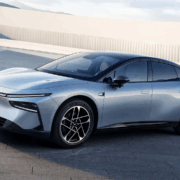
Chinese Automaker Xpeng Pivots to “Physical AI” Strategy Amid Intensifying Competition

Chinese electric vehicle maker Xpeng said it aims to reposition itself as a “physical AI” company rather than a traditional carmaker, as it prepares to launch street trials of robotaxis and begin mass production of humanoid robots, reflecting a broader shift in the auto industry toward artificial intelligence.

Speaking at an event in Guangzhou on Thursday, founder and Chief Executive He Xiaopeng said deep integration of AI — including Xpeng’s in-house “Turing” AI chip — would help the company stand out in China’s fiercely competitive auto market. Xpeng is one of China’s top-selling EV startups and a technology partner of Volkswagen.

“Xpeng definitely does not want to become a car company that simply sells hardware cheaply,” He said. “We want to become a global technology company, a company with strong differentiation.”

The strategy mirrors efforts by Tesla, led by Elon Musk, which has expanded into robotaxis and humanoid robots as AI adoption accelerates worldwide. Highlighting the growing focus on physical AI, Arm Holdings told Reuters this week it had reorganized to create a dedicated physical AI unit targeting robotics.

Other Chinese automakers are pursuing similar paths. Li Auto announced an AI-focused repositioning in 2023, with founder Li Xiang saying the company invests more than 6 billion yuan ($859 million) annually in AI models, computing power and infrastructure.

Xpeng’s push into AI comes as China’s auto sector — the world’s largest — remains locked in a prolonged price war that has pressured margins. At the Guangzhou event, He unveiled four updated vehicle models, highlighting new software-driven features such as 3D navigation, advanced hazard alerts beyond the driver’s line of sight, and upgraded autonomous driving systems.

He said Xpeng is continuing to hire aggressively and invest in autonomous driving and humanoid robotics built around its proprietary AI capabilities. The company plans to begin mass production of humanoid robots in the second half of 2026 and will start street trials of robotaxis “very soon.”

Xpeng reported a net loss of 380 million yuan in the third quarter. He has previously said he expects the company to break even by the end of 2025.

ChatGPT vs Gemini: 2025 Traffic Trends Reveal Why OpenAI Sounded the Alarm

As the competition in the AI space intensifies, ChatGPT and Google’s Gemini have clearly emerged as the two dominant consumer-facing platforms. OpenAI’s chatbot enjoyed a massive early advantage, having popularized generative AI well before major rivals entered the scene. Google, by contrast, stumbled out of the gate with early missteps such as the Bard rollout and image generation controversies, but Gemini has since rebounded and gained significant traction.

New traffic data from 2025 suggests that Gemini’s recovery is more than just cosmetic. According to website analytics, Google’s AI platform has been steadily cutting into ChatGPT’s dominance, largely driven by Google’s unparalleled distribution ecosystem across Search, Android, and its broader services. This shift appears to be reshaping the competitive balance between the two AI leaders.

Similarweb recently shared global generative AI website traffic data on X, tracking changes over the past 12 months. The figures show that ChatGPT’s share of worldwide AI web traffic declined sharply, falling from 86.7 percent at the start of the year to 64.5 percent by the end of 2025. While ChatGPT remains the market leader, the downward trend highlights growing competitive pressure.

During the same period, Gemini saw rapid growth, expanding its global traffic share from just 5.7 percent to 21.5 percent. Other platforms also made modest gains, with Grok and DeepSeek capturing 3.7 percent and 3.4 percent respectively, despite having little to no presence before 2025. Anthropic’s Claude posted a small increase, while Microsoft’s Copilot remained largely flat. However, the data is most significant for OpenAI and Google, as both companies aggressively drive users to their AI websites, unlike rivals that rely more heavily on app-based access or deep platform integrations.