
Investors Pressure Big Tech Over Data Center Water, Power Use

Major investors are increasing pressure on Amazon, Microsoft and Google to disclose more information about the environmental impact of their rapidly expanding data center operations in the United States.

The scrutiny comes as several large-scale data center projects have faced community opposition, forcing companies to reconsider or abandon multibillion-dollar developments. Concerns center on rising electricity demand and water consumption driven by artificial intelligence infrastructure.

Investor groups, including Trillium Asset Management, have filed shareholder resolutions seeking clearer reporting on emissions targets and sustainability strategies. Despite prior commitments—such as Google’s goal to halve emissions by 2030—investors note that emissions have instead increased significantly.

Water usage has become a focal issue. Data centers in North America consumed nearly one trillion liters of water in 2025, raising concerns about local resource strain. While companies are adopting more efficient cooling systems, such as closed-loop technologies, reporting standards vary widely across firms.

Meta Platforms has disclosed partial data showing rising water use, while Microsoft reports aggregate figures without site-level breakdowns. Amazon provides efficiency metrics but not total consumption, and Google’s disclosures omit some third-party facilities.

Investors argue that detailed, site-specific data is essential to evaluate operational risks and environmental impact, particularly in regions where water scarcity is a growing concern.

The pressure reflects a broader shift in how shareholders assess Big Tech, balancing strong growth from AI-driven infrastructure with long-term environmental and regulatory risks. As data center expansion accelerates, transparency and community engagement are becoming critical factors in sustaining that growth.

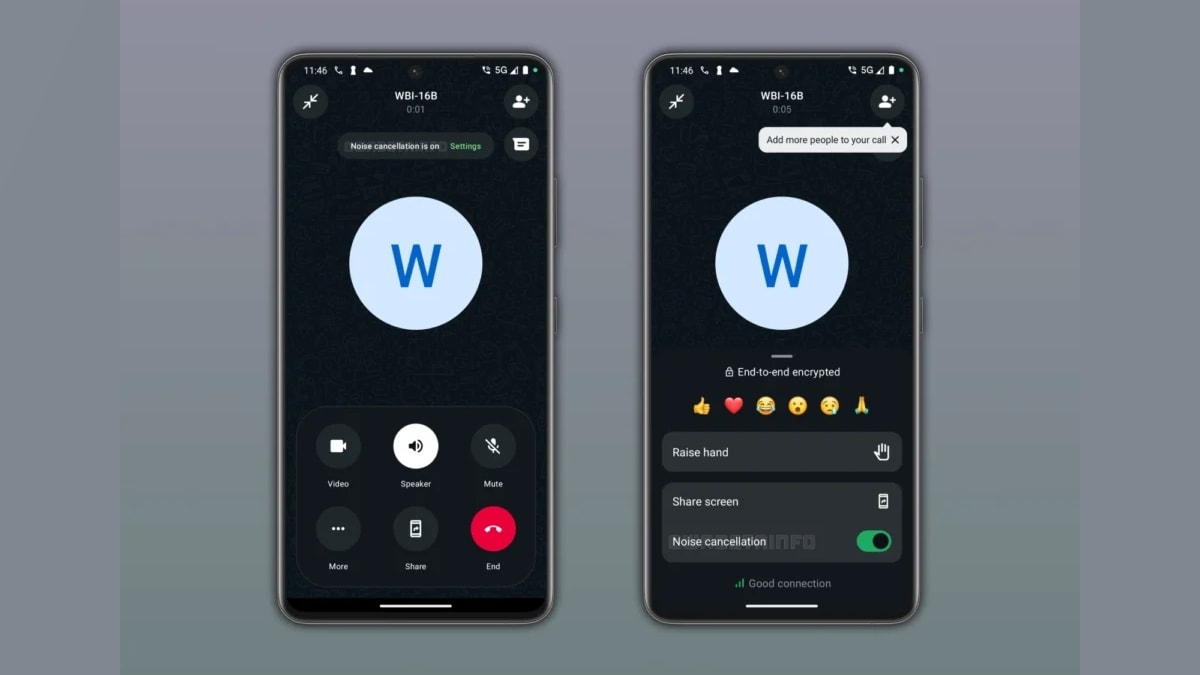
WhatsApp Introduces Noise Cancellation Feature for Voice and Video Calls in Android Beta

whatsApp voice wabetainfo WhatsApp

WhatsApp has reportedly begun testing a new noise cancellation feature for its Android beta users, aiming to enhance the clarity of both voice and video calls. Initially noticed in development earlier this year, the feature is designed to filter out background sounds like traffic, wind, and chatter in real time, while keeping the speaker’s voice intact. This move aligns with WhatsApp’s ongoing focus on improving call quality, particularly for users who often communicate in noisy or outdoor environments.

According to reports from WABetaInfo, the feature is currently available to a limited group of Android beta testers running version 2.26.14.1. Users who have access to the update can see the noise cancellation option directly in the call menu, where it appears to be enabled by default. This automatic activation ensures that calls benefit from the enhanced audio quality without requiring extra effort, though users do have the option to disable it if needed.

The feature could be especially valuable for frequent travelers or professionals who rely on WhatsApp for remote meetings. By minimizing distracting background sounds, conversations become clearer and more focused, improving overall communication. The implementation in beta testing also allows Meta to gather feedback and refine the technology before a broader rollout to all users.

While the rollout for general users has not been officially announced, the inclusion of real-time noise suppression in WhatsApp signals a significant step forward in the platform’s call experience. As beta testers continue to explore its functionality, expectations are high that the feature will eventually be extended to both Android and iOS users, offering a more seamless and professional-quality calling experience across the platform.

Meta Plans Workforce Shake-Up with 200 Job Cuts and Removal of Middle Management Roles in AI Shift

Meta Platforms is reportedly preparing another round of job cuts as part of its broader push toward artificial intelligence. According to recent reports, the company could lay off up to 200 employees, with the impact largely limited to its teams based in the United States rather than its global workforce. This move reflects a continued shift in priorities as the tech giant doubles down on AI-driven development.

The layoffs are also said to coincide with a structural overhaul inside the company. Meta is reportedly moving away from traditional middle management roles in an effort to simplify its internal hierarchy. Instead of maintaining layered management structures, the company is exploring a leaner approach, replacing conventional titles with newer roles such as “org lead,” which are intended to align more closely with fast-moving, AI-focused teams.

Details from filings with California’s Employment Development Department, cited in reports, suggest that a significant portion of the cuts will occur in Silicon Valley. Around 124 roles could be affected at the Burlingame office, with an additional 74 positions in Sunnyvale. These changes are expected to take effect by the end of May, marking yet another phase in Meta’s ongoing restructuring efforts.

This development follows earlier workforce reductions within the company. In January, Meta reportedly cut about 10 percent of its Reality Labs division, affecting roughly 1,500 employees. That move was widely seen as part of a strategic pivot away from certain metaverse-focused investments and toward accelerating its ambitions in artificial intelligence, which continues to be a central focus for the company’s future growth.