
OpenAI, Samsung SDS and SK Telecom to Begin Korea Data Center Build

OpenAI, Samsung SDS, and SK Telecom are preparing to begin construction of artificial intelligence data centers in South Korea as early as March, according to Science Minister Bae Kyung-hoon.

The South Korean government previously said the U.S. startup would form joint ventures with the two Korean firms to develop two facilities with an initial combined capacity of 20 megawatts. The planned infrastructure is intended to support AI model training and deployment, reinforcing South Korea’s role in the global AI supply chain.

SK Telecom confirmed it is in discussions with OpenAI regarding a data center project in the country’s southwest, though the exact timeline for construction remains under review. The collaboration reflects increasing partnerships between U.S. AI developers and Asian technology firms to expand computing capacity amid surging demand.

The initiative comes as major AI companies race to secure power, land, and advanced hardware to support rapidly scaling models. South Korea’s strong semiconductor ecosystem and digital infrastructure make it an attractive base for AI expansion, particularly as governments compete to host next-generation data facilities.
SiTime Tech Could Be Used in Billions of Renesas Chips

SiTime’s technology could ultimately be embedded in billions of chips made by Japan’s Renesas, SiTime’s chief executive said, following a landmark acquisition deal between the two firms. SiTime shares surged nearly 18% after the company announced a transaction worth up to $3.2 billion to acquire timing assets from Renesas.

SiTime expects the acquired assets to generate about $300 million in revenue in the first year after the deal closes, anticipated by the end of 2026—nearly doubling the company’s fiscal 2025 sales. The agreement also brings Renesas CEO Hidetoshi Shibata onto SiTime’s board and includes plans for Renesas to integrate SiTime’s timing technology into its chips.

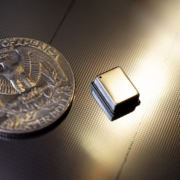
At the center of the deal is SiTime’s resonator technology, which is smaller and more resilient to temperature changes than traditional solutions. That makes it especially suitable for automotive applications, a core market for Renesas microcontrollers. SiTime CEO Rajesh Vashist said the collaboration could result in the first microcontrollers that require no external timing components.

While revenue impact will take time due to design, qualification, and production cycles, Vashist said the scale could be vast. If widely adopted across Renesas products, the technology could be integrated into billions of chips over the coming years, marking a major expansion opportunity for SiTime.

US Equity Fund Inflows Slow as Tech Selloff Pressures Demand

U.S. equity fund inflows eased in the week through February 4 as investors turned cautious amid a selloff in software stocks, according to LSEG Lipper data. Net purchases totaled $5.58 billion, down nearly 48% from the previous week’s $10.82 billion, even as strong earnings from Eli Lilly and Super Micro Computer helped offset some of the pressure.

Technology shares weakened after Anthropic introduced a legal plug-in for its generative AI chatbot, heightening concerns about disruption across the software sector. As a result, investors pulled $2.34 billion from technology funds. By contrast, industrials attracted $2.11 billion, while metals and mining funds drew $1.44 billion, reflecting a rotation toward more cyclical and defensive exposures.

Fund flows also diverged by market size. U.S. large-cap funds recorded $1.1 billion in inflows, while mid-cap and small-cap funds saw outflows of $1.59 billion and $1.67 billion, respectively. The pattern underscores investor caution toward riskier segments during periods of sector-specific volatility.

Bond funds continued to benefit from risk aversion, logging a fifth straight week of inflows totaling $11.11 billion. Short- to intermediate-term investment-grade funds led with $6.34 billion—the largest weekly intake since at least 2022—while municipal and inflation-protected funds also saw solid demand. Money market funds attracted a hefty $83.09 billion, their biggest weekly inflow since early December, highlighting a broader preference for liquidity amid market uncertainty.