Yazılar

Ripple’s Chris Larsen Donates $1 Million to Harris PAC, Signaling Crypto Industry’s Support for Vice President

Chris Larsen, co-founder and chairman of Ripple, has made a significant $1 million contribution in XRP tokens to Future Forward, a super PAC backing Vice President Kamala Harris’ presidential campaign. Larsen’s move is noteworthy, as the crypto industry has predominantly supported Republican candidates, with many leaders favoring former President Donald Trump.

Larsen’s support for Harris comes after months of conversations with campaign insiders, where he felt reassured by her understanding of the innovation economy, particularly given her ties to the Bay Area, a hub for tech and blockchain development. Harris’ replacement of President Biden at the top of the Democratic ticket in July further cemented Larsen’s confidence in her ability to address industry concerns.

A Shift Toward Harris: The Crypto Community and Political Influence

Larsen’s contribution is part of a broader trend of crypto-related political donations, though the majority has been directed toward Republicans. Public Citizen, a nonprofit watchdog group, reported that nearly half of all corporate donations in the 2024 presidential race come from the crypto sector. While Trump has received over $4 million in virtual tokens, Larsen has aligned with Harris, becoming one of the first major crypto figures to back her candidacy.

Larsen, who has a net worth of $3.1 billion, has also been politically active in other areas. His contributions in 2023 alone include donations to Democratic Gov. Josh Shapiro of Pennsylvania and support for John Deaton, a Republican taking on Elizabeth Warren, a staunch crypto critic. Larsen’s contributions to the Harris campaign, totaling around $1.9 million, show his increasing stake in the political future of cryptocurrency regulation.

Regulatory Concerns and Industry Frustration

Larsen’s backing of Harris stems from frustration with Gary Gensler, chair of the Securities and Exchange Commission (SEC), who has been perceived as hostile toward the crypto industry. Gensler’s aggressive stance, including actions against Ripple for alleged securities law violations, has made him a contentious figure within the space. Ripple’s legal battles with the SEC have cost the company over $100 million in litigation fees, a situation Larsen and other industry leaders attribute to a regulatory landscape plagued by uncertainty and overly strict measures.

Ripple’s leadership, including CEO Brad Garlinghouse, has expressed disappointment with Gensler’s approach, calling it “purposeful chaos” designed to stifle the domestic crypto market while empowering less regulated international operations. Larsen, in particular, views Harris as someone who could bring a more balanced and “pragmatic approach” to crypto regulation, contrasting her with Gensler’s more punitive strategies.

Growing Crypto Support for Harris

While Ripple has been a consistent donor to pro-crypto initiatives, Larsen’s support for Harris could be a turning point in how the industry approaches Democratic candidates. Uniswap, a decentralized exchange currently facing legal scrutiny, has also seen its legal chief, Marvin Ammori, contribute to the Harris Action Fund. Additionally, Anthony Scaramucci, former White House communications director under Trump, has given over $36,000 to PACs supporting Harris, signaling a shift in crypto donor allegiances.

One key area where Harris has begun to address the crypto space is through her “Opportunity Agenda for Black Men,” which includes a framework for cryptocurrency in the U.S. that emphasizes safeguarding assets while promoting innovation. Harris highlighted the importance of AI and digital assets during a $27 million fundraiser in New York, marking one of her first major public acknowledgments of cryptocurrency.

Challenges Ahead

Despite Larsen’s contributions and optimism, some skepticism remains within the crypto community. James Delmore, a blockchain analyst, noted that many in the Ripple and broader crypto communities are uncertain about Harris’ policies and how she would navigate the complex regulatory landscape. However, Larsen remains unfazed by criticism and emphasized that he is confident in Harris’ ability to lead the crypto space forward with a more pragmatic regulatory framework.

With industry leaders like Ben Horowitz of Andreessen Horowitz also showing signs of supporting Harris after initially backing Trump, it appears that Harris’ candidacy is gaining momentum among influential crypto advocates. Horowitz, a long-time friend of Harris, recently indicated plans to make a significant contribution to her campaign, further aligning the interests of Silicon Valley with her presidential bid.
Trump Escalates Immigration Rhetoric, Calls for Death Penalty for Migrants Who Kill Americans

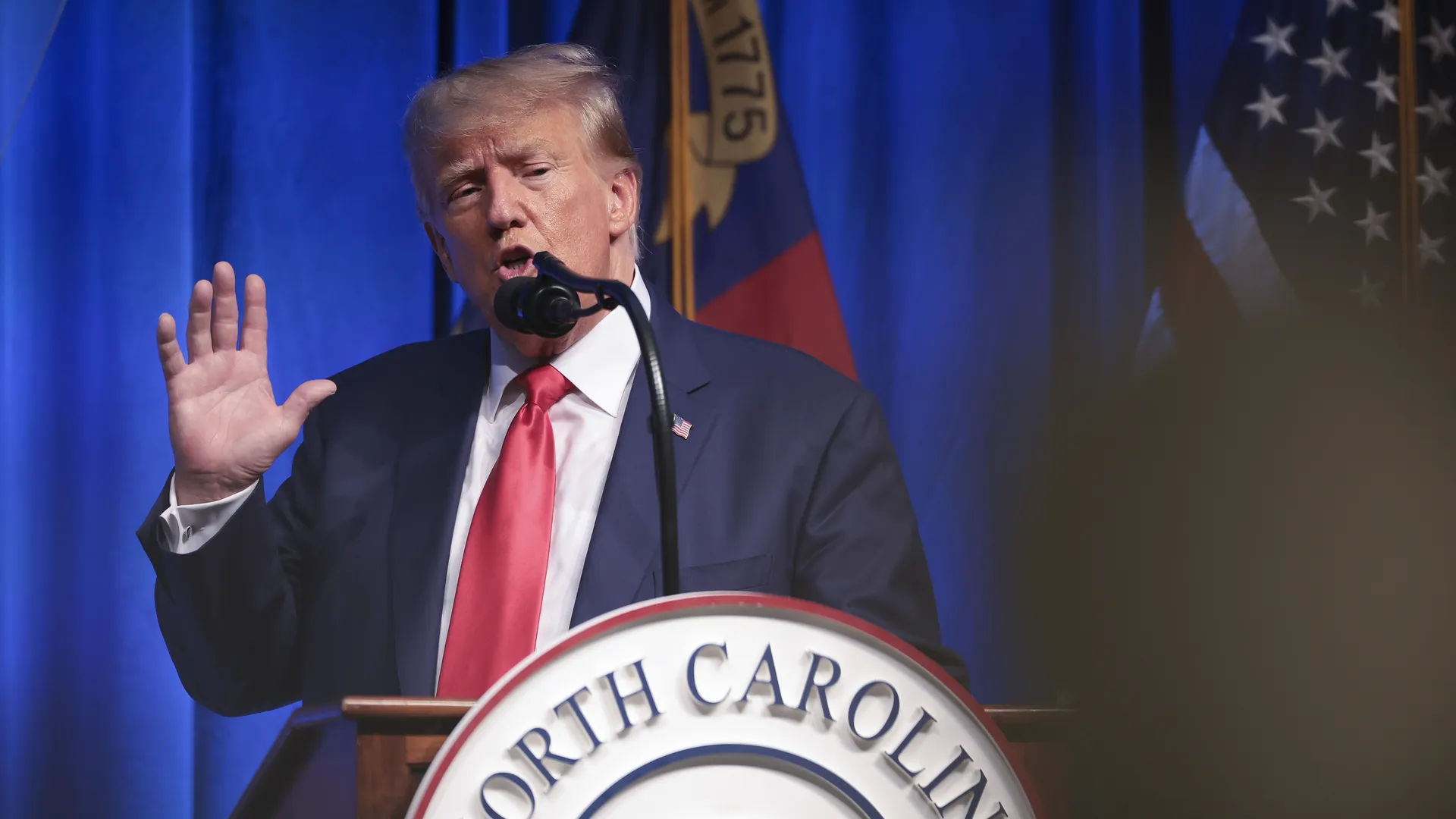
At a rally in Aurora, Colorado, Donald Trump heightened his anti-immigration rhetoric, advocating for the death penalty for migrants who kill U.S. citizens. As part of his presidential campaign, Trump has continued to portray migrants as dangerous criminals, positioning illegal immigration as one of the top voter concerns leading up to the November 5 election, where he faces off against Democratic candidate Kamala Harris.

Trump, surrounded by posters of alleged members of the Venezuelan gang Tren de Aragua, announced that if elected, he would launch “Operation Aurora,” a national effort to target criminal gangs. The rally was attended by a large crowd of supporters who cheered as Trump called for capital punishment for any migrant who kills an American citizen or law enforcement officer.

Death Penalty and Migrant Crime Focus

In his remarks, Trump reiterated his longstanding call to expand the death penalty to include migrants who commit such crimes, along with other offenders, such as individuals convicted of sex trafficking. This expansion would require an act of Congress, as nearly half of U.S. states currently ban the death penalty. Although there is a federal death penalty, it is seldom used, according to the Death Penalty Information Center.

Trump’s focus on “migrant crime” has been a consistent theme in his third bid for the presidency, despite studies showing that immigrants do not commit crimes at higher rates than native-born Americans. However, his stance resonates with many voters, as immigration remains a major concern in the election. Polls show that Trump is perceived by many as the candidate best equipped to address immigration issues.

Kamala Harris’s campaign has not yet responded to Trump’s death penalty proposal. After becoming the Democratic nominee in August, Harris has taken a stronger position on border security and has criticized Trump for stalling a bipartisan border security bill earlier this year.

Aurora in the Spotlight

Trump’s speech in Aurora highlighted a local dispute over gang activity in the city. During a presidential debate with Harris in September, Trump claimed that members of the Tren de Aragua gang had taken control of several apartment complexes in Aurora—allegations that local officials deny. Aurora Mayor Mike Coffman, a Republican, stated that concerns about gang activity have been “grossly exaggerated.” Ahead of Trump’s rally, Coffman invited the former president to tour the city to see the reality of the situation.

At the rally, Trump doubled down on his allegations, pledging to focus enforcement efforts on Aurora and claiming he would “rescue” the city from criminals if reelected. He also vowed to either imprison or deport gang members.

Despite Trump’s dramatic claims, there is no evidence to suggest that any U.S. town, including Aurora, has been overrun by migrants. Major crime rates in Aurora have actually decreased year-over-year, according to statistics from the Aurora Police Department.

Local Reaction and Concerns

Trump’s rally sparked concern among some Aurora residents, particularly migrants and their advocates. V Reeves, a community organizer with the Housekeys Action Network, said that locals were worried about potential threats from Trump supporters. Reuters reported that some apartment complexes in Aurora, at the center of the controversy, had broken windows and litter, and portable police camera stations had been installed.

Jesus, a 30-year-old Venezuelan migrant living in one of the apartments, expressed frustration over being unfairly blamed for the actions of a few. “We are not all bad people,” he said, declining to give his full name for fear of retaliation.

The controversy surrounding gang activity in Aurora stems from complaints about several apartment complexes that house migrants. The city has pressured the landlord, CBZ Management, to address issues such as pest infestations, trash, and safety concerns. In early August, a public relations firm hired by the landlord claimed that members of Tren de Aragua had taken over the properties. These allegations gained widespread attention when a viral video clip showed armed men in one of the apartment buildings.

At the rally, Cindy Romero, a former resident of the apartment complex, shared her experience with crime, stating that it had led her to switch her support from the Democratic Party to Trump.

As Trump’s anti-immigration rhetoric intensifies, the impact of his message on voters remains to be seen, especially in battleground states like Colorado, where immigration is a deeply divisive issue.

Why Pennsylvania Could Hold the Keys to the White House

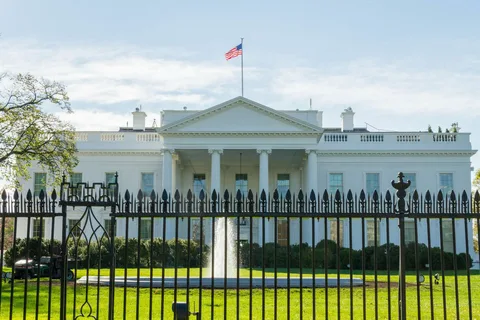
Pennsylvania’s importance in the U.S. presidential election has never been more crucial. With its 19 electoral votes, it stands as a pivotal battleground state that could very well determine the next occupant of the White House. According to political analyst Nate Silver, the candidate who wins Pennsylvania has a 90% chance of winning the presidency. This has led both the Kamala Harris and Donald Trump campaigns to focus heavily on securing a win in this state, as it could tip the balance in the race for the highest office in the U.S.

Pennsylvania is often referred to as the “Keystone State,” not just because of its geographical location but also for its symbolic importance in elections. If Harris manages to win Pennsylvania alongside Michigan, Wisconsin, and one congressional district in Nebraska, she is likely to secure the presidency. On the other hand, if Trump flips Pennsylvania along with North Carolina and Georgia, he could find his way back to the White House.

A Swing State That Mirrors America

What makes Pennsylvania so critical is that it serves as a microcosm of the broader United States. With a diverse economy that includes agriculture, energy, and new industries, as well as a population that is predominantly white but growing in diversity, it reflects the national landscape. Urban areas like Philadelphia and Pittsburgh lean heavily Democratic, while vast rural regions are strongholds for Republicans. The once-reliably conservative suburbs are now trending left, creating a political environment where the balance is constantly shifting.

In recent elections, Pennsylvania has remained fiercely competitive. Joe Biden won the state by just 80,000 votes in 2020, while Trump took it by about 40,000 in 2016. Only once in the last 40 years has a candidate won the state by double digits—Barack Obama in 2008. This ongoing electoral tightrope walk makes Pennsylvania a top priority for both campaigns.

Campaign Strategies for the Keystone State

Both Harris and Trump have been dedicating significant resources to Pennsylvania, spending more on advertising there than in any other swing state. Harris introduced her running mate, Tim Walz, at a rally in Philadelphia, and has spent considerable time campaigning in Pittsburgh, a key city in her electoral strategy. Trump, meanwhile, has held large rallies in Butler and Scranton, targeting areas where he enjoys significant support.

For Harris, the key to victory lies in dominating the urban vote in Philadelphia and Pittsburgh and winning the suburbs by enough to counter Trump’s dominance in rural areas. A big part of her strategy is appealing to moderate Republicans, especially the 160,000 voters who supported Nikki Haley in the state’s Republican primary, held after Trump had already secured the nomination. To this end, Harris is positioning herself as a centrist candidate, seeking to dispel any notions of radical leftism. Craig Snyder, a former Republican staffer, leads the “Haley Voters for Harris” initiative, which aims to win over moderate Republican voters.

Trump’s strategy revolves around maximizing turnout in the rural and conservative parts of Pennsylvania. His campaign has focused on registering new voters and mobilizing those who haven’t participated in past elections. Although Democrats still outnumber Republicans in the state, the margin has narrowed to just a few hundred thousand, the smallest gap since 1998. The Trump campaign also aims to peel away support from traditional Democratic voters, particularly among blue-collar union workers and young Black men, who have shown growing support for Trump in national polls.

The High Stakes of Pennsylvania

Both campaigns understand that winning Pennsylvania is critical. Trump’s team is banking on their grassroots efforts to turn out rural and suburban conservatives, while Harris is hoping to maintain strong support in urban areas and sway moderate Republicans. With the race in the state nearly deadlocked, the outcome in Pennsylvania could ultimately determine who will be sworn in as president in January.