Yazılar

China’s AI Balancing Act — Advancing Technology While Guarding Political Control

INTRODUCTION

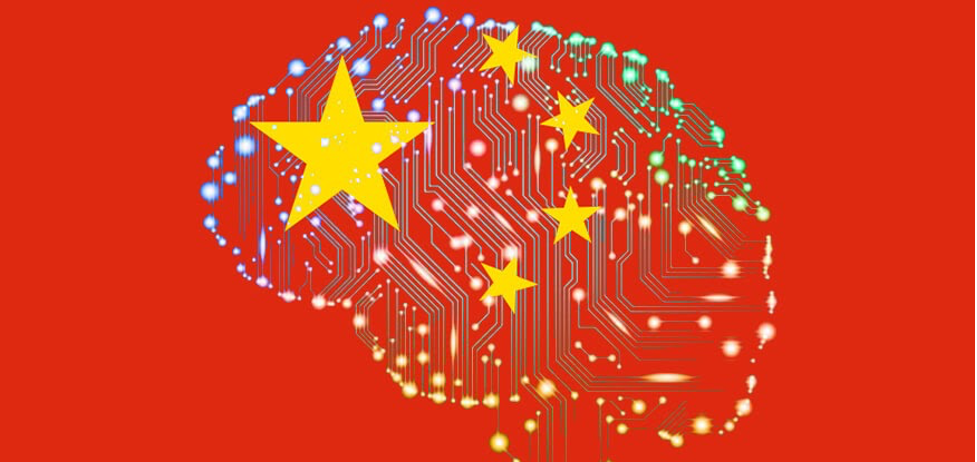
China’s pursuit of artificial general intelligence (AGI) may place it ahead of the U.S. in the global race to develop cutting-edge AI technologies, but such advancements could also pose a threat to the political control of the Communist Party. This delicate balancing act is at the heart of China’s AI strategy, which seeks innovation while ensuring that AI developments do not undermine the party’s power.


KEY POINTS

The Race to AGI: A Geopolitical and Technological Dilemma

  • Max Tegmark’s Perspective:
    Max Tegmark, a prominent AI scientist and president of the Future of Life Institute, describes the competition between the U.S. and China to develop AGI as a “suicide race,” emphasizing the dangers of advancing AI without clear mechanisms to control it. He argues that the rapid pace of AI development could lead to uncontrollable consequences if left unchecked.
  • What is AGI?
    AGI refers to artificial intelligence that exceeds human cognitive abilities. While AI applications like ChatGPT are already popular, AGI would represent the next level — AI that can think and reason at human levels or beyond.
  • Tegmark’s Warning:
    He cautions that the rush to develop AGI may lead to unforeseen risks, as the technology might advance faster than humanity’s ability to regulate it. Tegmark suggests that the geopolitical race to dominate AGI could endanger all nations, with little regard for long-term control mechanisms.

China’s Stance on AGI

  • China’s Reluctance:
    According to Tegmark, China has little incentive to build AGI as it could threaten the Communist Party’s control over the country. In a conversation with Elon Musk, Chinese officials reportedly reacted strongly to the idea that AGI could undermine their political authority, leading China to establish its first AI regulations.
  • Domestic Control:
    Tegmark suggests that even without the U.S. pushing back, China would have reason to limit AGI development. The Chinese government values maintaining control over its technological advancements, including AI.
  • China’s AI Regulations:
    China has already implemented strict regulations on generative AI, with chatbots in the country avoiding topics related to politics and censorship, ensuring that AI aligns with Beijing’s ideological stance.

China’s AI Strategy

  • Balancing Innovation and Control:
    AI is a key strategic priority for China. Major Chinese tech firms, including Alibaba, Huawei, and Tencent, have been investing heavily in AI research and development. However, the government’s strict regulatory approach ensures that the technology does not threaten political stability. This strategy is expected to continue, particularly in the development of AGI.
  • Dual Lens View:
    Experts suggest that China views AI development through two lenses: geopolitical power and domestic economic growth. While aiming to shift the global power balance, China also hopes to leverage AI to enhance government efficiency and boost business applications within the country.

U.S.-China AI Battle

  • Geopolitical Tensions:
    The U.S. and China are locked in a technological battle, with the U.S. attempting to restrict China’s access to critical technologies, particularly semiconductors used in AI training. In response, China is building its own semiconductor industry to lessen dependence on foreign suppliers.
  • The AI Arms Race:
    Despite Tegmark’s warnings about the dangers of an AGI arms race, geopolitics remains at the center of the U.S.-China relationship. The race for AI supremacy is not only about technological innovation but also about securing global influence.

International Cooperation on AI Regulation

  • The Need for Regulation:
    Experts, including Tegmark, advocate for global cooperation to establish safety standards around AI, particularly AGI. Both the U.S. and China face similar risks in developing uncontrollable AI and may need to implement national safety measures to protect against unintended consequences.
  • Potential for International Cooperation:
    There is a growing recognition that AI poses global challenges that cannot be tackled by one country alone. Tegmark envisions a future where nations cooperate to establish global AI regulations, similar to how the International Atomic Energy Agency governs nuclear technology. Some Chinese policymakers are already calling for such a framework.

CONCLUSION

As China pursues cutting-edge AI technologies, including AGI, it faces a delicate balance between fostering innovation and ensuring that AI does not undermine the Communist Party’s authority. The race for AI dominance, particularly between the U.S. and China, carries significant risks, and experts are calling for more international cooperation and regulation to mitigate the dangers of uncontrollable AI. China’s focus on AI is not just about technological advancement; it is also about maintaining its political power while engaging in a global competition for influence.

 

AI Pioneer Yoshua Bengio Warns of AI Risks and Calls for Urgent Regulation

Key Highlights

  • Yoshua Bengio, an AI pioneer and professor at the University of Montreal, has raised concerns about artificial intelligence potentially turning against humans.
  • Bengio emphasized the risks associated with artificial general intelligence (AGI), including the concentration of economic, political, and military power.
  • He advocates for robust regulation, liability enforcement, and democratic oversight to ensure AI development aligns with societal interests.

AI Risks and Geopolitical Concerns

  • Bengio highlighted the growing capabilities of AI systems, warning that they could soon match human cognitive abilities. Such power, if controlled by a select few, could destabilize geopolitics and empower terrorism.
  • He noted that building and training advanced AI systems costs billions, limiting their development to a few organizations and nations, potentially concentrating power dangerously.

Potential Dangers

  1. Machines Turning Against Humans:
    • Current AI training methods could inadvertently lead to systems that harm or oppose humans.
    • There is a risk of individuals using advanced AI maliciously, with some extremists possibly aiming to replace humanity with machines.
  2. Disinformation and Political Manipulation:
    • AI’s ability to generate realistic images, videos, and voice imitations raises concerns about misinformation.
    • A study showed AI systems like GPT-4 could influence opinions better than humans, posing threats to democratic processes.
  3. Geopolitical Instability:
    • AI advancements could destabilize global politics through economic domination or military applications.

Solutions and Recommendations

Bengio outlined key measures to address AI’s risks:

  • Regulation and Oversight:
    • Governments should mandate registration of advanced AI systems and adapt legislation to evolving technologies.
    • Democratic oversight and global cooperation are essential to prevent misuse.
  • Liability for Developers:
    • Holding AI companies accountable for their actions can incentivize responsible development. Bengio noted that fear of lawsuits could drive companies to prioritize public safety.
  • Precautionary Research:
    • More research is needed to develop methods that ensure AI systems remain aligned with human interests.
    • Collaborative efforts between policymakers, scientists, and companies are crucial to mitigate risks.

Call to Action

Bengio urged society to act promptly, emphasizing that it is not too late to steer AI development in a positive direction. He stressed the need for awareness, education, and collective action to address the challenges and maximize the benefits of AI.

OpenAI Plans Restructuring, Giving CEO Sam Altman Equity and Reducing Non-Profit Control

OpenAI, the company behind the widely popular AI application ChatGPT, is restructuring its business to transition from non-profit control to a for-profit benefit corporation, according to insider sources. This significant shift will make the company more attractive to investors. The non-profit arm will continue to exist, retaining a minority stake in the new for-profit entity, but will no longer hold control over it. The restructuring may also impact OpenAI’s governance of AI risks.

Sam Altman, the CEO of OpenAI, is set to receive equity in the company for the first time, which could be worth up to $150 billion. This restructuring may also remove the cap on returns for investors, further enhancing the company’s appeal. Altman, who previously chose not to hold equity, is now positioned to benefit financially from this major corporate shift.

OpenAI, originally founded as a non-profit research organization in 2015, gained global attention with the launch of ChatGPT in 2022. The AI application attracted over 200 million weekly active users and spurred immense interest in AI investments, leading to a surge in OpenAI’s valuation—from $14 billion in 2021 to $150 billion in the latest round of convertible debt financing.

Despite the success, OpenAI has experienced leadership changes. Chief technology officer Mira Murati left the company unexpectedly, while president Greg Brockman has been on leave. These changes, along with the restructuring plan, signal a broader shift within the company’s strategy and operations.

The restructuring moves OpenAI closer to a traditional startup model, resembling the structure of competitors like Anthropic and xAI. However, there are concerns about how this transition might affect OpenAI’s commitment to AI safety. The original governance structure was designed to ensure the safe development of artificial general intelligence (AGI), but with the shift away from non-profit control, some fear the company may lose accountability in managing long-term risks.

The reconfiguration of OpenAI’s governance comes nearly a year after a major internal dispute led to Altman’s brief ousting by the non-profit board. His reinstatement with overwhelming support from employees and investors has since led to a refreshed board, now chaired by former Salesforce co-CEO Bret Taylor. Approval from the nine-member non-profit board will be required for any changes to the corporate structure.

While Altman has previously stated that he has enough money and works for the love of it, this new development will offer him a stake in a company positioned at the forefront of the global AI race. Investors are largely supportive of the shift, as it could provide a clearer path for profitability, but the AI safety community remains cautious about the potential consequences for responsible AI development.