Yazılar

Nvidia Denies Backdoors in Chips, Warns US Against Mandating Location Verification

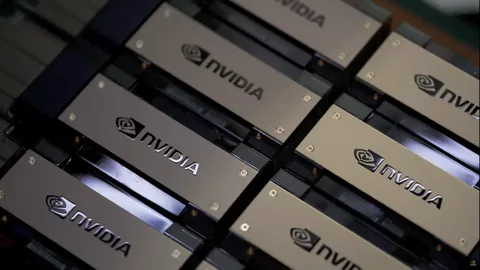
Nvidia (NVDA.O) reiterated in a blog post on Tuesday that its chips do not contain backdoors or kill switches, urging U.S. policymakers to avoid proposals that would require embedding location verification technology in advanced chips. Nvidia warned that such measures would effectively be a “gift” to hackers and hostile actors by creating vulnerabilities.

The statement follows a recent meeting between Nvidia and the Chinese government, which expressed concerns about a U.S. proposal to require chipmakers to include tracking and positioning functions in their products sold abroad, aimed at preventing unauthorized sales to restricted countries. While the White House and U.S. Congress have proposed such measures, no formal rules or technical standards have yet been established.

Nvidia emphasized that backdoors—hidden methods to bypass security controls—pose serious risks. The company stressed, “there is no such thing as a ‘good’ secret backdoor—only dangerous vulnerabilities that need to be eliminated,” reinforcing that their products do not allow remote access or control.

The tech giant warned that embedding backdoors or kill switches in chips would undermine global digital infrastructure and damage trust in U.S. technology worldwide.

Two Chinese Nationals in California Charged with Illegal Export of Nvidia AI Chips to China

Two Chinese nationals residing in California, Chuan Geng and Shiwei Yang, have been arrested and charged by the U.S. Justice Department for illegally exporting tens of millions of dollars’ worth of advanced Nvidia AI chips, including H100 processors, to China without the required U.S. Commerce Department licenses. The alleged activities took place between October 2022 and July 2025.

Geng, 28, from Pasadena, and Yang, 28, from El Monte, ran ALX Solutions, a company founded in 2022 shortly after the U.S. imposed stringent export controls to curb China’s military modernization by restricting advanced technology exports. ALX allegedly shipped over 20 consignments through Singapore and Malaysia, common transshipment hubs used to conceal shipments destined for China. Payments for these shipments came directly from companies in China and Hong Kong, not the freight forwarders.

From at least August 2023 to July 2024, ALX reportedly purchased more than 200 Nvidia H100 chips—highly advanced AI processors used in training large language models—from San Jose-based Super Micro Computer. Invoices falsely declared end customers in Singapore and Japan, but U.S. export officials could not verify the shipments or companies at the listed locations.

Nvidia emphasized its strict compliance with U.S. export controls, noting that diverted products receive no support or updates. Super Micro affirmed its commitment to regulatory compliance and cooperation with authorities.

Geng was released on $250,000 bond following a federal court appearance in Los Angeles, while Yang, who overstayed her visa, faces a detention hearing on August 12.

AMD Data Center Revenue Disappoints, Shares Drop About 4%

Advanced Micro Devices (AMD.O) reported weaker-than-expected data center revenue in its second quarter, disappointing investors betting on the company’s AI chip growth potential. Shares of the Santa Clara-based chipmaker fell roughly 4% in extended trading.

While AMD’s stock has climbed over 40% this year—outperforming the chip index’s 12% gain—its data center segment growth lagged behind rival Nvidia (NVDA.O), the dominant player in AI chips. Nvidia’s data center revenue surged 73% to $39.11 billion in its fiscal first quarter, driven by demand for its Blackwell GPUs and networking hardware.

AMD’s second-quarter data center revenue grew 14% to $3.2 billion, close to analysts’ estimate of $3.22 billion. This segment includes both server CPUs and Instinct AI chips. Portfolio manager Dan Morgan from Synovus Trust noted the “lackluster” data center results were concerning given AMD’s reliance on this segment.

CEO Lisa Su said the decline in AI chip revenue year-over-year was due to U.S. export restrictions on shipments to China and the transition to next-gen MI350 AI chips. Production of the MI350 series began ahead of schedule in June, with a planned steep production ramp in the second half of the year.

AMD also revealed that shipments of its MI308 AI chips to China remain on hold pending U.S. government export license approvals, impacting revenue. The company expects to resume shipments once licenses are granted. These export curbs are estimated to reduce AMD’s 2025 revenue by about $1.5 billion, mainly affecting Q2 and Q3.

For Q3, AMD forecast revenue of approximately $8.7 billion (±$300 million), above analyst expectations of $8.3 billion. The company projected adjusted gross margins around 54%, in line with estimates.

Adjusted earnings per share for Q2 were 48 cents on revenue of $7.69 billion, excluding stock-based compensation and other items.