Yazılar

Malaysia Investigates Chinese Firm’s Use of Nvidia AI Chips Amid Export Controls

Malaysia’s trade ministry is currently investigating reports that a Chinese company operating in the country is using Nvidia AI chips and servers for training large language models, according to a ministry statement on Wednesday. The inquiry aims to determine if any domestic laws or regulations have been violated.

The Wall Street Journal previously reported that Chinese engineers arrived in Malaysia in early March carrying suitcases filled with hard drives. They were reportedly working to develop AI models using data centers equipped with Nvidia chips.

These developments come against the backdrop of U.S. restrictions on exports of advanced AI chips, introduced during the Biden administration, which capped the number of AI chips Malaysia could receive. Though the Trump administration later rescinded these curbs, it issued guidance emphasizing licensing requirements if AI chip use is linked to weapons of mass destruction.

Malaysia’s ongoing verification reflects growing global scrutiny over technology transfer and AI development involving Chinese entities.

Nvidia to Participate in China Supply-Chain Expo in July for First Time, CCTV Reports

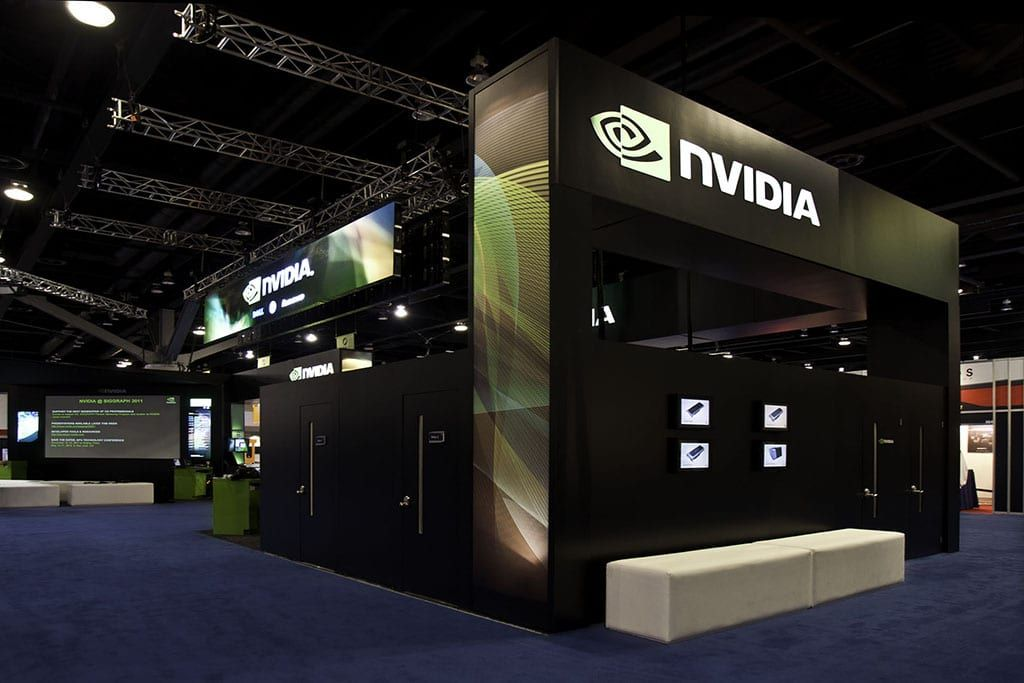
U.S. chip giant Nvidia (NVDA.O) will attend the China International Supply Chain Expo in Beijing this July for the first time, according to Chinese state broadcaster CCTV.

The expo, now in its third edition, will take place from July 16 to 20 and feature more than 230 new Chinese and foreign participants, CCTV reported. Nvidia, the market leader in artificial intelligence-related chips, faces challenges in maintaining its share of the Chinese market amid tightening U.S. export controls restricting China’s access to advanced chips.

While the expo is not typically a venue for major deals, it offers foreign companies an important platform to demonstrate their commitment to the Chinese market. The event’s inaugural edition in 2023 saw Premier Li Qiang emphasize the reliability of Chinese supply chains, especially as some Western countries sought to reduce dependence on China.

Despite escalating trade tensions with the U.S., American companies will make up the largest group of foreign participants at this year’s expo, with a reported 15% increase over last year, according to CCTV.

AMD Unveils AI Server and Chips as OpenAI Joins Development Effort

AMD CEO Lisa Su introduced a major new line of AI hardware on Thursday, unveiling both the MI350 and MI400 series of AI chips and announcing plans to release the company’s first AI server, called “Helios,” in 2026. The launch signals AMD’s most direct challenge yet to Nvidia’s dominance in the AI server and chip market.

The announcement was made at AMD’s “Advancing AI” developer conference in San Jose, California. The Helios servers will house 72 MI400 chips, designed to compete directly with Nvidia’s current NVL72 servers powered by its Blackwell processors. In a notable difference from Nvidia’s closed ecosystem, Su emphasized that many aspects of AMD’s server and networking standards would be openly available to the broader industry, including rivals like Intel.

“The future of AI is not going to be built by any one company or in a closed ecosystem. It’s going to be shaped by open collaboration across the industry,” Su stated.

Su was joined on stage by OpenAI CEO Sam Altman, who confirmed that OpenAI is already working with AMD on its MI450 chips to help optimize them for AI workloads. Altman remarked on OpenAI’s rapid infrastructure growth, calling the pace “crazy” and noting continued expansion with AMD’s hardware.

Executives from Meta Platforms, Elon Musk’s xAI, and Oracle also appeared during the event to showcase how their companies are adopting AMD’s processors. Additionally, Crusoe, a cloud provider specializing in AI, disclosed plans to purchase $400 million worth of AMD’s new chips.

Despite the announcement, AMD shares slipped 2.2%, with analysts suggesting the company still faces significant headwinds in dislodging Nvidia’s dominant market position. Summit Insights analyst Kinngai Chan noted that the newly announced products are unlikely to shift the competitive balance immediately.

AMD has aggressively expanded its AI capabilities over the past year, completing its acquisition of server manufacturer ZT Systems in March and making 25 strategic investments in AI-related startups. The company recently hired engineers from Untether AI and Lamini, further strengthening its chip design and software development teams.

However, AMD’s ROCm software stack continues to lag behind Nvidia’s highly entrenched CUDA platform, which many in the industry see as a major factor behind Nvidia’s dominance.

Nevertheless, AMD remains optimistic about its growth prospects, even as U.S. export controls tighten on AI chip sales to China. When reporting earnings in May, Su reiterated expectations for strong double-digit growth in AI chip sales despite these headwinds.