Micron Expands US Investment by $30 Billion Amid Trump’s Onshoring Push
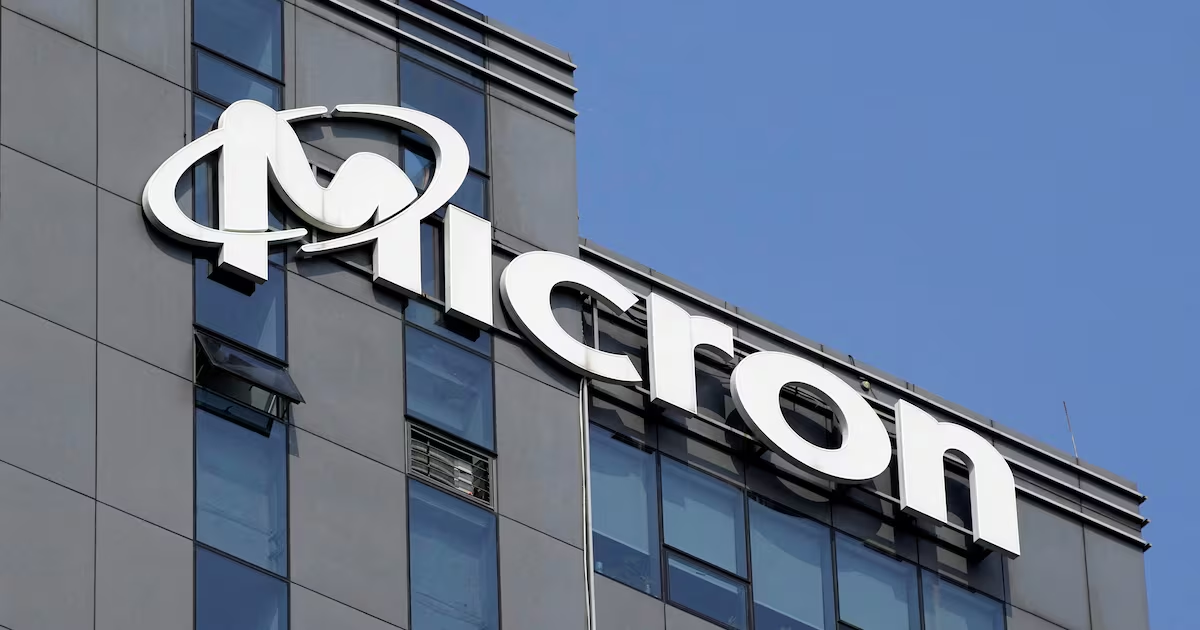
Micron Technology announced on Thursday a significant expansion of its U.S. investment plans, adding $30 billion to its existing commitments as President Donald Trump intensifies efforts to bring semiconductor manufacturing back to American soil. The memory chip maker now projects total investments of $200 billion, up from previous plans of approximately $125 billion.
The new funding will support the construction of a second cutting-edge memory fabrication facility in Boise, Idaho, and the expansion of its manufacturing site in Manassas, Virginia. “These investments are designed to allow Micron to meet expected market demand, maintain share and support Micron’s goal of producing 40% of its DRAM in the U.S.,” the company stated.
Micron’s DRAM chips are widely used in personal computers, automotive systems, industrial equipment, wireless communications, and artificial intelligence. The company’s High-Bandwidth Memory (HBM) products are seen as essential for powering next-generation AI models. About $50 billion of Micron’s total investment will be dedicated to research and development.
President Trump’s administration has pushed hard for semiconductor onshoring, with Trump threatening new tariffs on chip imports and reconsidering previous subsidies granted under former President Joe Biden. In December, Micron secured nearly $6.2 billion in government subsidies through Biden’s $52.7 billion 2022 CHIPS and Science Act. Trump’s administration is now renegotiating some of those grants, according to Commerce Secretary Howard Lutnick.
The expansion aligns with broader trends in the U.S. semiconductor industry. Nvidia, a key customer of Micron, announced plans in April to build AI servers worth up to $500 billion in the U.S. over the next four years, in partnership with firms such as Taiwan’s TSMC. “Micron’s investment in advanced memory manufacturing and HBM capabilities in the U.S., with support from (the) Trump administration, is an important step forward for the AI ecosystem,” said Nvidia CEO Jensen Huang.
Micron also finalized a $275 million direct funding award under the CHIPS Act to further support its Manassas facility expansion.