Yazılar

India’s IT Minister Praises DeepSeek’s Low-Cost AI, Draws Parallels with IndiaAI Mission

India’s IT minister, Ashwini Vaishnaw, has praised Chinese startup DeepSeek for its groundbreaking low-cost AI assistant, highlighting the startup’s frugal approach as a model that resonates with India’s own AI ambitions. Speaking at an event in Odisha, Vaishnaw drew a comparison between the $5.5 million investment DeepSeek used to create a powerful AI model and India’s $1.25 billion commitment to the IndiaAI mission.

The IndiaAI mission, announced in March, aims to develop a robust AI ecosystem by funding startups and creating the necessary infrastructure to support AI innovation. Vaishnaw’s comments came as he pointed out the cost-effectiveness of DeepSeek’s approach, which took just two months and under $6 million to develop its AI model using Nvidia’s less-advanced H800 chips.

DeepSeek’s success has been a game-changer in the AI sector, surpassing OpenAI’s ChatGPT in downloads on Apple’s App Store. The startup’s impressive performance challenges the prevailing belief that China is far behind the U.S. in the AI race and raises questions about the high costs traditionally associated with building AI models.

Vaishnaw’s statement also appeared to counter remarks made by OpenAI CEO Sam Altman during a visit to India last year. Altman had expressed skepticism about India’s ability to develop a competitive AI model on a $10 million budget, calling it “totally hopeless” to compete on training foundation models. Vaishnaw’s comments are now drawing attention, especially as Altman is set to visit India again in early February amid a legal battle with Indian digital news and book publishers over copyright issues.

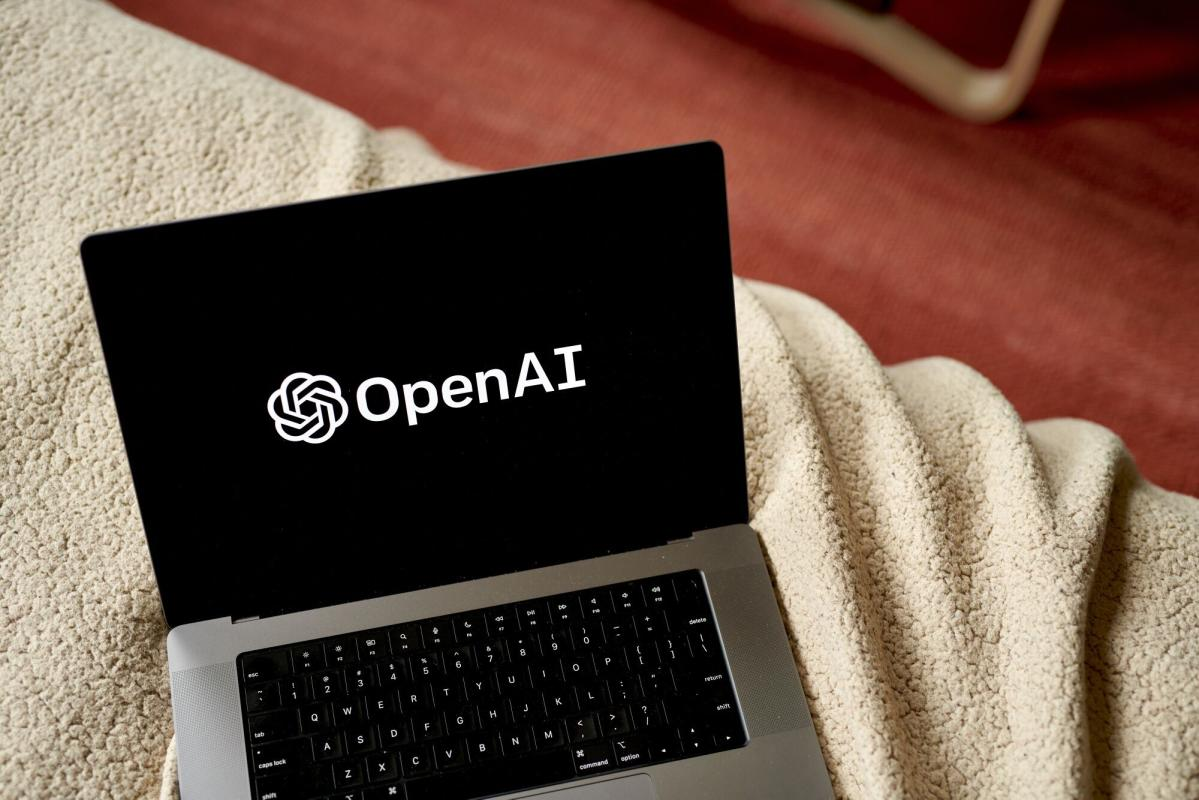
 

US Implements New AI Chip Regulation to Control Global Access

The U.S. government has introduced a new regulation to restrict global access to U.S.-designed artificial intelligence (AI) chips and technology. This regulation targets the export of advanced graphics processing units (GPUs), essential for building AI models, and aims to ensure that cutting-edge AI capabilities are developed and deployed securely and in trusted environments.

Which Chips Are Restricted?

The regulation focuses on GPUs, which were initially created to accelerate graphics rendering but have become critical for AI due to their ability to process large amounts of data simultaneously. U.S. companies, particularly Nvidia, dominate the production of these chips. GPUs like Nvidia’s H100 are used extensively in training advanced AI models, such as OpenAI’s ChatGPT.

What Is the U.S. Doing?

To regulate global access, the U.S. is extending restrictions on advanced GPUs, specifically those used in AI training clusters. The new rule sets limits based on compute power, measured by Total Processing Performance (TPP). For most countries, the cap is set at 790 million TPP until 2027, equivalent to roughly 50,000 H100 GPUs. These restrictions are meant to control access to the computing power required for large-scale AI research and applications.

However, certain companies, like Amazon Web Services and Microsoft Azure, that meet the requirements for special authorizations (called “Universal Verified End User” status) are exempt from these caps. Additionally, countries with “national Verified End User” status are allowed more advanced GPUs—about 320,000 over the next two years.

Exceptions to Licensing

There are exceptions for small GPU orders, such as those for universities or research institutions. Orders that do not exceed 1,700 H100 chips only require government notification and do not count toward the caps. This exception is designed to facilitate the global flow of AI technology for low-risk purposes.

GPUs intended for gaming are also excluded from the restrictions, ensuring that the gaming sector remains unaffected by the new rules.

Which Places Can Get Unlimited AI Chips?

Eighteen countries are exempt from the country-specific caps on GPUs. These countries include the U.S., Australia, Canada, Japan, South Korea, the European Union members, and Taiwan. This list reflects nations the U.S. considers aligned in terms of AI development and security.

What Is Being Done with ‘Model Weights’?

In addition to GPUs, the U.S. is regulating “model weights,” which are numerical parameters used in training AI models. These model weights, essential for refining the performance of AI algorithms, are considered sensitive information. The new rule establishes security measures to protect these parameters, ensuring that only trusted entities manage the most advanced AI systems.

Conclusion

The U.S. regulation reflects growing concerns over AI technology’s potential misuse and aims to ensure its responsible development. By controlling the flow of critical AI resources like GPUs and model weights, the U.S. seeks to maintain dominance in the AI field while preventing sensitive technology from reaching adversarial nations.


Private Equity Investor Adebayo Ogunlesi Joins OpenAI’s Board

OpenAI announced on Tuesday that Adebayo Ogunlesi, a prominent private equity veteran and current CEO of Global Infrastructure Partners (GIP), has joined its board of directors. Ogunlesi, 71, will advise the AI company on securing the infrastructure necessary to further advance its artificial intelligence development.

GIP, a private equity firm founded in 2006, specializes in infrastructure investments, managing more than $100 billion in assets. The firm’s portfolio includes high-profile assets such as Gatwick Airport, the Port of Melbourne, and significant offshore wind projects. Last year, BlackRock acquired GIP for $12.5 billion.

AI infrastructure has become a crucial element in the race for AI dominance, with the success of AI technologies heavily reliant on the ability to build and maintain vast compute infrastructures. This typically involves specialized data centers that link thousands of chips in clusters to process data at scale. According to projections, tech giants like Amazon, Microsoft, Alphabet, Meta, and Apple will spend over $200 billion on capital expenditures related to AI infrastructure in 2025, nearly double the amount spent in 2021.

OpenAI has also been advocating for U.S. government policies that would support the country’s AI initiatives, aiming to ensure that investments in AI remain within the U.S. to prevent China-backed projects from gaining an upper hand in global influence. OpenAI’s recent policy proposals highlight the estimated $175 billion waiting to be invested in AI projects, warning that failure to attract these funds could result in them flowing to China.