Yazılar

OpenAI Partners with Google Cloud in Surprising AI Rivalry Deal

OpenAI has struck a significant cloud computing deal with Alphabet’s Google Cloud to support its growing AI infrastructure needs, sources told Reuters. This collaboration, finalized in May, marks an unprecedented partnership between two major competitors in artificial intelligence.

The move signals OpenAI’s efforts to diversify beyond its longtime partner Microsoft, which had exclusively provided data center services until January. Google Cloud will now supply additional computing power to OpenAI for training and running its large language models, including ChatGPT.

The deal highlights the immense compute demands required for AI development and how competitive dynamics are evolving. Despite the fierce rivalry—OpenAI’s ChatGPT poses a strong challenge to Google’s dominant search business—both companies have chosen to cooperate in meeting infrastructure needs.

Alphabet’s stock rose 2.1% following the news, while Microsoft shares slipped 0.6%. Analysts at Scotiabank called the partnership “somewhat surprising” but a strategic win for Google Cloud, which has been aggressively expanding its AI hardware offerings, including tensor processing units (TPUs) used internally and for other customers like Apple.

OpenAI’s recent moves to reduce dependency on Microsoft include partnerships with SoftBank, Oracle, and CoreWeave, as well as plans to develop its own AI chips to cut reliance on external hardware providers. Meanwhile, Microsoft and OpenAI continue to renegotiate their multibillion-dollar investment terms.

Google’s Cloud business, generating $43 billion in sales in 2024, aims to capture market share against rivals Amazon and Microsoft by positioning itself as a neutral cloud provider favored by AI startups with costly infrastructure needs.

This deal presents a complex balancing act for Alphabet CEO Sundar Pichai, who must allocate limited chip capacity between competing demands from Google’s own AI projects and cloud customers. Despite ChatGPT’s threat to Google’s search dominance, Pichai remains confident in the company’s position.
B. Grimm Power and Digital Edge to Invest $1 Billion in Thailand Data Centre

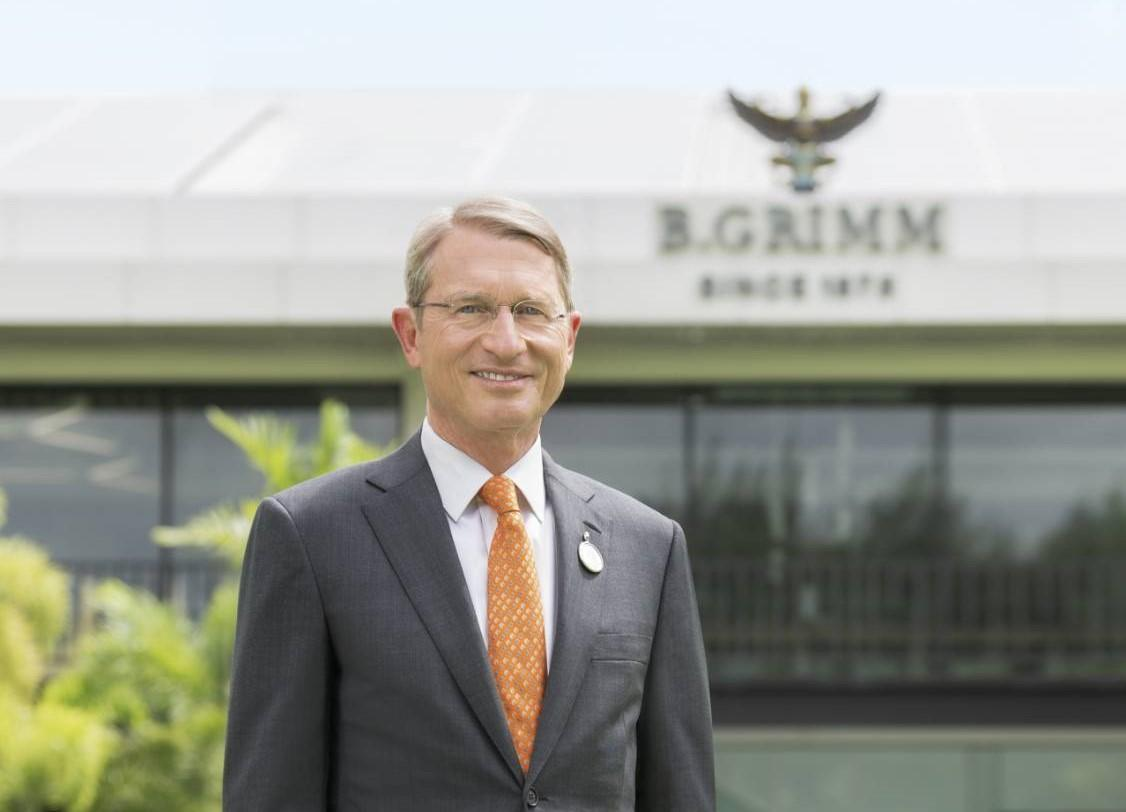
Thai energy firm B. Grimm Power Pcl and Singapore-based digital infrastructure company Digital Edge announced a joint investment of $1 billion to build a 100-megawatt data centre in Thailand. This project aims to meet rising demand for digital infrastructure powered by clean energy, driven in part by surging interest in artificial intelligence technologies across Southeast Asia.

Thailand, the region’s second-largest economy, has become a hotspot for tech giants investing heavily in data centres. Notably, TikTok’s parent company Bytedance plans to invest $8.8 billion over five years, while Google is also preparing to launch a $1 billion data centre facility in the country. Earlier this year, Thailand’s investment board approved $3 billion in investments specifically targeted at data centres and energy projects.

Microsoft last year announced plans for its first regional data centre in Thailand, further solidifying the country’s status as a growing digital hub.

B. Grimm Power and Digital Edge said construction will be “fast-tracked” to have the data centre operational by the fourth quarter of 2026, catering to global tech firms looking to expand AI infrastructure in Southeast Asia. Harald Link, Group President of B. Grimm Power, highlighted the synergy between renewable energy and advanced data centre technology, stating the project will support Thailand’s transformation into a regional AI and cloud innovation centre.

UAE’s ‘Stargate’ AI Megaproject to Launch in 2026 with 100,000 Nvidia Chips

A landmark AI infrastructure project in Abu Dhabi, dubbed Stargate UAE, is set to begin operations in 2026, becoming one of the largest and most advanced artificial intelligence data centers outside the United States. The project will be powered by an estimated 100,000 Nvidia chips, marking a significant step in the UAE’s ambition to become a global AI superhub.

The 1-gigawatt first phase is part of a broader 5-gigawatt, 10-square-mile site and represents the first outcome of a U.S.-brokered deal led by President Donald Trump. The partnership involves a collaboration between UAE’s state-backed G42, and major U.S. and Japanese tech firms: OpenAI, Oracle, Nvidia, Cisco Systems, and SoftBank.

Key Highlights:

  • Launch Timeline:

    • First phase (200MW) to be operational by 2026

  • Hardware:

    • Uses Nvidia Grace Blackwell GB300 systems, Nvidia’s most powerful AI chips

    • TrendForce estimates point to 1,400 servers, each with 72 chips, totalling ~100,000 chips

  • Scale:

    • Part of a 5-gigawatt megaproject to house the largest AI infrastructure outside the U.S.

    • Located on a 26 sq-km site in Abu Dhabi

  • Purpose:

    • Will allow UAE government bodies and businesses to access cutting-edge generative AI models

    • Positioned as a “first-in-the-world platform”, according to Oracle’s Larry Ellison

U.S. Policy Reversal

The announcement follows a significant policy shift by the Trump administration, which reversed Biden-era restrictions on exporting advanced AI chips to the UAE due to concerns over the country’s ties to China.

The U.S. Commerce Department will oversee a bilateral working group with the UAE to ensure compliance with:

  • National security standards

  • Ethical AI deployment

  • Global oversight of AI infrastructure

Strategic Implications

  • Geopolitical Impact:

    • The project cements UAE’s growing alignment with U.S. tech interests, even amid global tensions over AI dominance

    • Could challenge China’s AI influence in the Middle East and Africa

  • Commercial Influence:

    • Strengthens partnerships between OpenAI, Nvidia, and Oracle, anchoring them in the Gulf region

    • Offers a new AI deployment and monetization model based on national infrastructure rather than global cloud platforms

  • Regional AI Race:

    • The Stargate initiative follows Saudi Arabia’s recent moves to create its own multimodal Arabic LLMs

    • Marks a regional AI arms race underpinned by state-backed funding and global tech partnerships