Yazılar

ISS Urges Investors to Reject CoreWeave’s $9 Billion Acquisition of Core Scientific

Proxy advisory firm Institutional Shareholder Services (ISS) has advised investors to vote against the proposed $9 billion all-stock merger between artificial intelligence infrastructure company CoreWeave (CRWV.O) and data computing firm Core Scientific (CORZ.O). The shareholder vote is scheduled for October 30.

In its recommendation, ISS said that Core Scientific has shown strong independent performance and can continue to grow without being acquired. The firm noted that the company’s current trajectory suggests it could thrive as a standalone entity.

CoreWeave, which provides cloud infrastructure tailored for AI workloads, first proposed the acquisition in July, offering an implied value of $20.40 per share. However, investor Two Seas Capital quickly announced its opposition to the deal, citing concerns about the sale process, valuation, and the fixed exchange ratio, which leaves Core Scientific shareholders exposed to fluctuations in CoreWeave’s stock price.

Since the announcement, CoreWeave’s shares have declined, reducing the total deal value. Meanwhile, Core Scientific’s stock rose more than 5% in post-market trading on Monday, closing at $18.81, as investors appeared to favor keeping the company independent rather than moving forward with the merger.

Meta to finalize nearly $30 billion financing deal for Louisiana AI data center

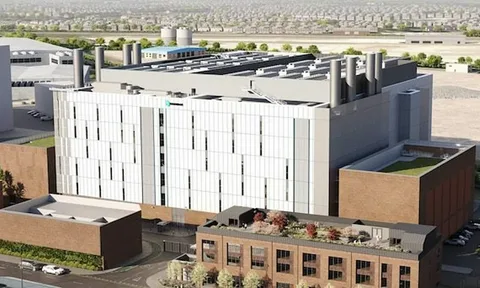
Meta Platforms is nearing completion of an almost $30 billion financing deal for its massive Hyperion data center project in Louisiana, in what would mark the largest private capital transaction in history, according to a Bloomberg News report on Thursday.

The financing package, led by Blue Owl Capital and Morgan Stanley, underscores the staggering scale of investment required to power next-generation artificial intelligence infrastructure. Meta and Blue Owl will split ownership of the site in Richland Parish, with Meta retaining a 20% stake, Bloomberg said, citing people familiar with the matter.

The structure involves more than $27 billion in debt and about $2.5 billion in equity through a special purpose vehicle (SPV). Meta itself will not take on the debt directly but will remain developer, operator, and tenant of the project, which is expected to be completed in 2029.

The deal builds on Meta’s recent $1.5 billion investment in a Texas data center and highlights the growing competition among so-called hyperscalers—including Amazon, Microsoft, and Alphabet—to expand capacity for AI computing workloads.

According to Bloomberg, the financing’s final stage was completed on October 16, when PIMCO anchored the bond issuance, structured under Rule 144A, with other investors taking smaller allocations of the debt, which matures in 2049.

Meta, Blue Owl, and Morgan Stanley have not yet commented on the report.

AI-driven data centre boom boosts ABB’s U.S. sales and orders

Swiss engineering giant ABB reported a strong third quarter as surging investment in data centres across the United States drives demand for its industrial robots, electrification products, and power solutions.

The company said new U.S. orders rose 27% in the third quarter, powered largely by the expansion of data centres needed to process artificial intelligence workloads. “It’s the normal standard business where there is strong demand,” said CEO Morten Wierod, noting the rise was not linked to U.S. import tariffs.

ABB generates about 7% of its revenue from data centres, up from 6% a year ago, and provides uninterruptible power supplies and electrification systems that keep critical servers online. Wierod said the AI boom is also driving broader electrification, forcing utilities and industrial sectors to increase investments.

Earlier this week, ABB announced a partnership with Nvidia to develop advanced infrastructure for next-generation data centres.

The company posted a 12% rise in operating EBITA to $1.74 billion, topping forecasts, while revenue grew 11% to $9.08 billion. Orders also climbed 12%. ABB’s shares initially rose 2.5% after the results before easing later in the session.

Chief Financial Officer Timo Ihamuotila, who will step down next year, said U.S. tariffs have had only a limited impact, costing “tens of millions” of dollars in profit, which the company has offset with price adjustments and efficiency gains. ABB currently manufactures about 75–80% of its U.S. products domestically, with plans to raise that to 90% through new factory investments.