Yazılar

Emerging AI Investment Opportunities Beyond Big Tech

The ongoing artificial intelligence (AI) revolution, described as the “biggest platform shift since electricity,” is predicted to create lucrative opportunities for smaller tech firms, according to Clare Pleydell-Bouverie, co-lead fund manager at Liontrust Asset Management.

In an interview with CNBC, Pleydell-Bouverie emphasized that the dominant players of the last tech cycle—referred to as the “Magnificent Seven,” which includes Alphabet, Amazon, Apple, Meta, Microsoft, Nvidia, and Tesla—may not necessarily lead in this new phase of technological transformation. Instead, emerging firms focused on AI applications and infrastructure are poised to become significant players.

“This year, we’ve concentrated on the AI infrastructure layer, which is essential for scaling this technology,” Pleydell-Bouverie stated. She highlighted sectors like silicon chip production, semiconductor equipment manufacturing, and network infrastructure as critical to enabling AI growth. Companies like Broadcom, Amphenol, and Arista Networks are vital in building the foundational layers of AI’s technological stack.

The “stack,” as described by Pleydell-Bouverie, includes several layers:

  1. AI Infrastructure: Firms providing hardware and connectivity, such as chips, cables, and networks.
  2. Foundation Model Providers: Companies creating large-scale machine-learning models, which she characterized as highly competitive and commoditized.
  3. AI Engineering Firms: Those enabling businesses to integrate AI into their operations and services.

While the infrastructure layer currently holds the most value, Pleydell-Bouverie foresees this shifting toward application and integration in the near future.

Nvidia’s Strategic Position in AI
Nvidia remains a standout in the AI space, which Pleydell-Bouverie compares to Apple’s dominance during the smartphone revolution. However, she argues that Nvidia is often misunderstood as merely a chip provider.

“Nvidia is positioning itself as the operating system for the next generation of AI-infused software,” she noted, pointing to the company’s strategic shift toward integrating software and hardware to power AI applications. Nvidia’s shares have surged by over 180% in 2024, fueled by demand for its advanced AI chips like Blackwell.

Pleydell-Bouverie sees Nvidia as the primary beneficiary of the AI boom in 2025, likening its current trajectory to Apple’s rise under Steve Jobs, who combined hardware innovation with software integration to dominate the tech landscape.

As AI continues to redefine industries, investors are encouraged to look beyond traditional Big Tech giants and explore opportunities in emerging firms that are reshaping the AI ecosystem.
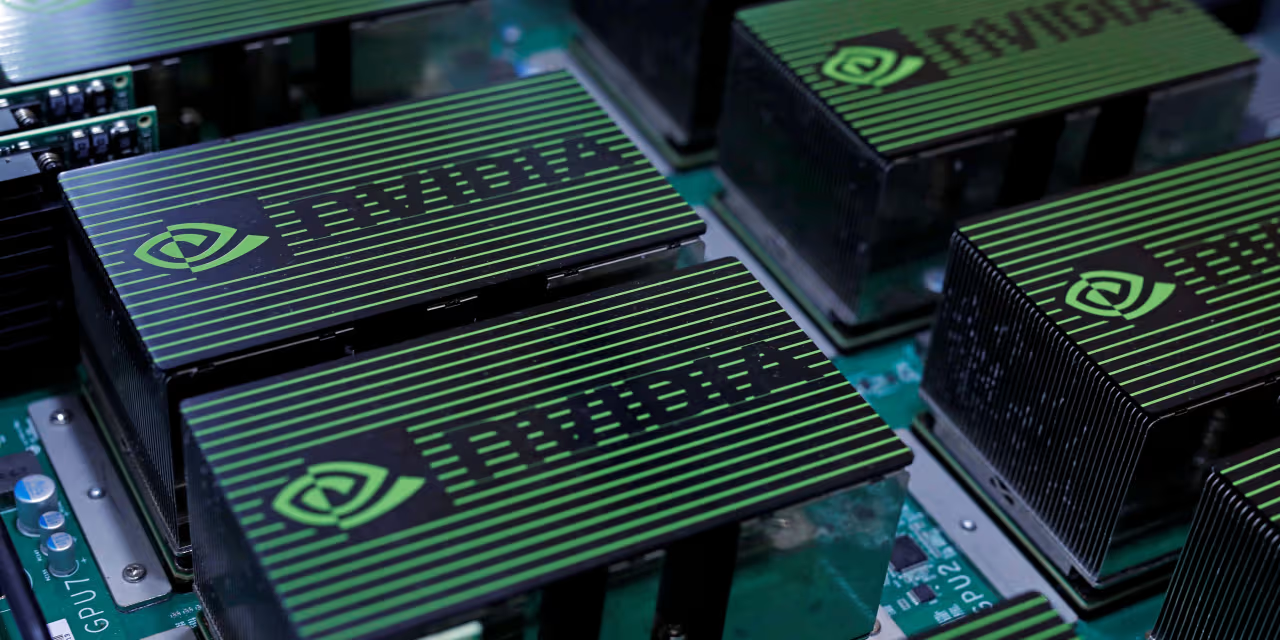

 

SoftBank to Receive Nvidia’s Latest Blackwell Chips for AI Supercomputer

SoftBank’s telecommunications unit in Japan will be the first to acquire Nvidia’s latest Blackwell-designed chips, marking a key step in the company’s ambition to harness artificial intelligence capabilities. The California-based chip giant made the announcement at a recent AI event in Tokyo, featuring both SoftBank Group CEO Masayoshi Son and Nvidia CEO Jensen Huang. SoftBank also plans to incorporate the Blackwell architecture in its upcoming supercomputer, as Son strengthens his group’s investment in AI through strategic acquisitions, including a stake in OpenAI and the purchase of chip startup Graphcore.

During a lively “fireside chat,” Huang recalled an instance when Son, already a visionary in AI, once proposed lending him the funds to buy Nvidia, a company the market undervalued at the time. “He wanted to lend me money to buy Nvidia—all of it. Now I regret not taking it,” Huang said, smiling. Son had made the offer shortly after acquiring Arm, a chip designer he later attempted to sell to Nvidia, though regulatory issues prevented the merger.

Over the years, Nvidia has transitioned from a primary focus on gaming graphics chips to becoming the global leader in AI chip technology, now powering much of the AI revolution. While Son has earned recognition as an early-stage investor in tech, with notable stakes in Alibaba and other successes, he has also faced setbacks, such as his high-profile investment in WeWork.

With telecom firms worldwide exploring new growth avenues, SoftBank and Nvidia are collaborating on a network to support both AI and 5G services, aligning their visions for the future. “It’s the same vision that we can smell, right? It’s like a wolf smell wolf,” Son joked about their shared outlook. Huang responded with humor, “I have two puppies. I don’t like that mental image,” drawing laughter from the audience.


Big Tech’s AI Investment Surge Stirs Investor Concerns Over Profitability

Big technology companies like Microsoft, Meta, and Alphabet are ramping up investments in AI infrastructure, sparking concerns on Wall Street over the returns on these large expenditures. As they aim to meet growing demand for AI applications, Microsoft and Meta revealed on Wednesday that their capital expenses are rising due to increased spending on AI infrastructure, with Alphabet also reporting sustained high expenditures earlier in the week. Amazon is expected to follow a similar path, set to report results on Thursday.

These AI investments are eating into the companies’ high margins, making profitability a key concern among investors. On Thursday, shares in these companies fell, reflecting investor anxiety about balancing long-term AI development costs with the need for short-term financial performance. Despite surpassing revenue and profit expectations for the July-September quarter, Meta’s stock dropped by more than 3%, while Microsoft fell 6%, and Amazon saw a 3% decline as well.

Analysts highlight the high costs associated with operating AI technology and expanding capacity. Beatriz Valle of GlobalData remarked, “It’s costly to run AI technology. Getting capacity is expensive.” This fierce competition for AI infrastructure could mean delayed returns on these investments. Microsoft’s quarterly capital expenses now exceed its full-year spending from just three years ago, while Meta’s quarterly spending aligns with its entire annual budget from 2017. Microsoft announced a 5.3% rise in capital spending, totaling $20 billion, and anticipates further spending increases in the coming quarters as it pursues its AI goals.

However, Microsoft also warned of potential slowdowns in growth for its cloud service, Azure, due to limitations in data center capacity, adding pressure to investor concerns. Analyst Gil Luria at D.A. Davidson pointed out the potential for a prolonged margin impact, noting that heavy investment years like this one could reduce margins by a percentage point for up to six years.

Capacity constraints are also affecting the broader tech industry, with chipmakers like Nvidia and AMD struggling to meet surging AI chip demand. AMD recently indicated that supply will likely remain tight into next year, further limiting cloud providers’ ability to expand AI capacity. Despite these challenges, Meta and Microsoft are doubling down on AI’s long-term potential, comparing today’s AI investments to the early days of cloud technology development.

Meta’s CEO Mark Zuckerberg emphasized that while building infrastructure may not satisfy short-term investor expectations, the potential rewards justify continued investment. He stated on Wednesday’s earnings call, “We’re going to continue investing significantly in this.”