Yazılar

Snapchat’s New AI Chatbot Sparks Concerns Over Privacy and Safety, Particularly Among Teens and Parents

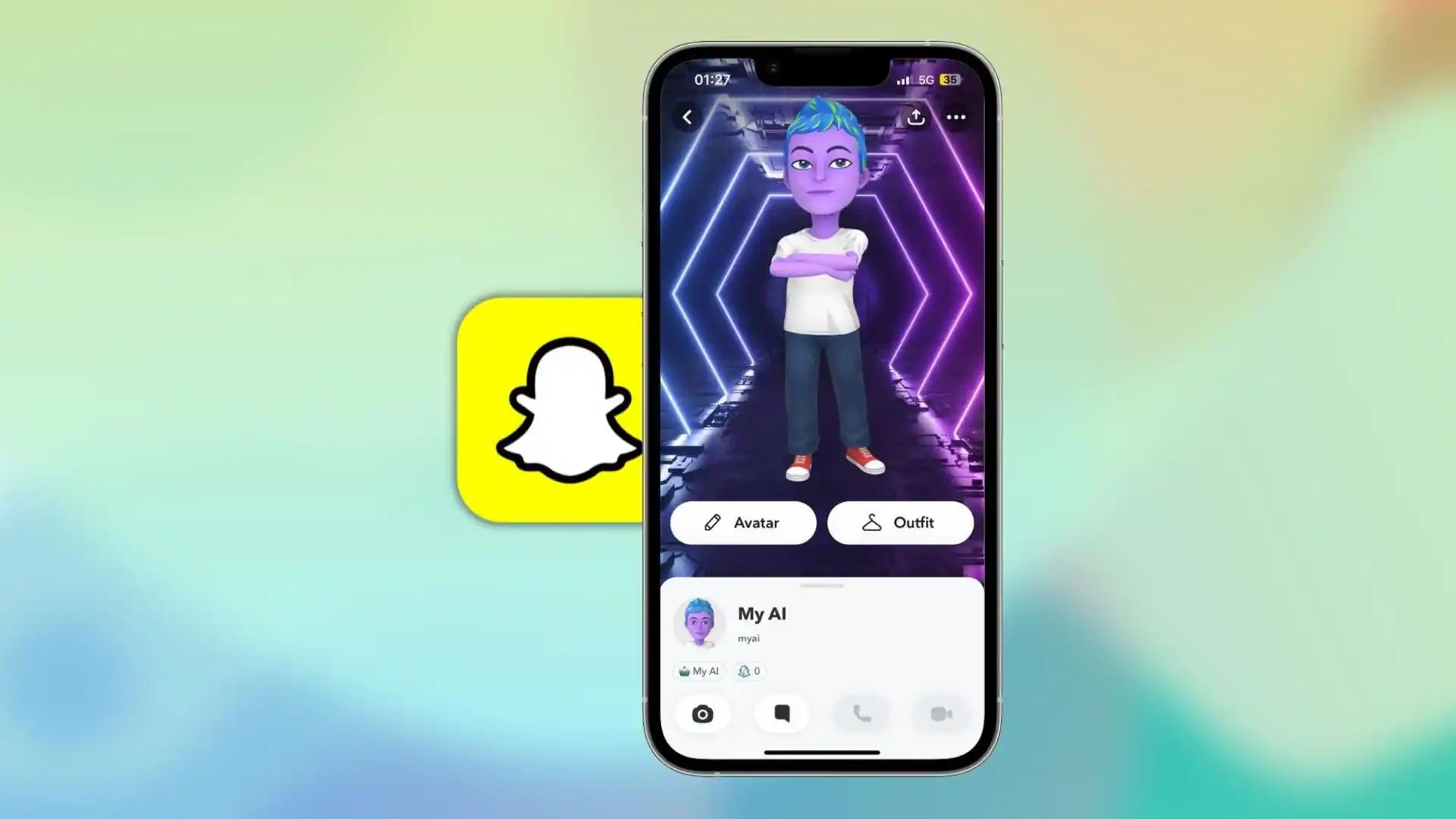
Snapchat’s recent introduction of its My AI chatbot has raised alarms among parents and some users, particularly due to the feature’s interaction with younger audiences. Launched last week, My AI is powered by ChatGPT and offers personalized recommendations, answers to questions, and the ability to converse. However, Snapchat’s version differs significantly from ChatGPT by allowing users to customize the chatbot’s appearance and integrate it into their existing conversations with friends, making it feel more personal and potentially blurring the line between human interaction and AI.

Lyndsi Lee, a mother from East Prairie, Missouri, expressed concerns about how her 13-year-old daughter might interact with My AI. “It’s a temporary solution until I know more about it and can set some healthy boundaries,” Lee said, highlighting the difficulty of teaching children how to distinguish between real and artificial interactions, especially when the AI chatbot looks and feels like a human.

Beyond parental concerns, Snapchat users have voiced their displeasure with the chatbot. Many criticize privacy issues, “creepy” conversations, and the inability to remove the feature from their chat feed unless they pay for the premium Snapchat+ subscription. Some users have reported disturbing interactions with the bot, such as misleading responses and unacknowledged contributions in collaborative activities, like songwriting.

In a letter to Snapchat’s executives, U.S. Senator Michael Bennet raised issues about the chatbot’s role in guiding younger users, particularly its potential to suggest deceptive behavior. This has raised fears about how easily vulnerable teens could be manipulated or misled by AI-powered tools on social media platforms.

While some users have found value in the chatbot, using it for homework help and personal advice, the mixed reactions point to the challenges and risks involved in integrating generative AI into widely used platforms like Snapchat, which is especially popular among teenagers.

Experts are also concerned about the psychological effects of AI on teenagers. Clinical psychologist Alexandra Hamlet warns that chatbots could reinforce negative emotional states, as teens might turn to AI for advice when in distress, further exacerbating their mental health challenges.

As AI tools like Snapchat’s My AI become increasingly integrated into apps popular with young people, experts advise parents to engage in open conversations with their children about how to responsibly use these technologies. Sinead Bovell, founder of WAYE, a startup focused on preparing youth for the future, emphasized that “chatbots are not your friend” and urged parents to educate their children about the risks of sharing personal information with AI.

The rapid advancement of AI technology calls for clearer regulations to ensure user safety and privacy, particularly when young users are involved.
 

China’s AI Balancing Act — Advancing Technology While Guarding Political Control

INTRODUCTION

China’s pursuit of artificial general intelligence (AGI) may place it ahead of the U.S. in the global race to develop cutting-edge AI technologies, but such advancements could also pose a threat to the political control of the Communist Party. This delicate balancing act is at the heart of China’s AI strategy, which seeks innovation while ensuring that AI developments do not undermine the party’s power.


KEY POINTS

The Race to AGI: A Geopolitical and Technological Dilemma

  • Max Tegmark’s Perspective:
    Max Tegmark, a prominent AI scientist and president of the Future of Life Institute, describes the competition between the U.S. and China to develop AGI as a “suicide race,” emphasizing the dangers of advancing AI without clear mechanisms to control it. He argues that the rapid pace of AI development could lead to uncontrollable consequences if left unchecked.
  • What is AGI?
    AGI refers to artificial intelligence that exceeds human cognitive abilities. While AI applications like ChatGPT are already popular, AGI would represent the next level — AI that can think and reason at human levels or beyond.
  • Tegmark’s Warning:
    He cautions that the rush to develop AGI may lead to unforeseen risks, as the technology might advance faster than humanity’s ability to regulate it. Tegmark suggests that the geopolitical race to dominate AGI could endanger all nations, with little regard for long-term control mechanisms.

China’s Stance on AGI

  • China’s Reluctance:
    According to Tegmark, China has little incentive to build AGI as it could threaten the Communist Party’s control over the country. In a conversation with Elon Musk, Chinese officials reportedly reacted strongly to the idea that AGI could undermine their political authority, leading China to establish its first AI regulations.
  • Domestic Control:
    Tegmark suggests that even without the U.S. pushing back, China would have reason to limit AGI development. The Chinese government values maintaining control over its technological advancements, including AI.
  • China’s AI Regulations:
    China has already implemented strict regulations on generative AI, with chatbots in the country avoiding topics related to politics and censorship, ensuring that AI aligns with Beijing’s ideological stance.

China’s AI Strategy

  • Balancing Innovation and Control:
    AI is a key strategic priority for China. Major Chinese tech firms, including Alibaba, Huawei, and Tencent, have been investing heavily in AI research and development. However, the government’s strict regulatory approach ensures that the technology does not threaten political stability. This strategy is expected to continue, particularly in the development of AGI.
  • Dual Lens View:
    Experts suggest that China views AI development through two lenses: geopolitical power and domestic economic growth. While aiming to shift the global power balance, China also hopes to leverage AI to enhance government efficiency and boost business applications within the country.

U.S.-China AI Battle

  • Geopolitical Tensions:
    The U.S. and China are locked in a technological battle, with the U.S. attempting to restrict China’s access to critical technologies, particularly semiconductors used in AI training. In response, China is building its own semiconductor industry to lessen dependence on foreign suppliers.
  • The AI Arms Race:
    Despite Tegmark’s warnings about the dangers of an AGI arms race, geopolitics remains at the center of the U.S.-China relationship. The race for AI supremacy is not only about technological innovation but also about securing global influence.

International Cooperation on AI Regulation

  • The Need for Regulation:
    Experts, including Tegmark, advocate for global cooperation to establish safety standards around AI, particularly AGI. Both the U.S. and China face similar risks in developing uncontrollable AI and may need to implement national safety measures to protect against unintended consequences.
  • Potential for International Cooperation:
    There is a growing recognition that AI poses global challenges that cannot be tackled by one country alone. Tegmark envisions a future where nations cooperate to establish global AI regulations, similar to how the International Atomic Energy Agency governs nuclear technology. Some Chinese policymakers are already calling for such a framework.

CONCLUSION

As China pursues cutting-edge AI technologies, including AGI, it faces a delicate balance between fostering innovation and ensuring that AI does not undermine the Communist Party’s authority. The race for AI dominance, particularly between the U.S. and China, carries significant risks, and experts are calling for more international cooperation and regulation to mitigate the dangers of uncontrollable AI. China’s focus on AI is not just about technological advancement; it is also about maintaining its political power while engaging in a global competition for influence.


Canadian News Companies Sue OpenAI Over Alleged Copyright Violations

Five Canadian news media organizations—Torstar, Postmedia, The Globe and Mail, The Canadian Press, and CBC/Radio-Canada—filed a legal action against OpenAI on Friday, alleging the AI company unlawfully used their content to develop its products. This lawsuit adds to a growing wave of legal challenges against generative AI firms by creators and copyright holders worldwide.

In a joint statement, the news companies accused OpenAI of scraping substantial portions of their journalism without permission or compensation. “Journalism is in the public interest. OpenAI using other companies’ journalism for their own commercial gain is not. It’s illegal,” they declared.

Legal and Financial Demands

The plaintiffs filed an 84-page claim in Ontario’s Superior Court of Justice, seeking damages and a permanent injunction to prevent OpenAI from further use of their intellectual property. The statement argues that OpenAI has “brazenly misappropriated” the companies’ copyrighted materials for commercial purposes without obtaining legal authorization or offering payment.

“The News Media Companies have never received from OpenAI any form of consideration, including payment, in exchange for OpenAI’s use of their works,” the filing states.

OpenAI’s Response

OpenAI defended its practices, stating its models are trained on publicly available data under principles of fair use and international copyright law. A company spokesperson highlighted its collaborative efforts with publishers, including offering mechanisms for opting out and attributing content in ChatGPT’s search features.

The lawsuit does not name Microsoft, OpenAI’s primary backer, which has been implicated in similar cases. Notably, Elon Musk recently expanded a separate lawsuit to include Microsoft, alleging monopolistic practices and illegal data acquisition for generative AI development.

Broader Implications

This case represents a critical juncture in the ongoing clash between AI companies and copyright owners. Similar lawsuits have been filed by authors, visual artists, and music publishers seeking to establish clearer legal boundaries around data use for AI training.

Recently, a New York federal judge dismissed a lawsuit against OpenAI brought by news outlets Raw Story and AlterNet. This decision may influence the Canadian court’s ruling, though Canadian copyright laws differ in scope and interpretation.

The outcome of this case could set a significant precedent for how AI companies interact with content creators and may prompt broader regulatory discussions around intellectual property rights in the digital age.