Yazılar

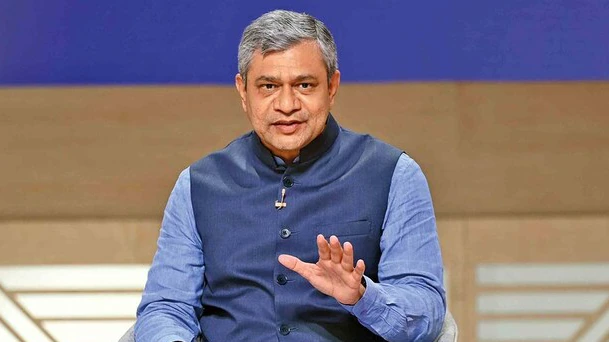
Union Minister Ashwini Vaishnaw and Meta’s Chief AI Scientist Explore AI Collaboration Opportunities

Union Information and Broadcasting Minister Ashwini Vaishnaw held a significant meeting with Meta’s Chief AI Scientist, Yann LeCun, on Saturday, focusing on collaborative opportunities in artificial intelligence (AI). This engagement underscores India’s commitment to harnessing AI technology to boost both industry growth and educational advancement. The meeting also highlights Meta’s interest in supporting India’s AI initiatives, aligning with the government’s broader vision for AI’s role in the nation’s future.

In a social media post on X, Minister Vaishnaw shared the progress of India’s AI Mission, noting how it has successfully fostered partnerships across industry, government, and academia. The AI Mission is a substantial push from the Indian government aimed at creating a collaborative ecosystem, where cutting-edge AI technology can be developed and applied to solve real-world problems. These collaborations are not only intended to fuel innovation but also to ensure that India builds a sustainable AI infrastructure.

One major highlight from the meeting was the collaboration between Meta and IIT Jodhpur, which is set to launch a Center of Excellence (CoE) in Generative AI. This CoE will focus on advancing generative AI research, potentially setting India as a hub for development in this field. Generative AI, known for its transformative applications in language models, media creation, and more, is an area where India seeks to establish a strong foothold. With Meta’s expertise and IIT Jodhpur’s academic resources, this initiative could mark a leap forward in the nation’s AI capabilities.

Additionally, Vaishnaw pointed to the YuvAI Skilling program, a partnership between Meta and the All India Council for Technical Education (AICTE), aiming to train 100,000 students in large language models (LLMs) and other foundational AI skills. This program is expected to empower the next generation of AI professionals in India, creating a highly skilled workforce that can drive innovation and meet the rising demand for AI expertise in the global market. Through such initiatives, India is not only advancing its AI agenda but is also positioning itself as a global player in the AI domain

Google Unveils Secure AI Framework and Shares Best Practices for Safe Model Deployment

Google has introduced a new tool aimed at improving the safety and security of AI model deployment, offering a framework designed to mitigate risks associated with artificial intelligence. Last year, the company unveiled its Secure AI Framework (SAIF), a set of guidelines created to help both Google and other enterprises build safer large language models (LLMs). The newly launched SAIF tool expands on these guidelines by providing a questionnaire-based system that generates a personalized checklist for developers and enterprises, offering actionable insights on how to enhance the security of their AI models.

This new tool is specifically designed to guide AI developers through the complexities of deploying AI models, helping them identify potential risks and implement best practices for safeguarding against those risks. Google’s blog post highlights that, while AI models can bring about tremendous benefits, they also come with a range of risks, including the generation of inappropriate content, deepfakes, and even misinformation. The tool is geared towards minimizing these risks and ensuring that AI technologies are deployed responsibly and ethically.

One of the major concerns in AI development is the potential for “jailbreaking,” where malicious actors manipulate AI models to make them perform tasks they were not originally designed to carry out. Google’s tool seeks to address this issue by providing developers with questions related to critical areas such as model training, tuning, and evaluation, as well as access control for models and data sets. It also covers preventive measures for attacks and harmful inputs, making it a comprehensive tool for ensuring that AI models are both secure and reliable.

The SAIF tool not only reflects Google’s commitment to responsible AI development but also underscores the need for all organizations involved in AI to adopt rigorous security protocols. With the increasing power and influence of AI technologies, it is vital for companies to consider the ethical implications of their models and take steps to safeguard against misuse. By sharing these best practices and offering the SAIF tool, Google is setting a benchmark for industry standards and encouraging a safer, more secure approach to AI model deployment across the globe.

OpenAI Set to Launch GPT-4 Successor Before Year-End, Reports Suggest

OpenAI is reportedly preparing to unveil the successor to its GPT-4 model by the end of this year, marking a significant milestone in the company’s AI development. According to recent reports, this next-generation model, internally referred to as “Orion,” is set to be more advanced and powerful than its predecessor. While a formal release is anticipated for December 2024, it is expected that Orion will initially be available only to a select group of enterprise partners, rather than being made widely accessible to the public right away.

The Verge has indicated that OpenAI is targeting December 2024 for Orion’s release, with sources familiar with the project confirming the model’s internal codename. Initially, rumors pointed to the model being named “Strawberry,” but it has since been clarified that this referred to the GPT-4o model, an updated version of GPT-4. Unlike GPT-4 and its previous updates, Orion is expected to represent a true leap forward in terms of architecture and capabilities, rather than simply being a refinement of existing models.

OpenAI has already released several iterations of GPT-4, including GPT-4 Turbo and GPT-4o, which were essentially optimized versions of the original GPT-4 architecture. These models incorporated improvements in efficiency and functionality but did not introduce groundbreaking changes to the underlying framework. Orion, however, is expected to break new ground, with advancements that could set the stage for the company’s next major leap in AI technology—likely branded as GPT-5.

This move suggests that OpenAI is preparing to shift toward a new era of AI capabilities, with models like Orion pushing the boundaries of what large language models can achieve. Given the increasing reliance on AI across industries, the launch of such an advanced model is set to have significant implications, both for the development of future AI applications and for the broader AI landscape. As the company works closely with its enterprise partners, Orion may soon become an integral part of many business processes, shaping the future of AI interactions in both commercial and technical domains.