
Yazılar

VanEck Expands Focus with Investments in Crypto and AI Startups

With the growing landscape of cryptocurrency and artificial intelligence (AI) startups, VanEck, a leading New York-based investment management firm, has committed $30 million (roughly Rs. 258 crore) to foster innovation in these sectors. As startups in crypto and AI proliferate, the demand for investment to fuel their growth and development has surged. VanEck, whose market cap currently stands at $26.9 billion (roughly Rs. 2,25,869 crore), is positioning itself to capitalize on this trend through its new initiative, VanEck Ventures. This venture arm aims to nurture early-stage startups that show promise in transforming the future of finance, technology, and digital assets.

VanEck Ventures officially launched this week, aiming to streamline investment efforts for startups at the forefront of digital currency and AI technology. According to VanEck’s announcement, the dedicated investment pool is part of the firm’s strategy to stay ahead of industry trends and foster emerging technology’s potential. The move reinforces VanEck’s commitment to high-growth areas, reflecting the company’s intent to diversify beyond traditional asset management and into cutting-edge domains that have the potential to reshape multiple sectors.

Jan van Eck, CEO of VanEck, remarked on the parallels he sees between gold investment in the late 1960s and Bitcoin today. VanEck was among the first to recognize gold’s potential as a strategic asset back in 1968, and it continues to be at the forefront of innovation in asset management. The CEO emphasized that Bitcoin, now considered the most valuable cryptocurrency, embodies similar transformative potential. Currently trading at $61,094 (around ₹51.2 lakh) according to CoinMarketCap, Bitcoin serves as a key indicator of digital currency’s mainstream adoption, underscoring VanEck’s belief in cryptocurrency’s long-term value.

The establishment of VanEck Ventures signals the firm’s confidence in the future of digital assets and AI-driven solutions. With this funding, VanEck aims to help startups bridge the gap between initial concept and full-scale execution. The firm’s strategic support of both crypto and AI startups not only highlights its progressive approach to asset management but also its dedication to fostering a future where technology and finance converge in meaningful ways.
Nvidia CEO Highlights Need for Affordable Computing to Drive ‘Reasoning’ AI

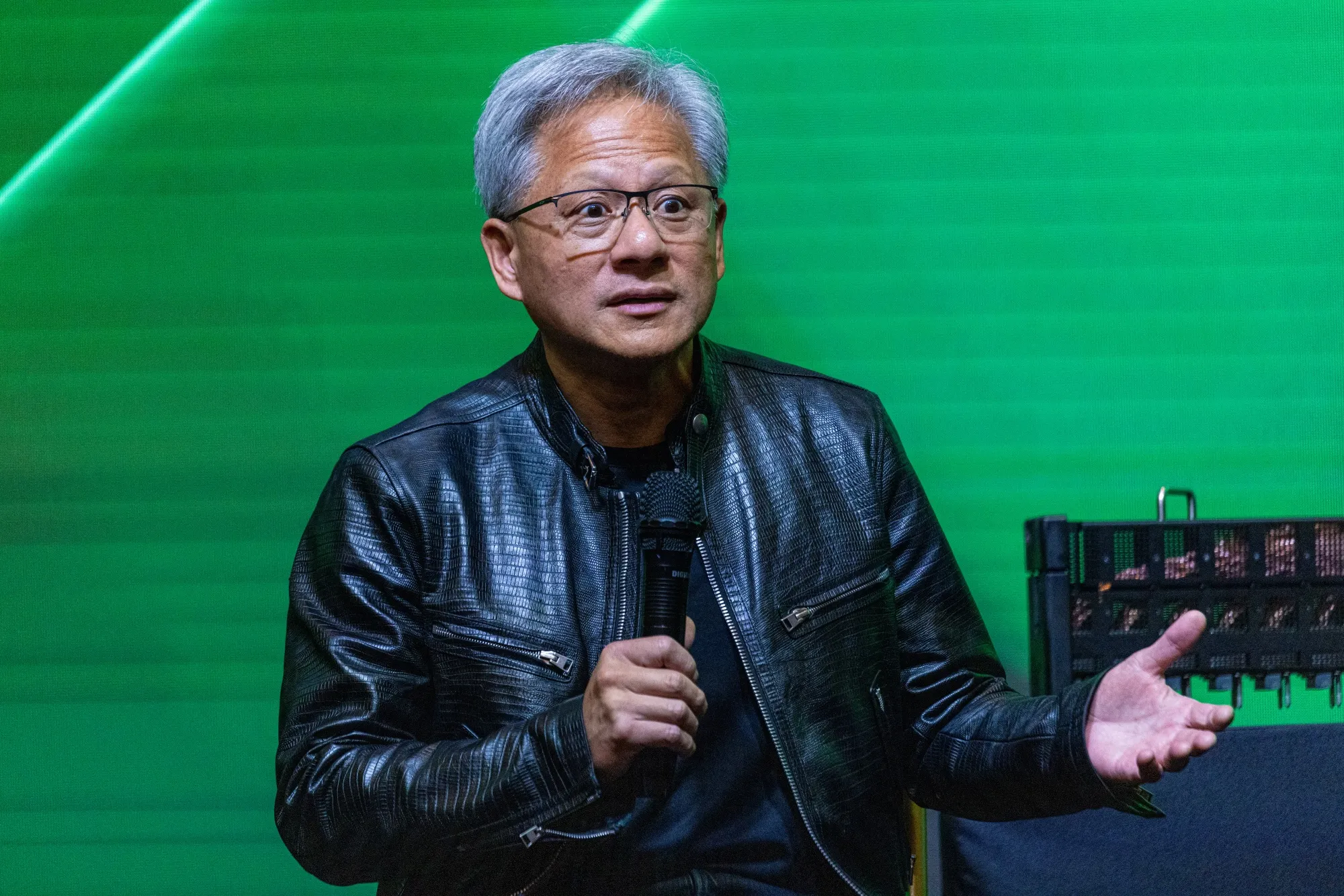
Nvidia CEO Jensen Huang has outlined a vision for the future of Artificial Intelligence (AI), where AI systems will be capable of “reasoning” rather than simply responding to inputs. Speaking during a podcast with Arm Holdings CEO Rene Haas, Huang emphasized that achieving this advanced level of AI will depend on making computing more affordable. Current AI tools, like OpenAI’s ChatGPT, which Huang personally uses daily, are powerful but still limited in their ability to carry out complex reasoning processes. To reach the next stage, AI will need to be able to analyze queries through hundreds or even thousands of steps, reflecting on its conclusions.

This capability would represent a significant leap forward from current AI models, which are highly efficient at generating responses but lack the depth of self-reflection and reasoning. Huang explained that future AI systems will differ by being able to process and interpret information with a much greater degree of complexity. This new form of AI will be more dynamic, capable of reasoning through multiple scenarios before arriving at conclusions, making it more adaptive and intelligent.

To make this vision a reality, Nvidia plans to continue enhancing its hardware capabilities. Huang stated that Nvidia will increase the performance of its chips by two to three times annually, while keeping the cost and energy consumption at current levels. This continuous improvement in chip technology is essential to lowering the cost of computing and making advanced AI systems more accessible. Huang believes that this will lay the foundation for AI models capable of handling inference, or the ability to spot patterns and draw conclusions, at a much more sophisticated level.

The transition to reasoning AI will be transformative, reshaping how AI systems operate and interact with the world. However, Huang noted that this leap will only be possible once the infrastructure required to support such advanced computation becomes affordable. With Nvidia at the forefront of this technological advancement, the company is positioning itself to play a pivotal role in making reasoning AI a mainstream reality.

Gemini AI Assistant Rumored to Gain Integration with WhatsApp and Spotify Through New Extensions

Gemini AI Assistant on Android is rumored to receive new integration features, making it a more versatile tool for users. Initially introduced as an AI-driven alternative to Google Assistant, Gemini was designed to answer queries, generate text, and perform web searches. However, its lack of integration with third-party apps limited its usefulness in everyday tasks. To address this, the tech company behind Gemini introduced extensions that allowed the AI assistant to interact with specific applications. Now, new reports suggest that Gemini will soon support extensions for popular apps like WhatsApp and Spotify, significantly enhancing its utility.

Expanding Its Functionalities Through Extensions
Recent reports indicate that Gemini’s capabilities are set to broaden with the inclusion of these new app integrations. A tipster known as AssembleDebug revealed to Android Authority that the update was spotted in the Google app’s Android beta version 15.40.31.29. While the feature isn’t yet live for beta testers, the update could allow Gemini to perform a variety of tasks within WhatsApp and Spotify. These could include sending messages, managing playlists, or accessing user content directly through voice commands, making the assistant more useful for users seeking hands-free operation across different apps.

The Role of Extensions in Enhancing the Assistant
The rollout of Gemini’s extension capabilities reflects a trend among AI assistants to become more integrated into the digital ecosystem. The extension for WhatsApp, for example, could allow users to quickly send or receive messages and manage contacts, while Spotify integration could enable playlist curation or song selection via voice commands. This kind of flexibility could elevate Gemini from a general-purpose assistant to a more personalized digital companion, helping users manage multiple apps without needing to open them individually.

What Lies Ahead for Gemini
If the rumored updates are successful, Gemini could potentially compete with other AI assistants that already offer extensive third-party app integration. As AI becomes more embedded into mobile operating systems, this development suggests that the future of AI assistants like Gemini may lie in how well they can connect users with the apps they rely on daily.