
Yazılar

Britain Needs AI Stress Tests for Financial Services, Lawmakers Say

British lawmakers are urging regulators to introduce artificial intelligence-specific stress tests for the financial sector, warning that current oversight is not sufficient to protect consumers or ensure market stability as AI adoption accelerates.

In a report on AI in financial services, the Treasury Committee said the Financial Conduct Authority and the Bank of England should move beyond a “wait and see” approach. The committee recommended running AI-focused stress tests to help firms prepare for potential market shocks triggered by automated systems.

Committee chair Meg Hillier said she was not confident the financial system could withstand a major AI-related incident, calling the situation worrying as increasingly autonomous systems influence decisions. Around three-quarters of UK financial firms now use AI in core functions such as insurance claims processing and credit assessments.

While acknowledging benefits, the report warned of significant risks, including opaque credit decisions, exclusion of vulnerable consumers through algorithmic targeting, fraud, and the spread of unregulated financial advice via AI chatbots. Lawmakers also highlighted potential threats to financial stability, including reliance on a small number of U.S. technology providers and the risk that AI-driven trading could amplify herding behaviour in markets.

The committee urged the FCA to issue guidance by the end of 2026 on how consumer protection rules apply to AI and what level of understanding senior managers must have of the systems they oversee. The FCA said it would review the report, while the Bank of England said it would consider the recommendations. Separately, Britain’s finance ministry appointed senior figures from Starling Bank and Lloyds Banking Group to help guide AI adoption in financial services.
Google-Backed Isomorphic Labs Delays Clinical Trial Timeline

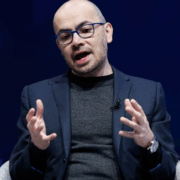
Isomorphic Labs, an artificial intelligence-driven drug discovery company backed by Google, now expects to begin its first clinical trials by the end of 2026, marking a delay from its earlier plans, founder and CEO Demis Hassabis said on Tuesday.

Speaking at the World Economic Forum in Davos, Hassabis said the revised timeline reflects the complexity of translating AI-designed drug candidates into human trials. Last year, he had indicated that Isomorphic aimed to have its first AI-developed medicines enter clinical testing by the end of 2025.

Founded in 2021, Isomorphic Labs was spun out of Google DeepMind, which Hassabis also leads. The company applies AI to accelerate drug discovery by improving how potential medicines are designed and evaluated.

Interest in AI-powered drug development has surged as pharmaceutical companies look to shorten research timelines and reduce costs. One of DeepMind’s most prominent achievements, AlphaFold, demonstrated AI’s potential by accurately predicting protein structures, a key challenge in biology.

Isomorphic raised $600 million in its first external funding round last year, led by Thrive Capital, underscoring strong investor confidence despite the longer path to clinical trials.

Mubadala Targets Opportunities in AI and Robotics, CEO Says

Abu Dhabi sovereign wealth fund Mubadala is stepping up its focus on artificial intelligence and robotics, identifying the convergence of the two as a key driver of future industrial growth, according to its group chief executive.

Speaking at the World Economic Forum in Davos, Khaldoon Al Mubarak said the intersection of AI and robotics could significantly reshape manufacturing and broader industry. He noted that the pace of technological change has shortened traditional investment horizons, making even five-year outlooks difficult to predict.

With assets of about $330 billion, Mubadala has expanded its technology portfolio in recent years, building positions across semiconductors, data centres, and AI infrastructure. Al Mubarak said robotics is becoming increasingly relevant as AI capabilities mature and begin to translate into physical automation.

Beyond industrial technology, Mubadala is also prioritising investments in life sciences, healthcare, and biotechnology, sectors the CEO said are likely to be transformed by AI-driven innovation. He added that the fund is preparing for a new phase of growth in Africa, as it looks to diversify geographically while aligning with long-term structural trends.