
Yazılar

Broadcom Names Alphabet Executive Amie Thuener as CFO

Broadcom has appointed Amie Thuener as its next chief financial officer, effective June 12, replacing current CFO Kirsten Spears.

Thuener currently serves as vice president, corporate controller and chief accounting officer at Alphabet Inc.. She brings extensive experience in financial reporting, corporate governance and AI-related transactions, having also previously worked at PricewaterhouseCoopers.

Broadcom CEO Hock Tan highlighted Thuener’s background in managing complex global operations as a key factor in her appointment.

Outgoing CFO Kirsten Spears, who has held the role since 2020, will remain as an advisor for nine months to ensure a smooth transition. During her tenure, Broadcom completed major strategic moves, including the $69 billion acquisition of VMware.

Broadcom continues to expand its role in the artificial intelligence ecosystem, working with partners such as Google and OpenAI on custom chip development. The company recently projected its AI-related chip revenue could exceed $100 billion next year, driven by strong demand despite ongoing supply chain constraints.
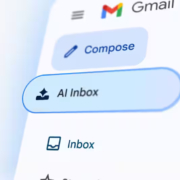

Gmail’s AI Inbox Feature With Smart Prioritisation Rolls Out for Google AI Ultra Subscribers in the US

Gmail is rolling out its AI-powered Inbox feature to select Google AI Ultra subscribers in the US, expanding on the Gemini-driven updates it introduced earlier this year. The new feature adds a dedicated AI view within Gmail that highlights priority emails, surfaces actionable tasks, and groups less urgent updates into summaries. It is said to be designed to reduce inbox clutter and help users quickly focus on what matters most, building on Google’s broader push to integrate AI more deeply across its email experience.

Gmail’s AI Inbox Feature Splits Email Into Two Sections
Gmail said in an X post that it has introduced an AI-powered Inbox with smart prioritisation and personalised briefings, now rolling out in beta to Google AI Ultra subscribers in the US. The new AI Inbox appears as a separate view alongside the traditional inbox and is designed to surface priority information, rather than requiring users to scan individual emails.

The AI Inbox feature splits emails into two sections. While suggested to-dos highlight messages that need action, such as bills, reminders, or deadlines, and show what needs to be done, topics to catch up on cover less urgent updates, grouping things like travel plans, events, and purchases into quick summaries. These appear as interactive cards that link back to the original emails.

AI Inbox was first introduced to a small group of testers in January and is now rolling out in beta. It runs on Gemini 3 and processes data within what Google describes as a dedicated privacy environment. Users can turn off AI features through Gmail settings, and the company says personal Workspace data is not used to train its AI models.


NeurIPS Reverses Ban on Sanctioned Entities After China Backlash

NeurIPS, one of the world’s leading artificial intelligence conferences, has reversed a controversial policy that would have banned research papers from entities under U.S. sanctions, following strong backlash from China.

The policy, initially introduced earlier in the week, aimed to expand restrictions beyond the U.S. Treasury’s sanctions list. It triggered immediate criticism, particularly from China Association for Science and Technology, which announced a boycott and halted funding support for members planning to attend the conference.

NeurIPS later stated that the broader restriction had been issued in error due to a miscommunication with its legal team. The organization clarified that submission limits would apply only to entities listed under the U.S. Specially Designated Nationals (SDN) list, not all sanctioned organizations.

The conference issued a public apology, acknowledging the disruption caused within the global research community. The incident underscores growing tensions between the United States and China in the field of artificial intelligence, where academic collaboration is increasingly influenced by geopolitical factors.

NeurIPS remains a key global platform where researchers, companies and experts present peer-reviewed AI research and discuss technological advances each year.