Yazılar

Waymo Recalls 1,200 Self-Driving Vehicles Over Barrier Collision Risks

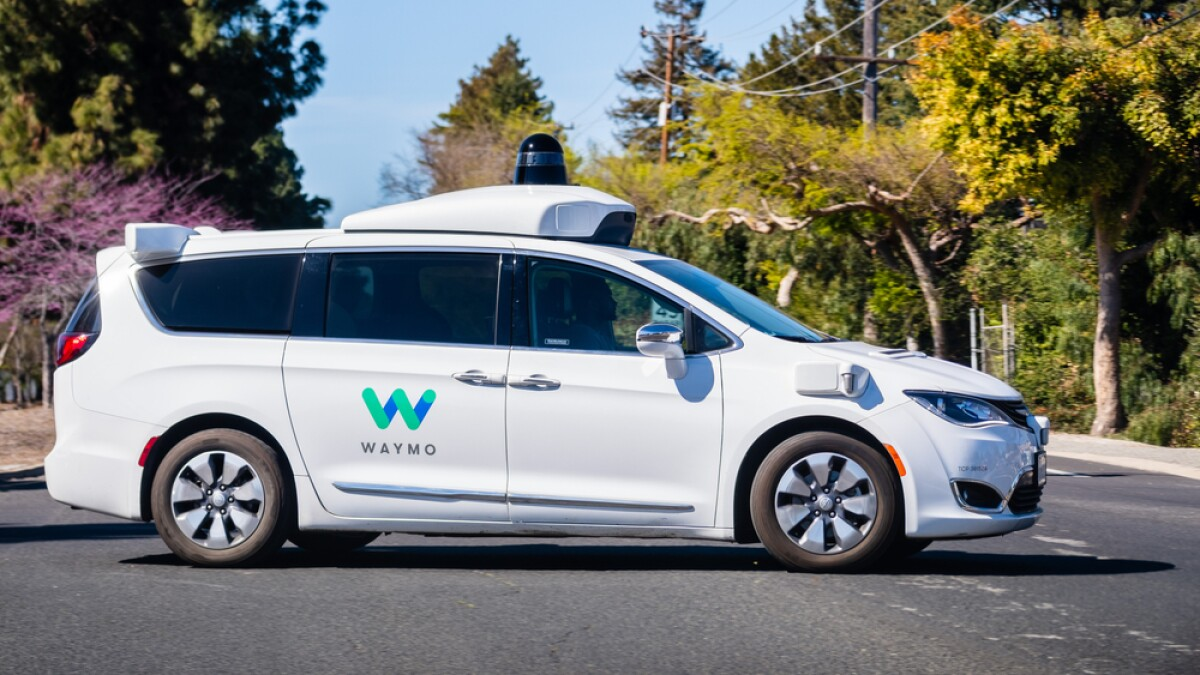
Waymo, Alphabet’s autonomous vehicle division, is recalling 1,212 self-driving vehicles in the U.S. to fix a software issue that led to minor collisions with chains, gates, and other stationary barriers, the company disclosed on Wednesday.

The recall follows a National Highway Traffic Safety Administration (NHTSA) probe initiated in May 2024, investigating reports that Waymo’s robotaxis had engaged in unsafe driving behaviors and failed to avoid clearly visible objects.

Key Details of the Recall:

  • Number of vehicles affected: 1,212 running the fifth-generation automated driving system.

  • Issue: Software misinterpretation of fixed road barriers, such as chains, poles, and gates.

  • Known incidents: 16 minor collisions (2022–late 2024), no injuries reported.

  • Resolution: A software update initiated in November 2024 and fully deployed by December.

  • Total Waymo fleet: Over 1,500 vehicles currently active in San Francisco, Los Angeles, Phoenix, and Austin.

  • Expansion plans: Services launching soon in Atlanta, Miami, and Washington, D.C.

Our record of reducing injuries over tens of millions of fully autonomous miles driven shows our technology is making roads safer,” Waymo said.

Ongoing Scrutiny

  • The NHTSA investigation remains open, focusing on multiple incidents where Waymo vehicles collided with obvious obstacles that a human driver would typically avoid.

  • In a similar trend, self-driving rivals like GM’s Cruise and Amazon’s Zoox have also been hit with recalls:

    • Cruise was penalized after a serious pedestrian injury in 2023, prompting GM to slash funding.

    • Zoox recalled 270 vehicles last week after a Las Vegas crash involving an unoccupied robotaxi.

Waymo’s Recent Recall History

  • February 2024: 444 vehicles recalled due to faulty predictions of towed vehicle movement.

  • June 2024: 670+ vehicles recalled after a collision with a wooden utility pole in Phoenix.

Despite the recent setbacks, Alphabet shares rose 4% on Wednesday, as investors focused on the broader AI and mobility potential of Waymo.

The recall underscores both the promise and fragility of autonomous driving technology, as companies balance innovation with public safety and regulatory compliance in increasingly complex urban environments.

CFPB Ends Supervision of Google Payment, Prompting Google to Drop Lawsuit

The U.S. Consumer Financial Protection Bureau (CFPB) has officially withdrawn its supervisory designation over Google Payment Corp, reversing a Biden-era initiative aimed at extending oversight to nonbank financial services provided by Big Tech companies.

The decision, first reported by Bloomberg News and confirmed by a Google spokesperson, ends months of legal conflict between the regulator and Alphabet’s financial unit. In response, Google will drop its lawsuit against the CFPB.

The CFPB initially announced in December 2024 that it would begin supervising Google Payment, claiming that the company’s financial services posed risks to consumers. Google promptly challenged the move in court, arguing that the claims were based on a discontinued peer-to-peer (P2P) payment product and a small number of unsubstantiated complaints.

Russell Vought, acting director of the CFPB under the Trump administration, defended the reversal in a May 7 memo, calling the supervision “an unwarranted use of the Bureau’s powers and resources.”

Google spokesperson José Castañeda welcomed the decision, stating:

It didn’t make sense for the CFPB to supervise a product that never posed any risks and is no longer available in the U.S. We appreciate their common-sense decision to drop this issue.”

Google discontinued its U.S. version of the Google Pay P2P service in June 2024, citing business reasons, well before the CFPB’s supervisory action was announced.

Under the Biden administration, the CFPB had expanded its focus to include tech-driven financial platforms, citing the growing role of companies like Apple, Google, and PayPal in managing consumer transactions outside traditional banking.

The end of the supervision marks a significant policy shift under the Trump administration, reflecting a broader rollback of regulatory scrutiny over nonbank fintech services.

Apple’s AI-Powered Safari Search Plans Challenge Google’s Online Dominance

Apple’s move to introduce AI-powered search options in its Safari browser is emerging as a significant challenge to Google’s dominance in online search, with major implications for the tech and digital advertising landscape.

According to reports, Apple is “actively looking at” overhauling Safari by integrating new AI-based search alternatives such as OpenAI and Perplexity AI. This strategy directly targets Google, whose lucrative advertising business heavily depends on iPhone users searching via Safari — a privilege for which it reportedly pays Apple about $20 billion annually.

The development rattled investors, sending shares of Google-parent Alphabet (GOOGL) down 7.3% and erasing nearly $150 billion from its market valuation. Apple’s own stock dipped 1.1% on the same day.

Apple executive Eddy Cue testified during an antitrust case against Google that search activity on Safari had declined last month for the first time, as more users began relying on AI tools for information. This trend, if sustained, could mark a fundamental shift in consumer behavior — away from traditional keyword search engines and toward conversational AI and generative search technologies.

Google responded by asserting it continues to see growth in total search queries, including those from Apple devices, attributing the increase to tools like voice and visual search and newer features like “AI Overviews” that summarize results at the top of the search page. The company also plans to integrate its Gemini AI model into Apple devices through a potential deal expected by mid-2025.

Still, analysts warn that the end of Google’s default search position on Safari could have serious repercussions. Gil Luria of D.A. Davidson noted that if advertisers begin shifting budgets to competing AI-driven search engines, Google’s market share and revenue could suffer substantially.

Meanwhile, platforms like ChatGPT and Perplexity are gaining traction rapidly. ChatGPT, for instance, logged over 1 billion weekly searches in April and reported more than 400 million weekly active users in February.

The U.S. Department of Justice, which has filed multiple antitrust suits against Google, proposes banning exclusive deals like the one between Apple and Google as part of broader efforts to increase competition in the search market.

As generative AI reshapes how people seek and consume information, Apple’s Safari updates could open the door to a new era of search — one where Google is no longer the default.