Yazılar

Tech Leaders Congratulate Donald Trump on Presidential Election Victory

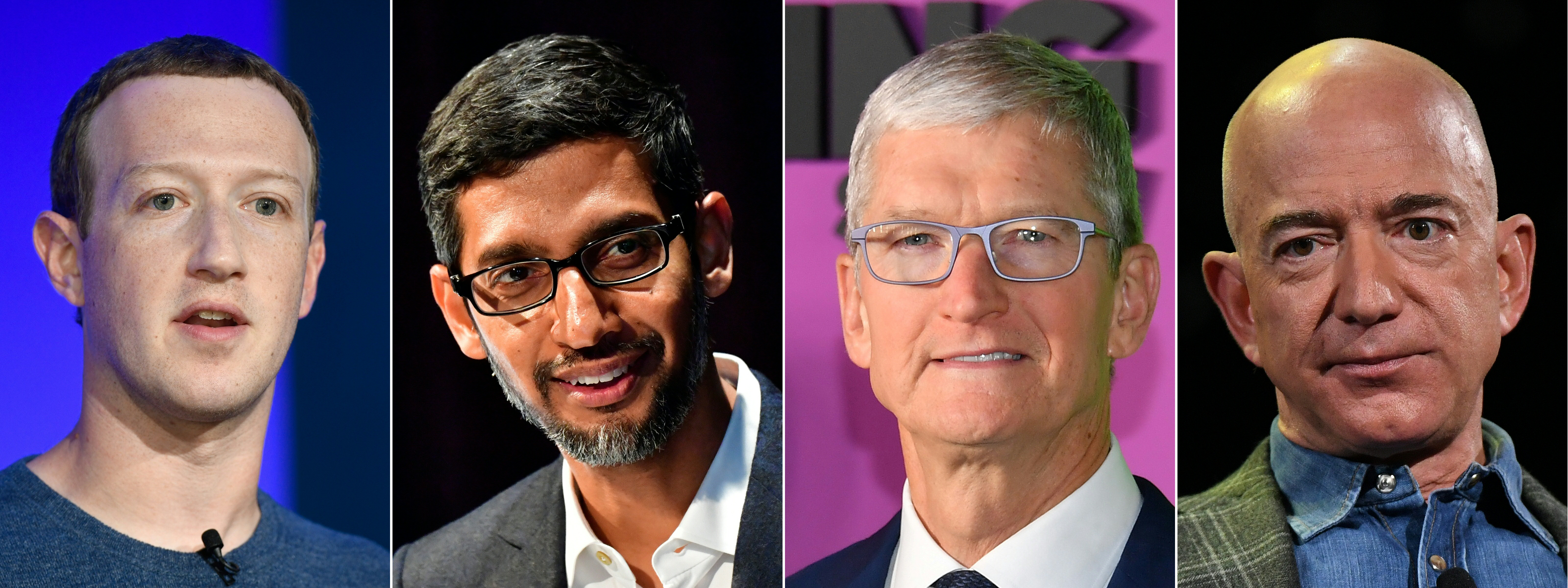
Several high-profile tech CEOs extended their congratulations to President-elect Donald Trump and Vice President-elect JD Vance following Trump’s win in the U.S. presidential election. These statements, posted on social media, expressed support for Trump’s return to the Oval Office and emphasized a shared focus on technology advancement and economic growth.

Amazon
Jeff Bezos, Amazon’s founder and executive chairman, congratulated Trump in a post on X, calling his win an “extraordinary political comeback and decisive victory.” Although Bezos and Trump clashed during Trump’s first term over issues like Amazon’s tax practices and The Washington Post’s editorial stance, Bezos has recently adopted a more conciliatory approach. He praised Trump for his “courage under literal fire” after the attempted assassination attempt on Trump this past summer. Amazon CEO Andy Jassy also extended his congratulations, expressing hope to collaborate on issues impacting Amazon’s customers and employees.

OpenAI
OpenAI CEO Sam Altman wrote on X that he wishes Trump “huge success in the job.” Altman emphasized the importance of the U.S. maintaining its leadership in artificial intelligence and expressed optimism about continuing to develop AI aligned with democratic values.

Meta
Mark Zuckerberg, CEO of Meta, congratulated Trump on what he described as a “decisive victory.” Zuckerberg said he looked forward to working with Trump on shared opportunities and goals, despite their sometimes tense history, notably Meta’s suspension of Trump’s Facebook account in the aftermath of the January 6 events.

Tesla and X
Elon Musk, CEO of Tesla and X (formerly Twitter), was another vocal supporter. Musk has been a prominent backer of Trump’s campaign and contributed $75 million to America PAC, a pro-Trump political action committee he founded. Musk, who is expected to lead a government efficiency commission under Trump, celebrated the win, which sent Tesla’s stock surging by over 13%.

Alphabet (Google)
Sundar Pichai, CEO of Alphabet, Google’s parent company, offered his congratulations to Trump and expressed a commitment to working together on technology-driven initiatives.

Intel
Intel CEO Pat Gelsinger also extended his congratulations, stating that Intel looks forward to collaborating with Trump’s administration to advance America’s technological and manufacturing leadership. Intel, currently restructuring to regain its position in the global chip market, could benefit if Trump and the Republican Congress pursue an agenda that replaces the Biden-Harris administration’s CHIPS and Science Act.

Cisco
Chuck Robbins, Cisco’s CEO, wrote that his company is eager to collaborate on policies supporting “connectivity, innovation, and cybersecurity.” Robbins highlighted Cisco’s readiness to work with Trump and Congress on key technological issues.

Box and Dell Technologies
Box CEO Aaron Levie also congratulated Trump on his win, describing it as a “wild ride” and noting his optimism about America’s future growth trajectory. Michael Dell, CEO of Dell Technologies, added his congratulations on X.

This election victory has brought a chorus of industry leaders expressing hope for collaboration on economic policies that could impact technology, innovation, and global competitiveness, aligning with Trump’s focus on strengthening American industries.


Dominion Energy Explores Small Nuclear Reactors Following Amazon Agreement

Dominion Energy is engaging in discussions with various technology companies about the development of small modular nuclear reactors, following a recent agreement with Amazon aimed at advancing this next-generation technology.

During the company’s third-quarter earnings call on Friday, Dominion CEO Robert Blue expressed optimism about the collaboration, stating, “It’s very encouraging to see large power users, including technology companies, express a willingness to invest, partner and collaborate to bring this exciting base load carbon-free technology into fruition.”

Dominion and Amazon have established a memorandum of understanding to investigate the feasibility of developing a small modular reactor at the utility’s North Anna nuclear station in Louisa County, Virginia. This reactor is expected to generate 300 megawatts of power, contributing significantly to the state’s energy supply.

Virginia is recognized as one of the most supportive states for nuclear energy, enjoying robust bipartisan backing for initiatives focused on next-generation nuclear technologies. Blue noted that the utility’s reputation as a reliable nuclear operator makes it an attractive partner for large customers interested in collaborating on these innovations.

In addition to Amazon, Dominion is in talks with other tech firms, reflecting a growing trend among technology companies to invest in nuclear power. These companies are seeking carbon-free, dependable electricity to meet the rising energy demands of their AI-driven data centers. Notably, Dominion serves the largest data center market in the world, located in northern Virginia.

Earlier this year, Amazon made headlines by acquiring a data center campus from Talen Energy, which will be powered by the Susquehanna nuclear plant in Pennsylvania. Additionally, Microsoft has secured a power purchase agreement from Three Mile Island, as Constellation Energy plans to restart the plant by 2028. In a similar vein, Alphabet’s Google recently agreed to purchase power from Kairos Power, a startup focused on small modular reactor development.

Small modular reactors are touted for their potential to lower capital costs and expedite the construction of nuclear facilities. Their compact design allows for easier site selection, and they promise a streamlined manufacturing process. However, the technology has faced challenges in reaching commercial viability, with no operational small modular reactor currently in the United States.


Big Tech’s AI Investment Surge Stirs Investor Concerns Over Profitability

Big technology companies like Microsoft, Meta, and Alphabet are ramping up investments in AI infrastructure, sparking concerns on Wall Street over the returns on these large expenditures. As they aim to meet growing demand for AI applications, Microsoft and Meta revealed on Wednesday that their capital expenses are rising due to increased spending on AI infrastructure, with Alphabet also reporting sustained high expenditures earlier in the week. Amazon is expected to follow a similar path, set to report results on Thursday.

These AI investments are eating into the companies’ high margins, making profitability a key concern among investors. On Thursday, shares in these companies fell, reflecting investor anxiety about balancing long-term AI development costs with the need for short-term financial performance. Despite surpassing revenue and profit expectations for the July-September quarter, Meta’s stock dropped by more than 3%, while Microsoft fell 6%, and Amazon saw a 3% decline as well.

Analysts highlight the high costs associated with operating AI technology and expanding capacity. Beatriz Valle of GlobalData remarked, “It’s costly to run AI technology. Getting capacity is expensive.” This fierce competition for AI infrastructure could mean delayed returns on these investments. Microsoft’s quarterly capital expenses now exceed its full-year spending from just three years ago, while Meta’s quarterly spending aligns with its entire annual budget from 2017. Microsoft announced a 5.3% rise in capital spending, totaling $20 billion, and anticipates further spending increases in the coming quarters as it pursues its AI goals.

However, Microsoft also warned of potential slowdowns in growth for its cloud service, Azure, due to limitations in data center capacity, adding pressure to investor concerns. Analyst Gil Luria at D.A. Davidson pointed out the potential for a prolonged margin impact, noting that heavy investment years like this one could reduce margins by a percentage point for up to six years.

Capacity constraints are also affecting the broader tech industry, with chipmakers like Nvidia and AMD struggling to meet surging AI chip demand. AMD recently indicated that supply will likely remain tight into next year, further limiting cloud providers’ ability to expand AI capacity. Despite these challenges, Meta and Microsoft are doubling down on AI’s long-term potential, comparing today’s AI investments to the early days of cloud technology development.

Meta’s CEO Mark Zuckerberg emphasized that while building infrastructure may not satisfy short-term investor expectations, the potential rewards justify continued investment. He stated on Wednesday’s earnings call, “We’re going to continue investing significantly in this.”