Yazılar

SoftBank Shares Drop as Nvidia Stake Sale Reveals Deep AI Funding Demands

SoftBank Group (9984.T) shares plunged as much as 10% on Wednesday, after the company’s $5.8 billion sale of its Nvidia stake raised questions about how it will finance its massive new AI investment spree, including major commitments to OpenAI.

The Japanese conglomerate is preparing to fund a $22.5 billion follow-on investment in OpenAI, alongside a $6.5 billion acquisition of chipmaker Ampere and a $5.4 billion purchase of ABB’s robotics division. Analysts estimate these moves bring SoftBank’s recent spending commitments to over $41 billion.

Despite holding 4.2 trillion yen ($27.9 billion) in cash at the end of September, CreditSights analyst Mary Pollock said the group’s short-term funding needs remain “substantial.” She added that SoftBank will likely need to “be proactive” in sourcing additional liquidity to sustain its AI push.

The selloff also reflects investor concerns that tech valuations are overstretched, even as SoftBank doubles down on its “all-in” strategy for artificial intelligence. Founder and CEO Masayoshi Son, long known for his high-risk investing style, remains confident that AI will define the next era of growth.

“The Nvidia position was large, liquid, and easy to monetize,” said Rolf Bulk, analyst at New Street Research, noting that SoftBank likely sees more upside by reallocating funds toward OpenAI.

SoftBank’s shares, which had quadrupled between April and October, closed the day down 3.46% after paring earlier losses. Nvidia and Arm Holdings, the chip designer SoftBank controls, also slipped around 3% overnight.

To fuel its aggressive investment agenda, SoftBank has raised funds through bond issuances and multi-billion-dollar loans, including an $8.5 billion facility for OpenAI and a $6.5 billion bridging loan for Ampere. CFO Yoshimitsu Goto said the group’s debt ratio of 16.5% is “actually a bit too safe,” signaling room for more leverage.

SoftBank’s Vision Fund CFO Navneet Govil defended the spending, arguing that today’s AI sector is fundamentally different from past speculative bubbles: “AI companies are generating meaningful revenues. The capital expenditure boom is driven by real demand.”
SoftBank Profit More Than Doubles to $16.6 Billion on OpenAI Valuation Gains

SoftBank Group reported a stunning surge in quarterly profits, more than doubling its net income to 2.5 trillion yen ($16.6 billion) in the July–September period, thanks largely to massive valuation gains from its stake in OpenAI, the creator of ChatGPT.

The figure far exceeded analyst expectations — three LSEG analysts had forecast an average profit of just 207 billion yen — and also dwarfed the 1.18 trillion yen profit recorded during the same period last year.

SoftBank’s Vision Fund unit, which manages the company’s global technology investments, posted a 3.5 trillion yen investment gain, with 2.16 trillion yen attributed directly to its OpenAI holdings.

The result comes amid a surge in AI-related stocks and infrastructure spending, pushing SoftBank’s shares to record highs. The company has emerged as one of the biggest beneficiaries of the AI investment boom, fueled by global demand for computing power and data centers.

In March, SoftBank led a $40 billion funding round valuing OpenAI at $300 billion. By October, it joined a group of investors purchasing $6.6 billion worth of OpenAI shares from employees at a $500 billion valuation, marking one of the largest private valuations in tech history.

Still, some investors are wary of an emerging “AI bubble”, questioning whether such vast capital inflows can sustain their expected returns.

SoftBank is also ramping up other AI and semiconductor bets. It recently sold 32.1 million shares of Nvidia for $5.83 billion, raised more than 620 billion yen in bonds across three currencies, and secured bridge loans totaling over $15 billion to fund its OpenAI and Ampere chip ventures.

Founder and CEO Masayoshi Son, known for high-stakes investments in transformative technologies, remains confident in AI’s potential despite a mixed record that includes triumphs like Alibaba and failures such as WeWork.

SoftBank to buy ABB’s robot unit for $5.4 billion in AI-robotics merger push

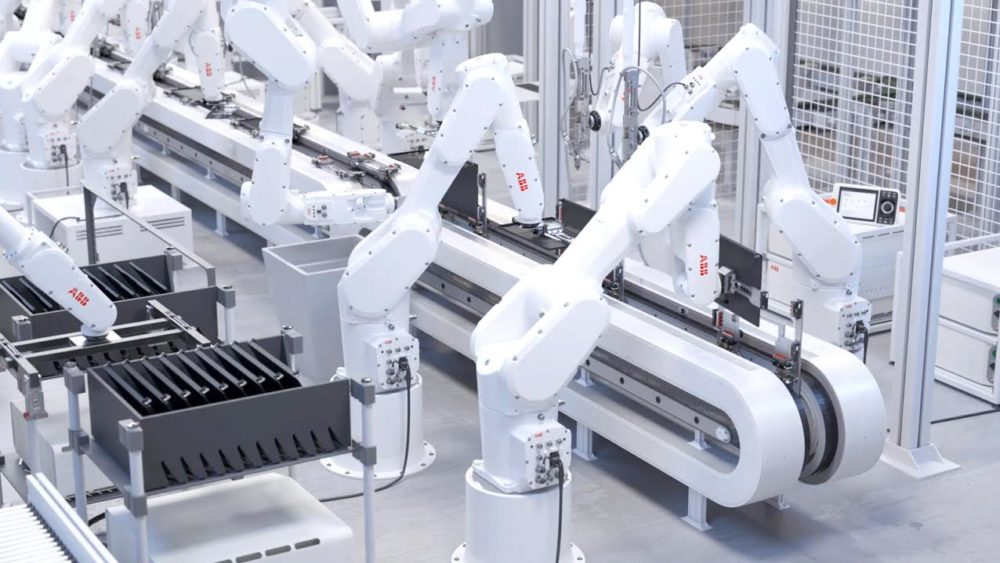
SoftBank Group has agreed to purchase the robotics division of ABB for $5.4 billion, marking a major step in CEO Masayoshi Son’s plan to unite artificial intelligence and robotics into what he calls “Physical AI.” The acquisition, announced Wednesday, gives the Japanese conglomerate control of one of the world’s leading industrial robotics makers as it deepens its bet on AI-driven automation.

The deal signals ABB’s decision to cancel its planned spin-off of the robotics unit, opting instead for a direct sale that delivers immediate liquidity. ABB CEO Morten Wierod said the sale provides stronger financial flexibility to invest in electrification, automation, and potential new acquisitions.

ABB’s robotics arm employs about 7,000 people and generated $2.3 billion in 2024 sales, roughly 7% of ABB’s total revenue. Despite its technological strength, the division struggled with volatile margins and limited overlap with ABB’s core business.

For SoftBank, the acquisition builds on a decade-long robotics journey that began with its humanoid Pepper robot and now extends into advanced factory automation. The company has recently invested in Berkshire Grey, AutoStore, and OpenAI, and earlier this year bought chip designer Ampere for $6.5 billion.

The transaction is expected to close by late 2026, subject to regulatory approvals. ABB shares rose 2% in Zurich after the announcement, while SoftBank’s stock slipped 2% in Tokyo trading.