
Yazılar

Hyundai Plans to Deploy Humanoid Robots at U.S. Factory Starting in 2028

Hyundai Motor Group said it plans to begin deploying humanoid robots at its U.S. manufacturing plant in Georgia from 2028, marking a major step toward automating higher-risk and repetitive factory tasks.

The company unveiled the production version of the Atlas humanoid robot — developed by its subsidiary Boston Dynamics — at the Consumer Electronics Show. Hyundai did not disclose costs or volumes but said it ultimately aims to roll out the robots across all its manufacturing sites as part of its push into “physical AI.”

Atlas robots will initially handle parts sequencing from 2028, with duties expanding gradually as safety and quality benefits are validated. By 2030, Hyundai expects the robots to move into component assembly and, over the longer term, take on heavy-load, repetitive and complex tasks.

Hyundai said the robots are designed to reduce physical strain on workers and improve safety. Atlas can lift up to 50 kilograms, operate autonomously and function in industrial environments ranging from minus 20 to 40 degrees Celsius.

The company added that it is accelerating development through partnerships with AI leaders such as Nvidia and Google, as humanoid robots are expected to become a key segment of the emerging physical AI market.

Samsung Plans to Embed AI Across Its Entire Device Ecosystem

TM Roh emphasized that AI is not just a feature, but a transformative force reshaping how people think, work, and interact with technology. Devamını Oku

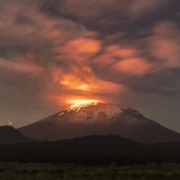
Scientists Capture First 3D Images of the Interior of Mexico’s Popocatépetl Volcano

Scientists from National Autonomous University of Mexico have produced the first three-dimensional images of the interior of Popocatépetl, one of the world’s most active volcanoes and a major threat to nearby population centres.

After five years of fieldwork and data collection, researchers used seismic sensors and artificial intelligence to map the volcano’s internal structure down to about 18 kilometres below the crater. The images reveal multiple magma reservoirs at different depths rather than a single magma chamber, offering new insight into how eruptions may develop.

The project leader, volcanologist Marco Calò, said the findings help explain where magma accumulates and why seismic activity is stronger in certain areas, particularly on the southeast side of the volcano. Around 25 million people live within 100 kilometres of Popocatépetl, making accurate monitoring critical for risk management.

Picture background

The team expanded the existing seismic network around the volcano and analysed ground vibrations using AI-based algorithms adapted for Popocatépetl’s unique behaviour. This approach allowed researchers to distinguish different types of tremors and infer temperature, depth and material composition underground.

Scientists say the 3D model will improve eruption forecasting and help authorities respond more effectively during periods of heightened activity. The research is set to be published soon and is expected to serve as a baseline for tracking future changes inside the volcano.