Yazılar

Musk’s xAI buys third building to expand AI compute power

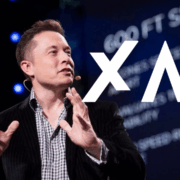
xAI, the artificial intelligence company founded by Elon Musk, has acquired a third building as part of its effort to significantly expand computing capacity, Musk said on Tuesday. The move is aimed at boosting xAI’s training infrastructure to nearly 2 gigawatts of compute power.

The expansion highlights xAI’s ambition to compete more aggressively with leading AI developers such as OpenAI, which develops ChatGPT, and Anthropic, creator of the Claude chatbot. xAI’s main supercomputer cluster, known as Colossus and located in Memphis, Tennessee, has been described by Musk as the largest in the world.

“xAI has bought a third building called MACROHARDRR,” Musk wrote on X, without revealing the site’s exact location. The name appears to be a play on Microsoft, a major investor in OpenAI.

Picture background
The Information, which reported the development earlier citing property records and a person familiar with the matter, said the new building is intended to support a third large-scale data centre planned outside Memphis.

According to the report, xAI plans to expand Colossus to house at least 1 million graphics processing units (GPUs). The company is expected to begin converting the newly acquired warehouse into a data centre in 2026. Both the planned facility and a separate expansion known as Colossus 2 are located near a natural gas power plant that xAI is building, alongside access to other power sources.

The rapid build-out of AI infrastructure has drawn criticism from environmental groups, who warn that large data centres consume vast amounts of energy and place strain on local power grids.

SoftBank completes $41 billion investment in OpenAI, deepening bet on AI

SoftBank Group said it has completed a $41 billion investment in OpenAI, marking one of the largest private funding rounds ever and giving the Japanese group an ownership stake of about 11% in the maker of ChatGPT.

The move underscores SoftBank CEO Masayoshi Son’s increasingly aggressive push into artificial intelligence, which he has described as an “all in” bet. Son is positioning SoftBank to capitalise on booming demand for AI computing power, spanning both software and the physical infrastructure that underpins advanced models.

SoftBank said it completed an additional $22.5 billion investment on Wednesday, following an earlier $7.5 billion injection in April. OpenAI also secured an expanded syndicated co-investment of $11 billion from other backers as part of the round. In March, SoftBank had agreed to invest up to $40 billion into a for-profit OpenAI subsidiary, with the funding structured through a mix of direct capital and syndicated investments.

Picture background

The transaction initially valued OpenAI at about $300 billion on a post-money basis. However, a subsequent secondary share sale completed in October pushed OpenAI’s valuation to roughly $500 billion, according to PitchBook data. CNBC first reported the completion of the latest investment earlier in the day.

The deal comes as artificial intelligence has become the central driver of global technology investment, reshaping corporate strategies and investor expectations. OpenAI has emerged as a key beneficiary of that shift, sitting at the heart of an industry-wide surge in AI spending.

OpenAI is also a core participant in “Stargate,” a large-scale, multi-year data centre initiative being developed alongside Oracle and other partners. The project aims to support next-generation AI models and is backed by major investors including SoftBank, further linking the group’s capital deployment to the infrastructure required for future AI growth.

Meta to buy Chinese-founded startup Manus to boost advanced AI

Meta said on Monday it will acquire Chinese-founded artificial intelligence startup Manus, stepping up efforts to integrate more advanced AI capabilities across its platforms. Financial terms were not disclosed, but a source with direct knowledge of the matter said the deal values the Singapore-based firm at between $2 billion and $3 billion.

Manus did not immediately respond to a request for comment. The startup drew widespread attention earlier this year after releasing what it described as the world’s first general AI agent—software designed to make decisions and execute tasks autonomously with far less prompting than conventional chatbots such as ChatGPT or DeepSeek. The launch sparked viral discussion on X and led some commentators to label Manus “China’s next DeepSeek,” with praise from Chinese state television.

Months later, Manus moved its headquarters from China to Singapore, joining a broader wave of Chinese-founded tech firms seeking to reduce exposure to rising U.S.-China tensions. The company’s products are not available in China. Manus has claimed its AI agent outperforms OpenAI’s DeepResearch and maintains a strategic partnership with Alibaba to collaborate on AI models.

Meta said it will operate and commercialize the Manus service and integrate it into both consumer and business offerings, including Meta AI. The acquisition reflects intensifying competition among large technology companies racing to secure differentiated AI capabilities through deals and talent hires.

Earlier this year, Meta invested in Scale AI in a transaction valuing the startup at $29 billion and bringing in its CEO, Alexandr Wang. Manus, backed by parent company Beijing Butterfly Effect Technology, raised $75 million this year at a valuation of about $500 million, according to the source, confirming prior media reports. The funding round was led by Benchmark, with investors including HSG, ZhenFund and Tencent Holdings, PitchBook data showed.