Yazılar

Albania Appoints AI Bot “Diella” as Minister to Oversee Public Procurement

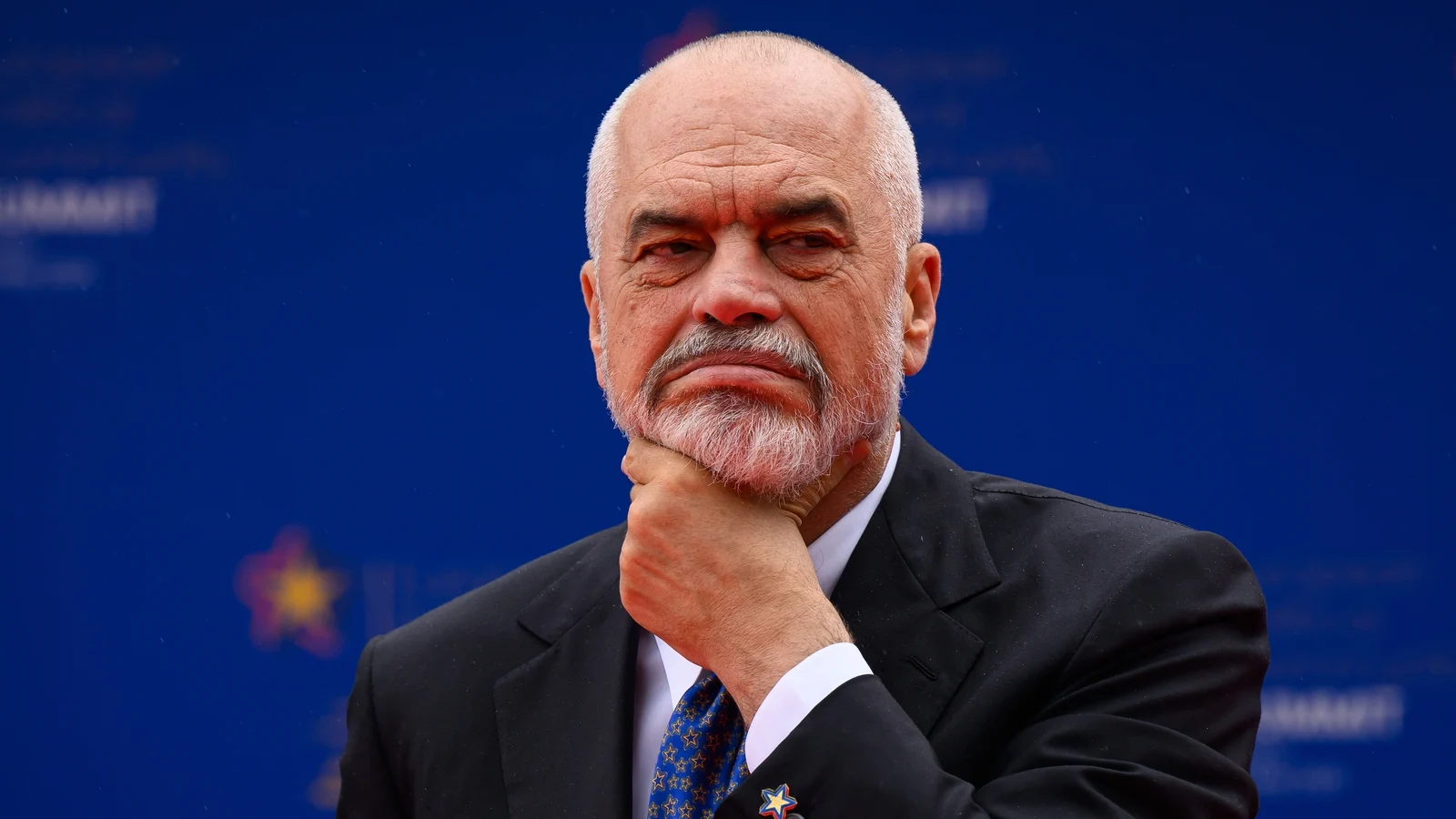
Albania has broken political ground by appointing an AI-generated bot named Diella as its new minister of public procurement, tasked with awarding and managing government tenders.

Prime Minister Edi Rama, beginning his fourth term, introduced Diella on Thursday, describing her as the first cabinet member to exist only virtually. “Diella will make Albania a country where public tenders are 100% free of corruption,” he said.

Public procurement has long been one of Albania’s most corruption-prone areas, tied to scandals involving money laundering by organized crime networks. Experts say graft within state contracts has also slowed Albania’s EU accession ambitions, which Rama hopes to achieve by 2030.

Who is Diella?

  • The name means “sun” in Albanian.

  • She debuted earlier this year as a virtual assistant on the e-Albania platform, helping citizens and businesses access official documents.

  • Diella appears dressed in traditional Albanian attire, provides support via voice commands, and can issue documents with electronic stamps, reducing bureaucratic bottlenecks.

Skepticism and Risks

While Rama hailed Diella’s incorruptibility, critics have raised questions about:

  • The extent of human oversight, which the government has not clarified.

  • The potential for AI manipulation or hacking, which could undermine the anti-corruption mission.

  • Public skepticism — one social media user quipped, “Even Diella will be corrupted in Albania.”

Political Context

The new parliament, elected in May, is set to convene on Friday, though it remains uncertain if Rama’s government lineup will be formally approved immediately.

If implemented effectively, Diella could mark a world-first experiment in AI-led governance. But whether an algorithm can untangle entrenched corruption in Albania remains an open question.

Klarna Shifts AI Strategy From Cost-Cutting to Growth After U.S. IPO

Swedish fintech Klarna is recalibrating its use of artificial intelligence, shifting from aggressive cost-cutting to enhancing customer services and long-term growth. CEO Sebastian Siemiatkowski told Reuters that while AI had helped streamline operations, the company “probably over indexed” on savings and is now focused on improving its products and merchant offerings.

The comments came as Klarna debuted on the New York Stock Exchange on Wednesday. Its shares opened at $52, a 30% jump above the $40 IPO price, giving the buy-now, pay-later lender a market capitalization of $19.7 billion. The IPO raised $1.37 billion, valuing Klarna at around $15 billion and marking the largest U.S. market debut by a Swedish firm since Spotify.

Klarna has leaned heavily on AI in recent years, cutting staff from 5,000 to 3,800 and using chatbots to replace 700 customer service roles. The company said AI had slashed customer query resolution times from 11 minutes to just 2 minutes. It also experimented with an AI avatar of Siemiatkowski for earnings presentations and even launched a hotline where customers could speak to an interactive version of the CEO.

However, the company has since realized that cost savings alone—like the $2 million saved by replacing Salesforce with in-house AI data tools—carry little weight with investors. Instead, Klarna is refocusing on growth, customer satisfaction, and productivity. Siemiatkowski emphasized that investors “are going to look for growth, and they’re going to look to what we offer our customers and how that’s doing.”

The company, now hiring again with more than two dozen job openings, sees AI as a tool for scaling services rather than just trimming expenses. CFO Niclas Neglen stressed that AI’s role “is definitely not just a cost play… it’s going to help us provide better services to consumers and merchants over time.”

Siemiatkowski, who holds about 7% of Klarna, did not sell shares in the IPO. Reflecting on the milestone, he compared it to a wedding: “It’s a big party and then life goes on, and you get kids and other things happen.”

Meta’s TBD Lab: Small, Talent-Dense Team Driving Next-Gen AI Models

Meta’s TBD Lab, a research group within its Superintelligence Labs, consists of only “a few dozen” researchers and engineers, CFO Susan Li told investors at the Goldman Sachs Communacopia + Technology conference on Tuesday.

Key Details

  • Team size: “A few dozen” researchers and engineers, highly talent-dense.

  • Focus: Developing next-generation foundation models at the AI frontier over the next 1–2 years.

  • Name origin: “TBD” began as a placeholder (“to be determined”) but stuck, reflecting the exploratory nature of the group.

Meta’s AI Reorganization

  • Earlier this year, Meta split its AI efforts under Superintelligence Labs into four groups:

    1. TBD Lab – new, frontier-focused models.

    2. Products team – including the Meta AI assistant.

    3. Infrastructure team – scaling compute and systems.

    4. FAIR (Fundamental AI Research) – long-term research.

  • This restructuring followed senior staff exits and lukewarm reception for Meta’s Llama 4 model.

Leadership & Talent Push

  • CEO Mark Zuckerberg has been personally driving talent acquisition, reportedly reaching out to startup founders and top researchers directly — even via WhatsApp — with million-dollar offers.

  • The company’s AI ambitions are positioned as a long-term bet, combining frontier R&D, consumer AI products, and infrastructure scaling.

Strategic Significance

  • The compact size of TBD Lab emphasizes high-leverage innovation rather than large-scale manpower.

  • Its work will likely feed into both open-source and proprietary models, shaping Meta’s response to OpenAI, Google DeepMind, and Anthropic in the race for AI dominance.

  • If successful, TBD Lab could be key in restoring Meta’s competitive credibility in foundation models.