Yazılar

ASML Maintains Financial Guidance Despite New U.S. Restrictions on China Chip Exports

INTRODUCTION:
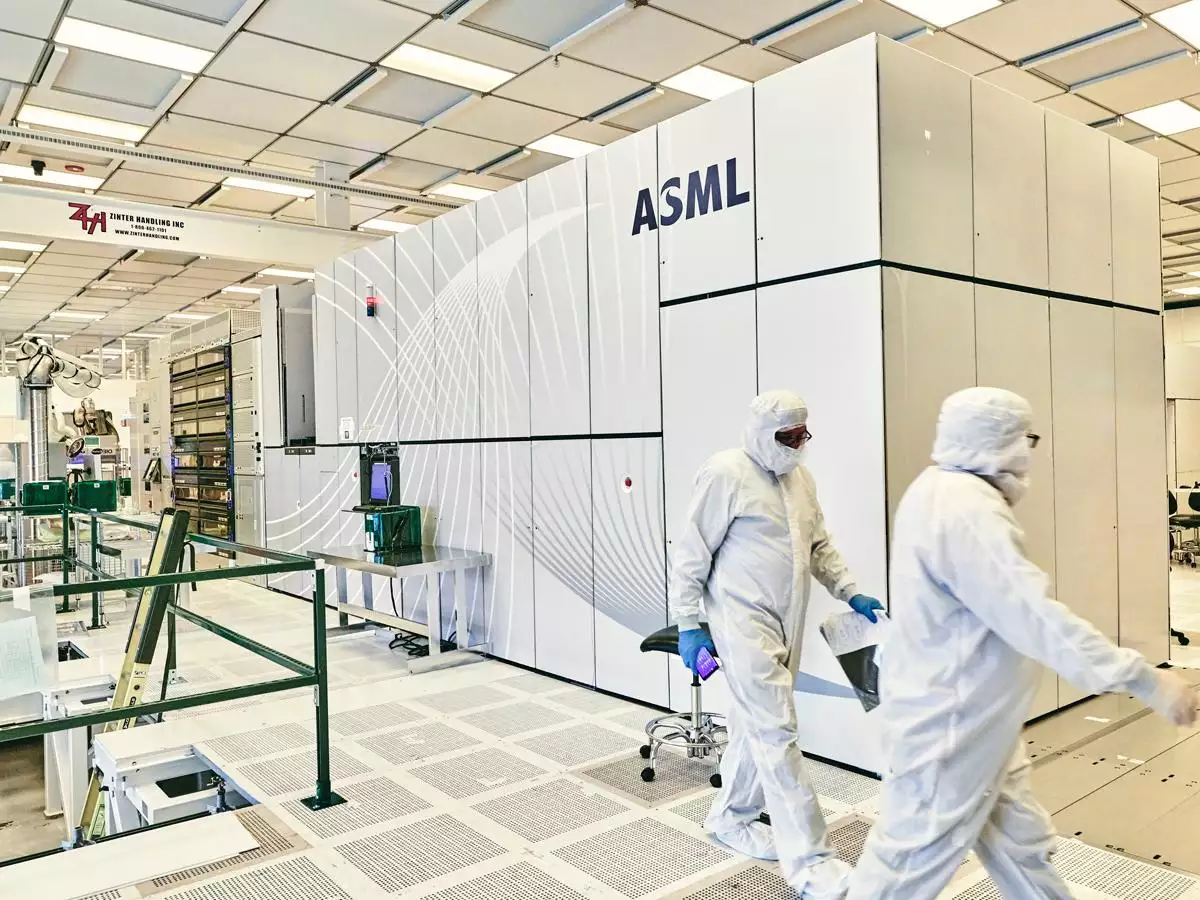
ASML Holding, the leading Dutch semiconductor equipment manufacturer, has reaffirmed its financial projections for 2025 despite the latest U.S. export restrictions targeting China’s chip industry. The company cited minimal long-term impact from the new rules, while the Dutch government expressed alignment with U.S. concerns over advanced semiconductor exports.

KEY DETAILS

  1. ASML’s Financial Guidance:
    • ASML reiterated its November 14 outlook, forecasting group sales between €30-35 billion ($31.5-36.7 billion) in 2025.
    • The company projects China’s contribution to its sales to drop to 20% by 2025, a significant decline from approximately 50% this year.
  2. Impact of U.S. Restrictions:
    • The latest U.S. measures target semiconductor equipment exports to China, including ASML’s deep ultraviolet (DUV) lithography systems, if enforced by Dutch authorities.
    • The new rules also impose stricter controls on computational lithography software and metrology equipment critical to chip production.
  3. Dutch Government’s Position:
    • The Netherlands supports U.S. concerns about uncontrolled semiconductor equipment exports and is evaluating the implications of the updated regulations.
    • Dutch authorities reiterated that export decisions are based on their national security assessments.
  4. ASML’s Long-Term Outlook:
    • ASML stated that the global demand for semiconductors underpins its growth scenarios, minimizing the long-term impact of these regulations.
    • The company’s shares closed 0.9% higher at €664.10 in Amsterdam following the announcement.
  5. Industry-Wide Implications:
    • The restrictions represent the third wave of U.S. efforts in recent years to curtail China’s semiconductor development.
    • Chinese entities, including additional subsidiaries of Semiconductor Manufacturing International Corporation (SMIC), face tightened export curbs.
    • Japanese competitors Nikon and Canon are also affected by restrictions on computational lithography software.

CONTEXT AND ANALYSIS

  • Strategic Implications for ASML:
    ASML’s dominant position in lithography machine manufacturing mitigates immediate risks. However, its reliance on China as a key market presents challenges as geopolitical tensions persist.
  • Dutch Government’s Balancing Act:
    While aligning with U.S. security concerns, the Netherlands must navigate its own economic interests and maintain a competitive edge in the semiconductor sector.
  • Broader Market Impact:
    The global semiconductor supply chain remains under pressure as U.S.-China tech rivalry escalates, with regulatory measures reshaping industry dynamics.

CONCLUSION

ASML’s confidence in its financial resilience reflects the strength of its market leadership and strategic planning. However, the evolving regulatory environment underscores the complexities of balancing business growth with geopolitical realities in the semiconductor industry.
Shares of Key Chip Suppliers Jump as U.S. Considers Milder China Sanctions

Shares of global semiconductor equipment suppliers surged on Thursday following reports that the U.S. is revising its proposed sanctions on China’s chip industry, potentially implementing less restrictive measures than previously planned.

ASML, a Dutch semiconductor equipment manufacturer, saw its shares rise by approximately 4.3% in early trading in Europe. Similarly, Japan’s Tokyo Electron saw a more than 6% increase in its share price.

According to a Bloomberg report, the U.S. government is contemplating new restrictions on the sale of semiconductor equipment and AI memory chips to China, but these measures are expected to be less severe than earlier proposals.

The U.S. Commerce Department’s Bureau of Industry and Security did not provide an immediate comment regarding the Bloomberg article.

One significant shift in the proposed measures is the decision not to add certain Chinese companies to the U.S. export blacklist, known as the Entity List. Among the companies not affected is ChangXin Memory Technologies, a Chinese memory manufacturer that competes with major global players like SK Hynix and Samsung.

For ASML, analysts at Jefferies noted that the company had previously forecast a 30% revenue decline from China next year due to restrictions. However, the exclusion of ChangXin from the export blacklist could result in a smaller-than-expected decline in ASML’s Chinese sales for 2024.


Chip Stocks Decline as ASML’s Weak Outlook Sparks Concerns Over Non-AI Chip Demand

Semiconductor stocks in both the U.S. and Asia took a hit after ASML (ASML.AS), a prominent chip equipment maker, cut its annual sales forecast due to weak demand for non-AI chips. Despite strong demand for AI-related chips, such as those produced by industry giant Nvidia (NVDA.O), the broader semiconductor market is experiencing a slower recovery. This news sent ripples through the sector, dragging down major chip stocks.

Key Losses Across the Sector

Nvidia, which had recently surpassed Apple as the world’s most valuable company, saw a 4.5% drop in its stock price, wiping out approximately $158 billion from its market cap. This widened the gap with Apple, whose value sits at $3.56 trillion. Other major chip firms such as AMD (AMD.O), Intel (INTC.O), Arm, Broadcom (AVGO.O), and Micron (MU.O) fell between 3.2% and 5% by Tuesday’s close. The Philadelphia SE Semiconductor Index dropped nearly 5%, further weighing down the tech-heavy Nasdaq.

The sharp decline followed an apparent error by ASML, which prematurely released its quarterly results, revealing weak bookings and slower-than-expected recovery in chip demand, particularly outside the AI sector. This led to a 16% plunge in ASML’s U.S.-listed shares.

AI Demand vs. Broader Market Weakness

While the demand for AI chips continues to surge, fueled by growing interest in artificial intelligence and machine learning applications, other segments of the chip market remain tepid. Logic chip makers are delaying orders, and memory chip manufacturers are planning only limited new capacity expansions, which signals ongoing weakness in non-AI chip demand.

“ASML’s fat finger error isn’t cause for concern in itself, but the content of the release didn’t make comforting reading for investors,” noted Derren Nathan, head of equity research at Hargreaves Lansdown.

Asian Chipmakers Also Hit

Asian semiconductor companies, many of which are customers of ASML, also suffered losses. Taiwan Semiconductor Manufacturing Co (TSMC), Samsung Electronics, and SK Hynix all saw stock declines ranging from 2.2% to 2.5%. This further underscores concerns that the non-AI chip sector is slowing down, with chip factories having stabilized after racing to build extra capacity during the pandemic.

Samsung, which had earlier warned of disappointing third-quarter profits due to struggles in capitalizing on AI chip demand, continued to face pressure. On the other hand, TSMC, which supplies Nvidia, is expected to report a 40% jump in third-quarter profit, showcasing a more optimistic outlook for companies directly tied to AI chip production.

Geopolitical Tensions and Export Controls

Adding to market concerns, Bloomberg News reported that U.S. officials are considering placing a cap on AI chip export licenses to certain countries, particularly in the Persian Gulf. The move is driven by national security concerns that advanced American chips could be indirectly acquired by China, circumventing existing trade restrictions.

Danni Hewson, head of financial analysis at AJ Bell, remarked, “With the AI revolution expected to play such a huge part in upping productivity and enabling other technological advances, it’s not surprising the U.S. wants to do what it can to maintain its dominance.”

The combination of weak non-AI chip demand and increasing geopolitical tensions highlights the delicate balance chipmakers must navigate as they grapple with shifting market dynamics.