Yazılar

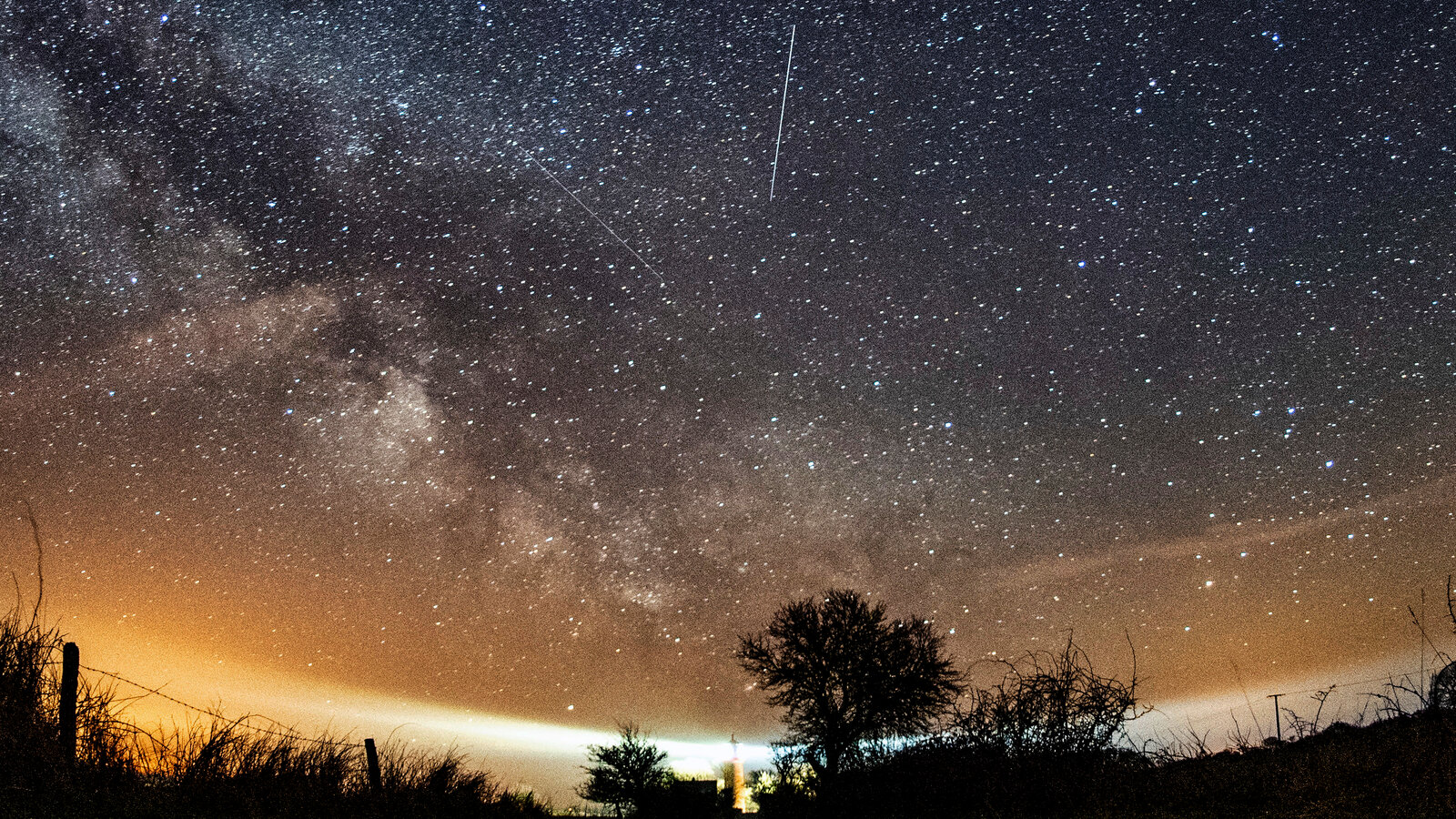
Lyrid Meteor Shower 2025 Set to Illuminate the Night Sky: Here’s When to Catch the Show

The highly anticipated Lyrid meteor shower is almost here, and skywatchers are in for a spectacular show. Every year, the Lyrids light up the night sky with their fast-moving meteors, which radiate from the Lyra constellation, close to the bright star Vega. These meteors streak across the sky at impressive speeds, and the best part is that you don’t need a telescope to enjoy the show—simply step outside, and the meteors are visible to the naked eye. This is one of the oldest meteor showers on record, having been documented for over 2,700 years, and it’s expected to deliver bursts of up to 100 meteors per hour.

So, what causes these dazzling meteors? The Lyrids are formed from the debris left behind by Comet Thatcher (C/1861 G1), which orbits the Sun every 415 years. As Earth passes through this dust trail, the particles enter our atmosphere at high speeds, creating the brilliant streaks we see as meteors. While the Lyrids aren’t known for being the brightest meteor shower of the year, they still offer a breathtaking spectacle for those who take the time to watch.

The Lyrids will be visible between April 15 and April 29, but the peak of the meteor shower is expected on the morning of April 22. The best time to observe the meteors will be between 3:00 a.m. and 5:00 a.m., just before the break of dawn when the sky is darkest. For the optimal viewing experience, escape the city’s bright lights and head to a rural area, such as a park, mountain, or coastal trail. Not only will the view be much clearer, but the experience will also be more serene and awe-inspiring.

To make the most of your meteor-watching experience, give your eyes at least half an hour to adjust to the darkness. It’s also helpful to use red light to preserve your night vision. If you’re planning to head out, be sure to inform someone about your whereabouts for safety. And if you can, bring friends along to share in the excitement. With a little preparation, you’ll be ready to witness one of nature’s most magical events.
Scientists Propose That Black Hole Singularities Might Not Exist

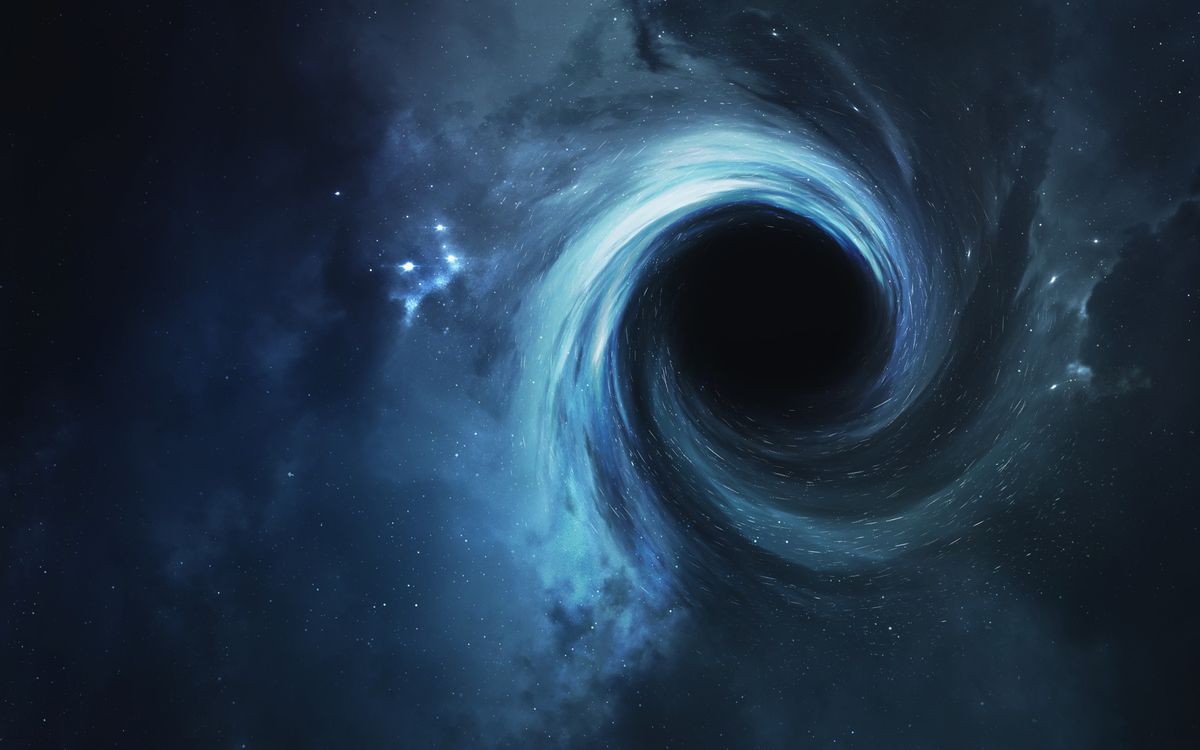
The concept of singularities at the core of black holes has long posed a paradox in physics, as these infinitely dense points challenge the fundamental principles of space, time, and matter. However, new research suggests that singularities may not exist at all. Physicists have proposed modifications to Einstein’s general relativity equations, offering an alternative view of black hole interiors. If these changes are correct, they could resolve one of the biggest inconsistencies between general relativity and quantum mechanics, restoring predictability to physical laws.

A study published in Physics Letters B introduces refinements to general relativity based on principles from quantum gravity. While Einstein’s theory has been remarkably successful in describing cosmic phenomena like black holes and neutron stars, it breaks down under extreme conditions. The incompatibility of singularities with quantum mechanics has long suggested that general relativity is incomplete. The new modifications aim to bridge this gap, potentially eliminating the need for singularities while maintaining the theory’s ability to describe gravitational systems accurately.

Robie Hennigar, a postdoctoral researcher at Durham University, explained in an interview with Live Science that singularities represent a fundamental problem in our understanding of the universe. He described them as regions where space, time, and matter are crushed into a state of nonexistence—something that most physicists see as a sign that a deeper theory is required. By adjusting general relativity with insights from quantum mechanics, researchers hope to develop a more complete framework for understanding black holes.

If singularities are indeed mathematical artifacts rather than physical realities, this could have profound implications for black hole physics and cosmology. Future advancements in observational technology, such as next-generation space telescopes and gravitational wave detectors, may provide further evidence to test these new models. As theoretical and experimental research progresses, the true nature of black hole interiors may soon be better understood, reshaping our understanding of the universe’s most mysterious objects.

James Webb Telescope Spots Continuous Flares Erupting from Sagittarius A at the Milky Way’s Center

Astronomers have recently observed the supermassive black hole at the center of the Milky Way, Sagittarius A*, emitting continuous flares, revealing new and intriguing behaviors in this cosmic giant. These observations were made using the James Webb Space Telescope (JWST), which provided unprecedented detail and clarity on the black hole’s activity. The flares, which vary in duration and intensity, add to the growing body of research on black holes, their accretion disks, and their interactions with surrounding matter. This discovery sheds light on a level of variability in Sagittarius A* that was previously not well understood, providing new insights into the dynamics of supermassive black holes.

The flares detected by JWST occurred over several observation sessions, totaling two full days of data collected during the past year. Using the telescope’s Near-Infrared Camera (NIRCam), researchers closely examined Sgr A* across multiple eight-to-ten-hour periods. The results were striking: the black hole produced bursts of energy ranging from quick, short-lived flashes to much longer, sustained outbursts. These bursts, occurring up to six times a day, were linked to the accretion disk surrounding the black hole, which is a dense ring of gas and dust spiraling inward. Some of these bursts were even accompanied by smaller sub-flares, further adding to the complexity of the black hole’s behavior.

While flares are a known phenomenon in supermassive black holes, the activity of Sgr A* is particularly unpredictable, setting it apart from other known black holes. The exact causes behind these flares are still being investigated, with scientists considering a variety of mechanisms. Shorter, fainter flares could be the result of small disturbances in the accretion disk, akin to ripples caused by minor disruptions. In contrast, the larger and brighter flares may be driven by more dramatic events, such as magnetic reconnection—an event in which charged particles accelerate to nearly the speed of light, producing powerful bursts of radiation.

Interestingly, the researchers compared the flaring activity of Sgr A* to solar flares, which are driven by magnetic activity on the sun’s surface. However, they noted that the processes near a black hole are far more extreme, with much greater forces at play. The NIRCam’s ability to observe multiple infrared wavelengths has proven invaluable in understanding these flares. It revealed a slight delay in the brightness of longer-wavelength emissions compared to shorter-wavelength ones, offering new clues about the complex mechanisms at work in the vicinity of the black hole. As research continues, these findings are helping scientists piece together a more complete picture of the behavior and characteristics of supermassive black holes.