Yazılar

Baidu Unveils AI Video Generator and Major Search Engine Upgrade

China’s Baidu (9888.HK) on Wednesday launched MuseSteamer, an AI-powered video generator designed specifically for business users, alongside a significant upgrade to its search engine features. MuseSteamer can produce videos up to 10 seconds long and is offered in three versions: Turbo, Pro, and Lite.

Over the last year, AI leaders like OpenAI and global tech giants have expanded beyond chatbots into text-to-video and image-to-video generation. In China, competitors including ByteDance, Tencent (0700.HK), and Alibaba (9988.HK) have also released similar models. Unlike many rivals such as OpenAI’s Sora that target consumers with subscription plans, Baidu’s MuseSteamer is currently focused solely on business users, with no consumer app available yet.

The search engine overhaul features a redesigned search box supporting longer queries, voice and image searches, and displays more relevant content powered by Baidu’s AI technology.

Baidu faces rising competition as AI chatbots like ByteDance’s Doubao and Tencent’s Yuanbao gain popularity in the Chinese market.

Baidu Says Homegrown Tech Shields AI Ambitions from U.S. Chip Curbs

Chinese tech giant Baidu asserted on Wednesday that its artificial intelligence (AI) development remains largely insulated from recent U.S. semiconductor export restrictions, thanks to an expanding domestic supply of chips and software. The company also reported stronger-than-expected Q1 financial results, fueled by growth in its AI cloud segment.

“Domestically developed chips and increasingly efficient homegrown software will form a strong foundation for long-term innovation in China’s AI ecosystem,” said Shen Dou, Baidu’s Vice President, during a conference call with analysts.

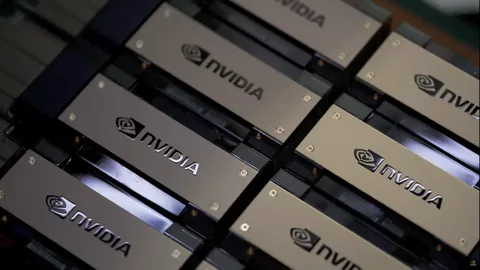
The statement follows the latest U.S. curbs on advanced chips — including Nvidia’s H20, a product tailored for the Chinese market — which officially took effect last month. Baidu’s confidence mirrors that of rival Tencent, which recently cited existing chip stockpiles as a buffer against Washington’s tightening export controls.

Baidu’s first-quarter revenue rose 3% year-over-year to 32.45 billion yuan ($4.5 billion), surpassing analysts’ estimates of 30.9 billion yuan, according to LSEG. The company’s non-online marketing revenue, primarily driven by its AI cloud business, jumped 40% to 9.4 billion yuan, highlighting Baidu’s accelerating pivot away from its legacy ad-based search engine model.

While revenue from its online marketing segment fell 6% to 17.31 billion yuan — slightly below forecasts — Baidu posted a robust profit of 21.59 yuan per American Depositary Share, up from 14.91 yuan a year earlier.

Baidu has made aggressive moves in the generative AI space since becoming one of the first Chinese firms to launch a ChatGPT-style chatbot in early 2023. However, its flagship Ernie model now faces stiff competition from fast-rising domestic players like DeepSeek.

In response, Baidu scrapped subscription fees for premium AI chatbot services in April and launched enhanced models including Ernie X1 and Ernie 4.5, later upgrading both to “Turbo” versions. The company’s AI ambitions are powered by its self-developed P800 Kunlun chips, with a 30,000-chip cluster said to be capable of training DeepSeek-scale models.

Despite the upbeat earnings and AI momentum, Baidu’s U.S.-listed shares were slightly down 0.3% in Wednesday morning trading.

Pony.ai Robotaxi Catches Fire After Malfunction, No Injuries Reported

Pony.ai, one of China’s leading autonomous vehicle companies, confirmed on Wednesday that one of its driverless robotaxis caught fire in Beijing after a system malfunction triggered an emergency stop. The incident occurred while the vehicle was being handled by service personnel. Fortunately, no passengers were on board, and no injuries were reported.

According to a company statement, the car—operating without a human driver—experienced an “abnormal statusearly Tuesday morning, prompting its safety system to initiate a stop. Service staff arrived within two minutes, but during the response process, the vehicle ignited and caught fire.

No collision occurred and no one was injured. The specific cause is currently under investigation,” Pony.ai stated.

Incident Footage and Public Response

Videos circulating on Chinese social media show thick black smoke rising from a multi-lane highway, with a burned-out vehicle straddling a road divider. The car appears to be a Lexus, the luxury brand under Toyota, which is a known backer of Pony.ai. However, Reuters was unable to verify the model or authenticity of all media posted online.

An unnamed Beijing traffic police officer told Qingdao city’s broadcast outlet that the fire broke out when the engine was restarted, further complicating the cause analysis.

Regulatory and Industry Implications

The incident comes at a sensitive time, as Chinese regulators have begun tightening scrutiny on autonomous driving systems following a recent fatal autopilot-related crash involving a Xiaomi vehicle. The government has been encouraging the deployment of autonomous driving technology, with Pony.ai, Baidu, and others receiving approval to operate fully driverless robotaxis in designated urban zones.

However, high-profile failureslike the Waymo robotaxi incident in San Francisco where the vehicle was set on fire by a crowd—have raised broader concerns about safety, emergency response, and public trust in autonomous vehicles.

Ongoing Investigation

Neither Pony.ai nor Toyota provided additional details as of this writing. The cause of the fire remains under investigation, and regulators are likely to monitor the situation closely as the government refines its autonomous vehicle safety standards.