Yazılar

UK Economy Contracts in September Amid Challenges to Growth Ambitions

The United Kingdom’s economy shrank by 0.1% in September, marking an unexpected setback to Finance Minister Rachel Reeves’ plans for sustained economic growth. Over the third quarter, growth slowed to just 0.1%, down from 0.5% in the second quarter, according to data released by the Office for National Statistics (ONS) on Friday.

Economic Performance Below Expectations

The September contraction, attributed to stagnation in the services sector alongside declines in manufacturing and construction, underperformed forecasts from economists and the Bank of England (BoE), which had predicted 0.2% quarterly growth. The slowdown follows a stronger first half of 2024 when the economy rebounded from the effects of last year’s mild recession.

Despite the disappointing figures, there was a notable 1.2% quarterly increase in business investment, marking four consecutive quarters of growth in this area. However, broader economic challenges overshadowed this progress.

Reeves’ Growth Agenda

Finance Minister Rachel Reeves acknowledged the need for more robust economic performance. “Improving economic growth is at the heart of everything I am seeking to achieve, which is why I am not satisfied with these numbers,” she said, reiterating her commitment to stimulating growth through investment and regulatory reforms.

Reeves recently announced plans to overhaul regulations governing the UK’s financial sector, labeling it a “crown jewel” of the economy. Her big-spending budget, coupled with these reforms, is designed to drive short-term recovery and position the UK for stronger growth in the coming years.

However, critics argue that Labour’s landslide election victory in July, and subsequent rhetoric about weak economic conditions, has dampened confidence. The opposition Conservative Party accused Reeves of “talking down” the economy.

Challenges Ahead

The Bank of England revised its annual growth forecast for 2024 downward to 1% from 1.25%, though it expects a stronger performance in 2025. Britain’s economic output has been sluggish since the COVID-19 pandemic, with growth of just 3% since late 2019. Among major advanced economies, only Germany has fared worse, heavily impacted by rising energy costs following Russia’s invasion of Ukraine.

Sanjay Raja, chief UK economist at Deutsche Bank, warned of potential risks on the horizon, including increased taxes on businesses, which could dampen private sector investment and hiring. “We still see positive momentum into 2025, but downside risks are brewing,” he said, citing geopolitical tensions and the potential for a trade war.

Long-Term Growth Ambitions

Prime Minister Keir Starmer and Reeves have set ambitious economic targets, including achieving annual growth of 2.5%, a level not consistently reached since before the 2008 financial crisis. Reeves has also pledged to position the UK as the fastest-growing economy per capita among the G7 nations for two consecutive years.

However, Friday’s data highlights the challenges in reaching these goals. GDP per capita fell by 0.1% in the third quarter and remained flat compared to the previous year, with no annual growth recorded since 2022.

Outlook

The latest figures underscore the complexity of the UK’s economic recovery. While targeted investments and reforms aim to provide a pathway to growth, global uncertainties, domestic policy risks, and stagnant GDP per capita present significant obstacles. Analysts agree that the coming quarters will be crucial in determining the success of Reeves’ growth push.
 

UK Borrowing Costs Surge After Labour’s Tax-Heavy Budget Announcement

UK borrowing costs rose sharply a day after the Labour government introduced a tax-increasing budget. By 2:33 p.m. on Thursday in London, the 1-year gilt yield had jumped by 20 basis points to over 4.5%, with the 10-year yield up by 15 basis points, also reaching 4.5%. These shifts came on the heels of Finance Minister Rachel Reeves’ announcement of a budget plan incorporating £40 billion ($52 billion) in tax hikes and significantly higher borrowing over the next few years.

Analysts at ING expressed concerns over the projected increase in government borrowing, which is forecasted by the Office for Budget Responsibility to average £36 billion more per year over the next five years as tax revenue gradually adjusts. Despite the recent volatility, this budget reaction is seen as more stable than the “mini-budget crisis” of September 2022, which saw then-Prime Minister Liz Truss’s administration announce substantial unfunded tax cuts. That move led to severe bond market instability, placing UK pension funds at risk and ultimately forcing an emergency intervention by the Bank of England. Truss’s policies were largely reversed, leading to her resignation shortly afterward.

Reeves’ budget has led some analysts to predict modest inflationary pressure, which may result in a slower rate-cutting pace by the Bank of England. Analysts at Goldman Sachs noted the likelihood of a “reduced urgency for sequential rate cuts in the near term,” while Morgan Stanley’s Andrew Sheets highlighted the potential for slight inflation growth alongside short-term economic improvements.

Despite fears of inflation, ING analysts suggested the Bank of England is unlikely to alter its policy approach based on the budget, with services inflation expected to continue declining. Meanwhile, the British pound was down 0.4% against the U.S. dollar and 0.46% against the euro, while the FTSE 100 index dropped 1.04%, aligning with broader declines in European equities.

Deutsche Bank’s Jim Reid remarked that the UK market’s reaction could be attributed to robust European data that has pushed yields higher on the continent, along with U.S. market pressures amid reports of increased poll support for Donald Trump. Reid emphasized that the new budget reflects a different approach than the Truss-era tax cuts, with increased borrowing intended for investment rather than immediate fiscal relief.

UK Inflation Falls Sharply to 1.7%, Below Bank of England’s Target for First Time in Over Three Years

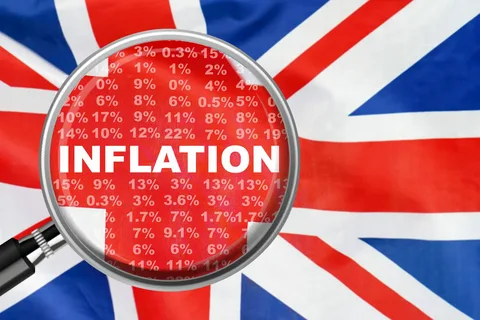
Inflation in the United Kingdom dropped sharply to 1.7% in September, marking the first time since April 2021 that inflation has fallen below the Bank of England’s (BOE) 2% target. The Office for National Statistics (ONS) announced the drop on Wednesday, surprising markets as economists had expected a higher inflation rate of 1.9% for the month. The fall from 2.2% in August to 1.7% in September has now intensified speculation about a potential rate cut by the BOE in November.

Core and Services Inflation Drop

Core inflation, which excludes volatile components like energy, food, alcohol, and tobacco, also fell from 3.6% in August to 3.2% in September, lower than the 3.4% forecast. Meanwhile, inflation in the services sector, a key driver of the UK economy, eased to 4.9% from 5.6%, its lowest rate since May 2022.

These declines in core and services inflation are crucial for the BOE as it assesses whether to adjust interest rates further. A reduction in services inflation, in particular, suggests that underlying price pressures are starting to ease, providing the BOE with more flexibility.

Rate Cuts Anticipated

Following the publication of these inflation figures, market expectations for a 25-basis-point rate cut in November surged to 92%, up from 80%. Analysts are also pricing in a likely follow-up rate cut in December. If the BOE proceeds with these reductions, the key interest rate could fall to 4.5% by the end of the year. The central bank, which had already begun cutting rates in August, held steady in September but now appears more likely to continue easing its restrictive policy.

The BOE’s decisions may also be influenced by a fall in wage growth reported earlier in the week by the ONS. Lower wage growth could further support the case for loosening monetary policy, as inflationary pressures linked to labor costs decline.

Market Reactions and Future Outlook

The release of the lower-than-expected inflation data caused a drop in the British pound, with sterling falling 0.6% against the U.S. dollar to $1.299, dipping below the $1.3 mark for the first time since September 11. The British currency also dropped 0.5% against the euro.

Additionally, yields on British government bonds, or gilts, fell across the board. The two-year gilt yield declined by 9 basis points, while the 10-year gilt yield dropped by 7 basis points.

Although inflation has eased from a peak of 11.1% in October 2022, some economists remain cautious about the longer-term outlook. Suren Thiru, economics director at the Institute of Chartered Accountants in England and Wales, noted that while the latest figures are reassuring, inflation could rebound in October due to an increase in the energy price cap. Thiru also emphasized that the BOE might wait for the UK Labour government’s budget at the end of October to assess any potential inflationary impacts before committing to further rate cuts.

Similarly, Paul Dales, Chief UK Economist at Capital Economics, warned that part of the weakness in core and services inflation was due to a significant drop in airfares. Dales predicted that the BOE may proceed with gradual 25-basis-point rate cuts at every other meeting but expects rates to eventually fall to 3.00%, below the 3.50-3.75% currently priced into markets.

Risk from the Upcoming Budget

The upcoming UK budget on October 30 presents another potential risk for the BOE’s decision-making. Sanjay Raja, Chief UK Economist at Deutsche Bank, suggested that while the inflation figures will be welcomed by the BOE, the government’s fiscal policies may still pose challenges. Raja expects the budget to be expansionary, which could add inflationary pressure despite ongoing fiscal consolidation.

As the BOE weighs its options, the central bank is expected to carefully monitor both the impact of the government’s policies and the global economic environment before determining the pace and scale of its rate-cutting cycle.