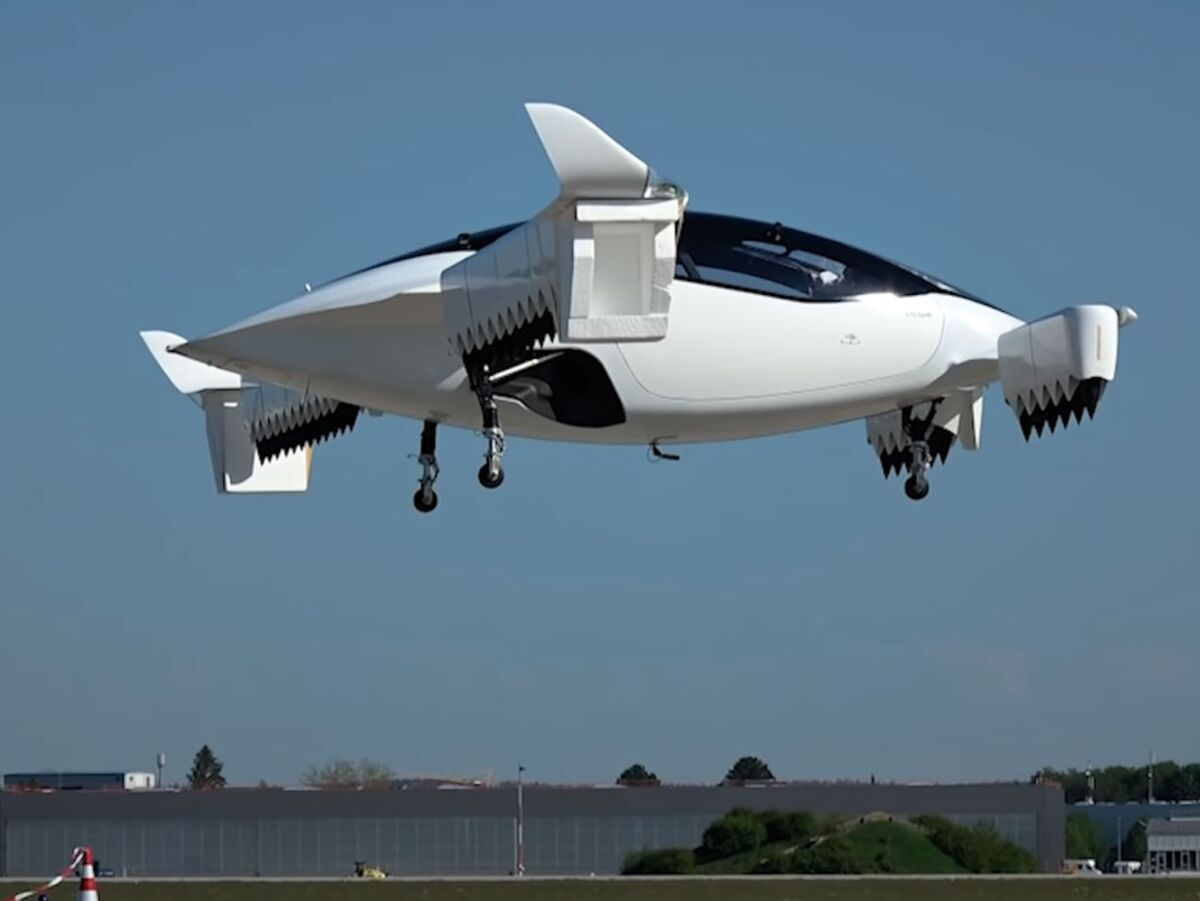
German aerospace startup Lilium is on the verge of insolvency unless it secures emergency funding from the Bavarian state government. Once seen as a frontrunner in the race to develop electric vertical take-off and landing (eVTOL) vehicles—often referred to as “air taxis”—Lilium now finds itself in a precarious financial position, reflecting a dramatic fall from grace for a company that was once valued at billions.
Financial Struggles
Lilium has been actively seeking emergency capital injections from both the federal and state governments in Germany. The company has requested €50 million ($54 million) in loans from the federal government, but this request was recently denied by German lawmakers. In a regulatory filing, Lilium disclosed that the German parliament’s budget committee is unlikely to approve a guarantee for a proposed €100 million convertible loan, which would have been essential for the company’s survival.
Despite these setbacks, Lilium is still in discussions with the Free State of Bavaria regarding a guarantee of at least €50 million. A spokesperson for Lilium stated that the company would not provide further comments beyond the information in their filing.
Bavaria’s economy minister, Hubert Aiwanger, criticized the federal government’s decision not to support Lilium, labeling it as “regrettable.” The rejection has sparked a debate about the government’s approach to supporting innovative companies. Danijel Višević, co-founder of climate tech investors World Fund, suggested that the notion that air taxis are merely “toys for millionaires” is a shortsighted perspective. He pointed out the disparity in government support, noting how U.S. electric vehicle maker Tesla received federal loans while Lilium has not been afforded the same opportunity.
Vision for the Future
Lilium’s vision goes beyond just creating “flying cars.” The company aimed to develop a vertical take-off and landing aircraft capable of transporting passengers between cities, alleviating urban congestion. Initially, Lilium intended to operate its own digital hailing service, allowing users to summon rides from designated takeoff and landing areas. However, it later shifted its strategy to collaborate with airlines and airport operators to build the necessary infrastructure and service model.
The company’s jets, priced at around $9 million for the larger models and $7 million for a six-seater version, were designed to cater to urban air mobility needs. Lilium secured significant partnerships with notable players like Lufthansa in Germany and Saudia in Saudi Arabia, along with a collaboration with Groupe ADP, an international airport operator based in Paris.
Rise and Fall
Founded in 2015 by four university students, Lilium quickly gained traction as one of Europe’s most well-funded air taxi ventures, raising hundreds of millions from investors such as Tencent, Atomico, and Earlybird. The company went public in September 2021 through a merger with the special purpose acquisition company (SPAC) Qell, reaching a valuation of $3.3 billion at its peak. However, its stock has since plummeted to under 50 cents, reflecting a staggering decline of over 95% from its market debut.
Conclusion
Lilium’s struggles highlight the challenges faced by ambitious startups in the eVTOL space, where substantial investment and government support are crucial for survival. As it stands on the brink of insolvency, the future of Lilium and its vision for urban air mobility hangs in the balance.