Yazılar

FCC to End EchoStar 5G Probe After $40 Billion in Spectrum Deals with SpaceX and AT&T

The U.S. Federal Communications Commission (FCC) will close its investigation into EchoStar’s 5G buildout obligations, following the company’s recent spectrum sales to SpaceX and AT&T worth a combined $40 billion.

FCC’s decision

  • FCC Chair Brendan Carr said in a letter to EchoStar Chair Charles Ergen that the agency would conclude EchoStar has met its 5G obligations.

  • Carr called the outcome a “potential game changer” for American consumers, freeing up spectrum and injecting new competition into the wireless market.

  • EchoStar’s Boost Mobile brand, which lost 2 million customers in recent years, had been seen as providing limited competitive pressure.

Spectrum sales

  • $17B deal with SpaceX: Enables Starlink Direct-to-Cell services with upgraded satellites.

  • $23B deal with AT&T: Provides AT&T with 50 MHz of nationwide mid- and low-band spectrum.

Background

  • EchoStar was under probe for slow 5G deployment and potential “warehousing” of spectrum.

  • SpaceX had previously pressed the FCC to review EchoStar’s holdings.

  • The FCC’s move confirms EchoStar’s exclusive rights to key spectrum blocks for ground and satellite use.

Political backdrop

  • In June, President Donald Trump encouraged EchoStar and the FCC to resolve disputes over its wireless spectrum licenses.

  • The transactions with SpaceX and AT&T still require final FCC approval.

Industry impact

Carr said the deals could reshape the wireless market:

“The status quo wasn’t working. We have a chance now to do something different … this is much more competitive.”
SpaceX Buys EchoStar Spectrum in $17 Billion Deal to Expand Starlink’s 5G Reach

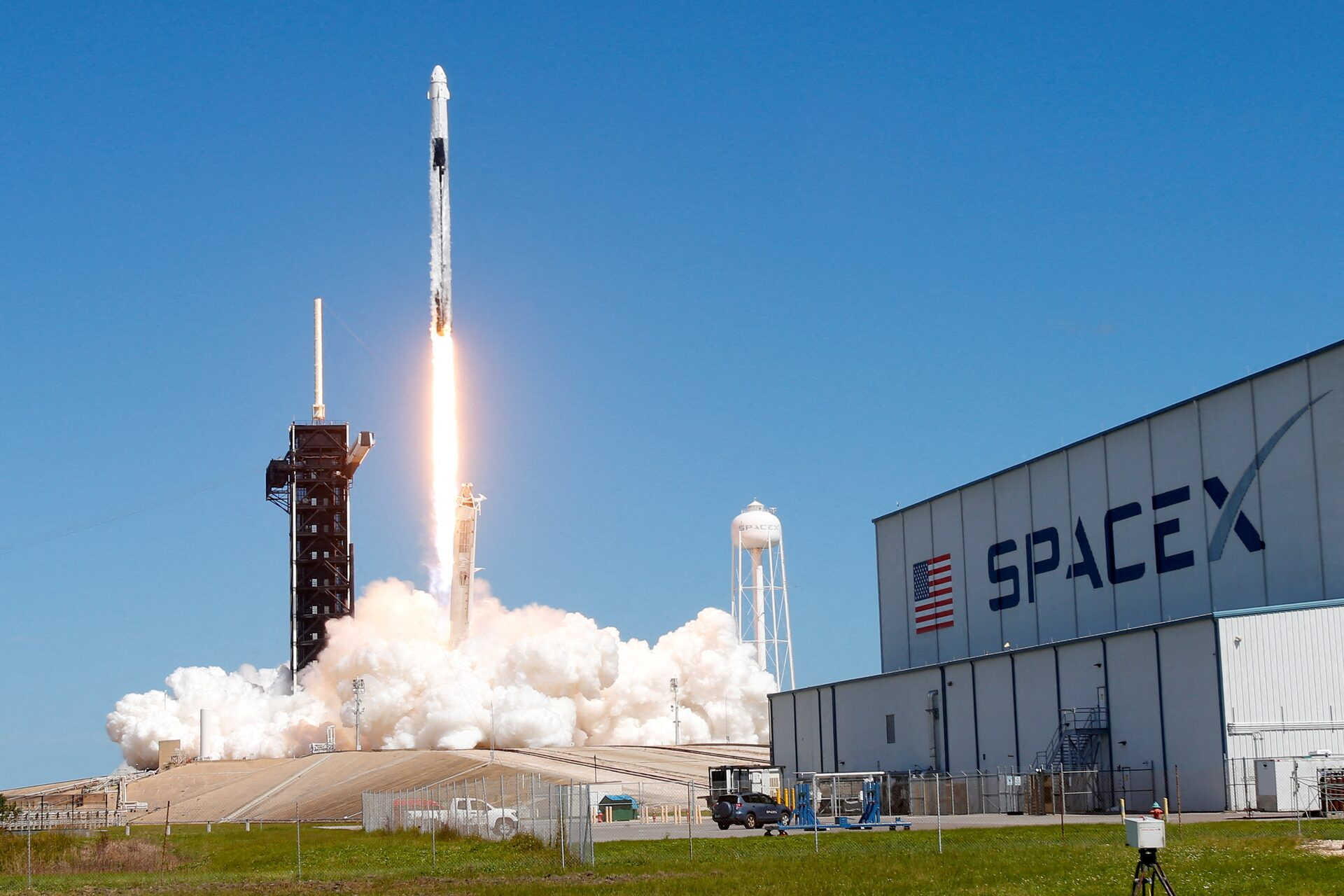
SpaceX announced Monday that it will purchase wireless spectrum licenses from EchoStar for about $17 billion, a move designed to accelerate Starlink’s expansion into the 5G mobile connectivity business. The deal also allows EchoStar’s Boost Mobile subscribers to access Starlink’s direct-to-cell satellite service, extending coverage to underserved regions.

The acquisition gives SpaceX exclusive rights to critical mid-band spectrum, enabling it to build upgraded, laser-linked Starlink satellites that could expand network capacity by over 100 times. “With exclusive spectrum, SpaceX will develop next-generation Starlink Direct to Cell satellites… to end mobile dead zones around the world,” said SpaceX President Gwynne Shotwell.

The deal boosted EchoStar’s shares by 19%, while U.S. carriers AT&T, T-Mobile and Verizon fell 2–3% amid investor concerns over heightened competition. Americans’ mobile data usage surged 35% in 2024 to a record 132 trillion MB, underscoring the need for expanded capacity.

Since 2020, SpaceX has launched more than 8,000 Starlink satellites, with about 600 “cell towers in space” deployed in 2024 alone for direct-to-cell services. Its giant Starship rocket, now in advanced testing, will play a key role in launching the next generation of larger satellites, with operational missions expected in 2026.

The FCC, which had questioned EchoStar’s spectrum obligations, welcomed the SpaceX deal, calling it an opportunity to “supercharge competition” and extend connectivity. EchoStar recently sold $23 billion in spectrum licenses to AT&T, and the SpaceX transaction is expected to resolve regulatory inquiries.

The purchase structure includes $8.5 billion in cash, $8.5 billion in SpaceX stock, and $2 billion in debt interest coverage. EchoStar will continue to operate its Dish TV, Sling, Hughes internet service and Boost Mobile brands.

The deal marks a major win for Elon Musk’s push to control spectrum for Starlink, shifting from leasing agreements with carriers like T-Mobile to operating on frequencies SpaceX owns outright.

EchoStar Considers Bankruptcy Amid FCC Spectrum Review

EchoStar is preparing for a potential Chapter 11 bankruptcy filing as it seeks to protect its valuable wireless spectrum licenses from possible revocation by U.S. federal regulators, according to a report by the Wall Street Journal citing sources familiar with the situation. The telecommunications services company has not publicly commented on the report.

The Federal Communications Commission (FCC) launched an investigation last month into whether EchoStar is in compliance with federal requirements to provide 5G service across the United States. The FCC questioned EchoStar’s request for a buildout extension as well as its adherence to mobile-satellite service obligations.

In a recent regulatory filing, EchoStar stated that the FCC’s investigation has significantly constrained its ability to make strategic business decisions related to its Boost Mobile unit, hindering growth and investment. The uncertainty surrounding the FCC’s review has already led EchoStar to miss approximately $500 million in interest payments.

The financial pressures facing EchoStar have been mounting. Last year, satellite TV provider DirecTV canceled its agreement to acquire EchoStar’s satellite television business, which includes rival Dish TV, after a debt-exchange offer failed. The collapse of that deal removed a potential lifeline for the company.

EchoStar’s spectrum licenses are among its most valuable assets. A bankruptcy filing under Chapter 11 would allow the company to restructure its debt while attempting to shield these licenses from being revoked during the FCC’s ongoing review.

The situation underscores the broader challenges facing telecommunications companies as they navigate both financial strain and increasingly aggressive regulatory scrutiny, particularly as the rollout of next-generation 5G networks accelerates across the United States.