Yazılar

BRICS’ Plan for Digital Assets Platform to Promote De-Dollarisation Draws Criticism from Trump

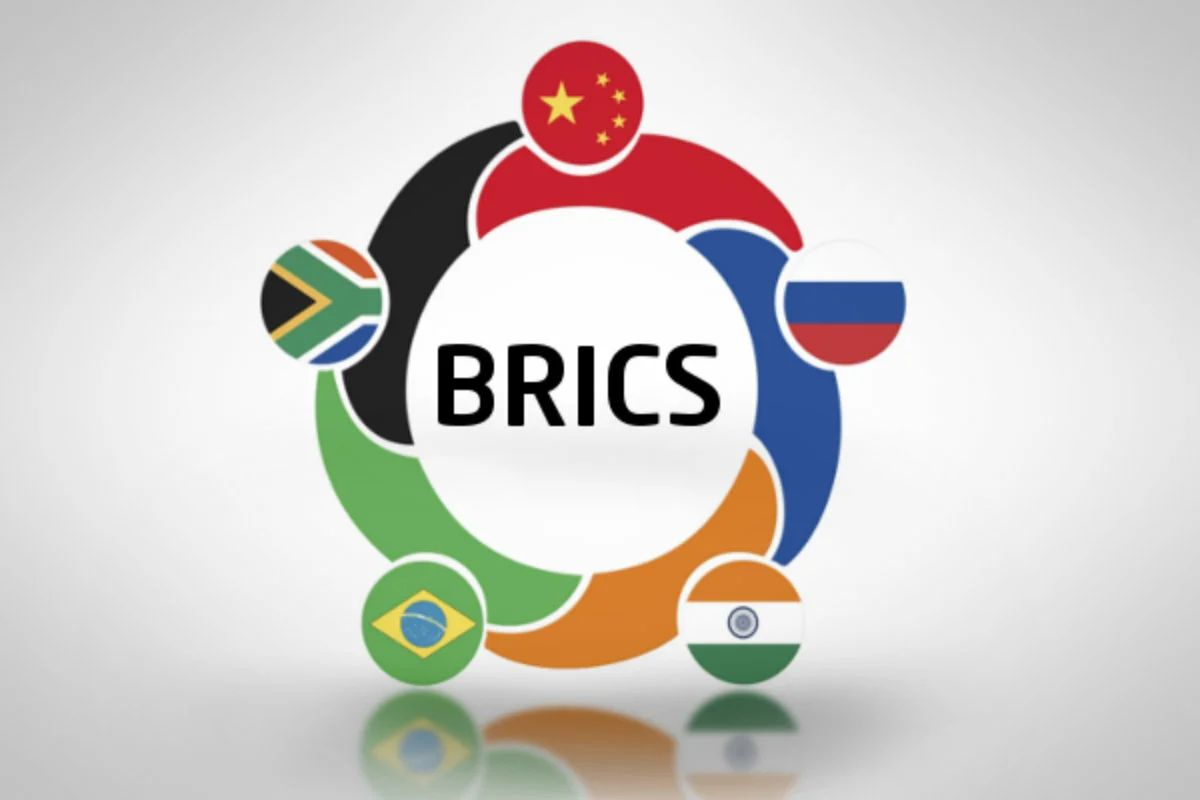
The BRICS nations are planning to launch a digital assets platform to facilitate cross-border settlements, a move that has sparked strong criticism from US President-elect Donald Trump. This new initiative aims to reduce the BRICS countries’ reliance on the US dollar, potentially reshaping global trade dynamics. The BRICS group, which originally included Brazil, Russia, India, China, and South Africa, has since expanded to include Iran, Egypt, Ethiopia, and the UAE, further broadening its influence. This platform is seen as a step toward reducing the dominance of the US dollar in international transactions and fostering a more diversified global financial system.

Trump has strongly opposed this initiative, warning the BRICS nations, including India, of serious consequences if they continue to pursue de-dollarisation. Over the weekend, Trump issued a stern warning, suggesting that if the BRICS nations go ahead with their plans, they could face a dramatic 100 percent increase in tariff rates. The US President-elect’s comments reflect his firm stance on maintaining the dollar’s preeminent role in global trade and finance. He made it clear that any attempt to undermine the dollar’s dominance would not be tolerated by the United States.

In a tweet posted on December 1, Trump reiterated his position, stating that the days of the US “standing by” while the BRICS countries move away from the dollar are over. He emphasized that the BRICS nations must commit to not creating a new currency or backing any alternative currency that could challenge the US dollar’s global position. According to Trump, if the BRICS nations do not adhere to these demands, they could face punitive tariffs, which would effectively cut them off from the US market—a significant threat considering the size and importance of the American economy.

Trump’s comments underscore the growing tension between the US and the BRICS nations as they explore ways to reduce their dependence on the dollar. While the digital assets platform is still in the planning stages, it has already drawn attention from global leaders. The move is seen as part of a broader effort by BRICS to assert its economic independence and challenge the longstanding dominance of the US dollar in international trade. However, with Trump’s strong opposition, it remains to be seen how far BRICS will go in pursuing this ambitious financial shift.

Russia Aims to Strengthen AI Capabilities Despite Western Sanctions

Russia has the potential to bolster its position in global AI rankings by 2030, leveraging its talented developers and in-house generative AI models, according to Alexander Vedyakhin, the first deputy CEO of Sberbank. Despite Western sanctions targeting its technological infrastructure, Vedyakhin expressed confidence in Russia’s ability to achieve significant advancements in the field.

Speaking to Reuters, Vedyakhin emphasized the resilience of Russia’s AI sector, noting that while some developers left during the 2022 Ukraine conflict mobilization, many are now returning, drawn by emerging opportunities. “It is vital to continue fostering experimentation in AI,” he said.

Russia, currently ranked 31st in the Global AI Index by Tortoise Media, lags behind AI leaders like the United States and China. However, Vedyakhin argued that the six-to-nine-month gap could close quickly through supportive regulation and domestic innovation. “Sanctions were designed to limit our computing power, but we are compensating with the brilliance of our scientists and engineers,” he added.

At Sberbank’s annual AI Journey conference, President Vladimir Putin reiterated Russia’s intent to collaborate with BRICS nations and other partners to challenge U.S. dominance in AI technology. While Vedyakhin acknowledged that Russia would not rival the U.S. and China in building massive data centers, he outlined a strategy focused on developing smart, localized AI models akin to Meta’s Llama.

Generative AI models, like large language models (LLMs), analyze extensive datasets to produce human-like responses and content. Vedyakhin highlighted the importance of national AI models for maintaining technological sovereignty. He noted that foreign-trained models often misunderstand local cultural contexts, citing the example of a Western AI misinterpreting the Russian dish “herring under a fur coat” as a literal fish wearing a fur coat.

Vedyakhin also criticized overregulation in Europe and parts of China, which he said hampers innovation. He stressed the need for Russia to maintain an AI-friendly regulatory environment. “If we stifle experimentation with excessive restrictions, we risk falling behind in the global AI race,” he said.

Despite a broader decline in venture capital investment in Russia, funding for AI startups continues to grow. Vedyakhin predicted the rise of decentralized autonomous organizations (DAOs) powered by blockchain and AI agents, which could help address Russia’s labor shortages. He envisioned DAOs where AI handles most operations, with a single human at the helm, projecting widespread adoption within 3-5 years.

Russia’s focus on developing generative AI models tailored to its language and culture could help it carve out a niche in the global AI landscape, even as geopolitical and economic challenges persist.


BRICS Nations Have No Intent to Undermine U.S. Dollar, Says Indian Foreign Minister

India’s Foreign Minister, Subrahmanyam Jaishankar, emphasized on Saturday that the BRICS nations—comprising Brazil, Russia, India, China, and South Africa—have no intention of weakening the U.S. dollar. Speaking at an event in Doha, Qatar, Jaishankar sought to dispel concerns regarding the bloc’s monetary policies and intentions.

His comments come in the wake of U.S. President-elect Donald Trump’s ultimatum to BRICS countries. Trump recently demanded that the bloc refrain from creating or supporting an alternative currency to replace the dollar. Failure to comply, he warned, could result in the imposition of 100% tariffs on goods from BRICS member nations.

Context and Background

The U.S. dollar has long dominated global trade and financial markets, with BRICS countries occasionally proposing mechanisms to reduce dependence on it for international transactions. However, Jaishankar’s statement underscored India’s stance that BRICS aims to enhance multilateral cooperation without disrupting the global economic order.

“The BRICS framework has always focused on promoting shared growth and balanced trade partnerships, rather than challenging existing systems,” Jaishankar stated.

Trump’s Stance on BRICS and Global Currency

Trump’s sharp rhetoric reflects his administration’s broader concerns about potential threats to the dollar’s supremacy in global trade. The president-elect has also consistently advocated for protective economic measures to shield the U.S. from perceived challenges posed by major emerging economies.

While some BRICS nations, particularly China and Russia, have explored alternatives to reduce dollar dependency—such as using local currencies for trade or discussing a potential BRICS currency—there has been no formal move to establish a competitor to the U.S. dollar.

India’s Diplomatic Position

India, as one of the leading voices within BRICS, has reiterated its commitment to global financial stability. Jaishankar stressed that any speculation about undermining the dollar is unfounded and counterproductive to fostering international economic cooperation.

The Indian foreign minister also hinted at the need for constructive dialogue between the U.S. and BRICS to address concerns rather than escalating tensions through unilateral measures like tariffs.