Yazılar

Oracle’s Record-Breaking Surge Highlights AI Trade’s Dominance in Markets

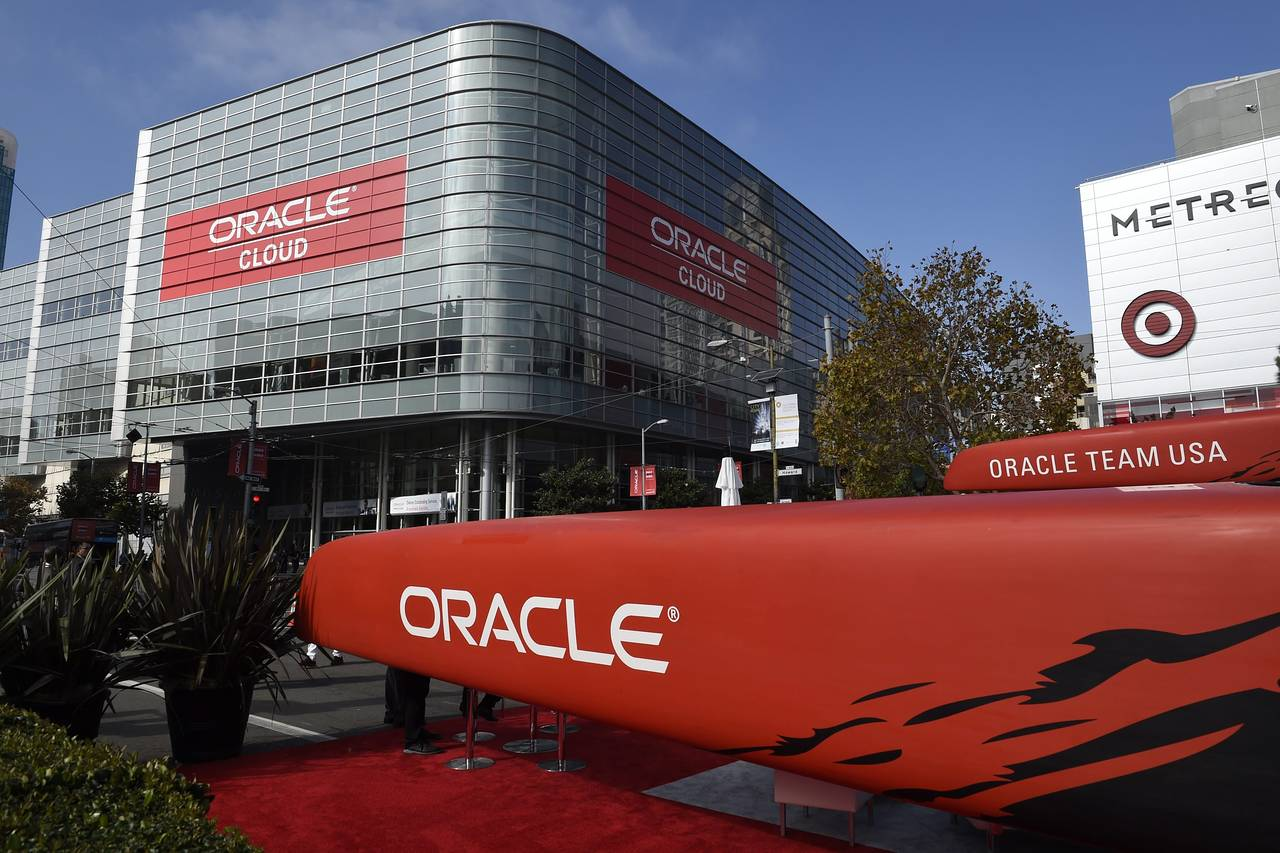
Wall Street’s AI-driven rally hit another milestone this week as Oracle’s shares soared 36%, pushing its market value to $922 billion and reinforcing artificial intelligence as the defining force behind 2025’s equity boom.

Oracle’s AI Catalyst

  • The surge followed Oracle’s disclosure of four multi-billion-dollar cloud contracts driven by demand from AI companies such as OpenAI and xAI.

  • The move places Oracle among the 10 most valuable U.S. companies, overtaking names like Eli Lilly, JPMorgan, and Walmart.

  • Oracle’s stock has nearly doubled in 2025, making it one of the top S&P 500 performers.

AI Trade in Context

  • Nvidia, Microsoft, Alphabet, Amazon, Palantir, Broadcom, Meta Platforms, and Oracle together have accounted for about half of the S&P 500’s 11% gain this year.

  • Nvidia remains the world’s most valuable company at $4.3 trillion, despite a minor pullback after its August sales forecast.

  • The technology sector overall is up 16% year-to-date, with forward P/E ratios at 28x earnings — well above the 10-year average of 22x.

Broader Market Impact

  • AI-linked stocks now dominate trading activity: 9 of the 10 most traded companies this week were AI-related (Apple being the lone exception).

  • The enthusiasm has spread beyond tech: utilities and industrials like GE Vernova, Constellation Energy, and Vistra are gaining on expectations of higher energy demand to fuel AI infrastructure.

  • This has lifted the S&P 500’s overall valuation to 22x forward earnings, near a four-year high.

Investor Sentiment

Despite concerns about overheating, analysts see Oracle’s surge as proof that capital continues flowing heavily into AI plays.

“I was very surprised by the magnitude of the (Oracle) jump and it shows there is still a lot of life left in the AI trade,” said Chuck Carlson of Horizon Investment Services.
OpenAI’s Cash Burn Projected to Hit $115B by 2029 Amid Chip, Data Center Push

OpenAI has revised its financial outlook sharply upward, projecting it will burn through $115 billion by 2029, according to The Information. The new figure is about $80 billion higher than its earlier estimate, reflecting the surging costs of powering ChatGPT and other AI models.

The report says OpenAI expects to lose over $8 billion in 2024 alone, roughly $1.5 billion more than forecast earlier this year. The company anticipates that annual burn will balloon to $17 billion next year, rising to $35 billion in 2027 and $45 billion in 2028.

To rein in costs, OpenAI is pursuing vertical integration—developing its own AI server chips and data center infrastructure. Its first in-house chip, being developed in partnership with Broadcom, is expected in 2025 and will be used internally. On the infrastructure side, OpenAI has struck major agreements, including:

  • A $4.5 GW data center expansion with Oracle announced in July.

  • The Stargate project, a planned $500 billion, 10 GW buildout backed by SoftBank.

  • Expanded computing capacity through Google Cloud.

The staggering burn rate underscores the immense capital intensity of generative AI, where costs for cloud computing, GPUs, and electricity are skyrocketing. At the same time, it highlights OpenAI’s strategy to reduce reliance on external providers like Nvidia and Amazon Web Services by building a proprietary AI stack—from chips to data centers.

Broadcom Soars on $10B AI Chip Deal, Likely With OpenAI

Broadcom shares surged 15% Friday after unveiling a $10 billion AI chip order from a new, unnamed customer—an announcement that cements its role as a key custom chip supplier in the race to expand generative AI infrastructure. The blockbuster order immediately sparked speculation that the buyer is OpenAI, with analysts at J.P. Morgan, Bernstein, and Morgan Stanley pointing to the timing and scale of the deal.

If confirmed, the partnership would mark OpenAI’s biggest move yet toward developing its own in-house processors, reducing reliance on Nvidia and AMD, whose stock prices dipped 2% and 5% respectively after Broadcom’s news. Reuters previously reported that OpenAI had been working with Broadcom on a custom chip project.

The deal highlights Big Tech’s broader trend of diversifying away from Nvidia’s costly, supply-constrained GPUs. Microsoft, Amazon, Google, and Meta are already designing their own silicon. Broadcom, which already supplies custom AI chips to Google and Meta, now appears positioned to capture even more of the rapidly expanding market.

The rally added more than $200 billion to Broadcom’s valuation, boosting its market cap above $1.44 trillion. Analysts now forecast Broadcom’s AI revenue could surpass $40 billion in fiscal 2026, far above last quarter’s $30 billion projection.

Adding to investor optimism, longtime CEO Hock Tan confirmed he would remain in charge for at least another five years. Under his leadership, Broadcom has transformed into a central player in the global AI supply chain.