
Yazılar

U.S. Treasury’s Bessent to Meet China’s He Lifeng in Madrid on Trade, TikTok, and Money Laundering

U.S. Treasury Secretary Scott Bessent will meet Chinese Vice Premier He Lifeng in Madrid next week for high-level talks covering trade, TikTok, and illicit finance, the Treasury said Thursday. The meetings, set for September 12–18, coincide with Bessent’s trip to Spain and Britain, ahead of his participation in President Donald Trump’s state visit to the UK (Sept. 17–19).

Focus Areas

  • Trade and Tariffs: The talks mark the fourth major in-person meeting between Bessent and He this year, as Washington and Beijing seek to uphold a fragile trade truce. A July meeting in Stockholm resulted in a 90-day tariff pause extension, approved by Trump until November 10. U.S. tariffs on Chinese goods remain steep at ~55%, with agriculture a sticking point. Washington accuses China of shifting farm imports to Brazil and Argentina, undercutting U.S. soybean farmers.

  • TikTok Deadline: ByteDance’s short-video platform faces a U.S. ban unless it is sold to U.S. ownership. Trump extended TikTok’s divestment deadline to September 17. Treasury confirmed the app will be discussed in Madrid, after not featuring in July’s talks.

  • Money Laundering Cooperation: Both sides will address illicit finance, which Washington links to Chinese banks allegedly enabling Russia’s access to military technologies amid the Ukraine war. Treasury retains the authority to sanction Chinese banks involved in such transfers, though it has not yet exercised it.

Broader Context

The Madrid meeting comes as the world’s two largest economies attempt to stabilize relations:

  • Rare earth exports from China to the U.S. were restored under the current truce.

  • However, agriculture and tariffs remain unresolved, with U.S. farmers facing a shrinking share of the Chinese market.

  • Trump has maintained high tariffs on Chinese goods, including those tied to fentanyl supply chain disputes.

The outcome of the Madrid talks remains uncertain, particularly on farm trade or tariff relief, but the inclusion of TikTok and money laundering suggests Washington is broadening the agenda beyond traditional trade disputes.
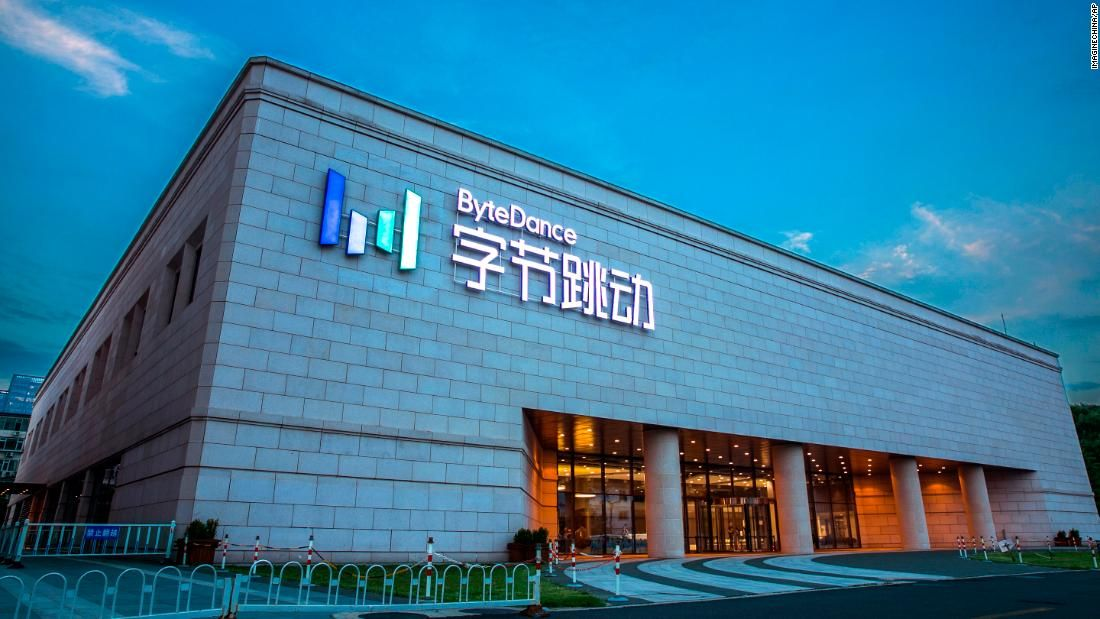
ByteDance Shifts Chip Design Staff to Singapore Unit Amid U.S.-China Tensions

Chip designers at ByteDance, many based in Beijing and Shanghai, were surprised last week to learn they are officially reporting into a Singapore unit, according to three people familiar with the matter. The change became clear when staff were reassigned into a new group on the company’s internal messaging system.

Analysts suggest the restructuring could help ByteDance navigate U.S.-China trade restrictions on semiconductor access. Since late 2023, U.S. rules have barred mainland Chinese firms from using Taiwan’s TSMC to manufacture advanced AI chips above certain performance thresholds. Shifting oversight to Singapore may allow ByteDance more flexibility in securing partnerships and production.

ByteDance, best known globally for TikTok, has been expanding into proprietary chip design since 2022, developing application-specific integrated circuits (ASICs) to reduce reliance on suppliers like Nvidia. The company has worked with Broadcom on AI processors intended for TSMC fabrication, though it does not currently outsource manufacturing to the Taiwanese firm.

The Singapore entity may be linked to Picoheart, a ByteDance subsidiary registered in December 2023. Picoheart drew notice last year when it acquired a 9.5% stake in Chinese memory chipmaker Innostar. Singapore also hosts TikTok’s CEO Shou Zi Chew and some of ByteDance’s largest data centers.

So far, ByteDance’s chips are limited to inference tasks, such as video decoding and networking, rather than the more computationally intensive AI training workloads where rivals like Alibaba and Baidu have advanced further. Job postings indicate ByteDance is still hiring for its AI chip team as it tries to catch up in the strategic semiconductor race.

Chinese Tech Firms Still Pursuing Nvidia Chips Despite Government Pressure

Chinese tech giants including Alibaba (9988.HK) and ByteDance remain eager to secure Nvidia’s (NVDA.O) artificial intelligence chips despite regulators in Beijing discouraging such purchases, according to four sources familiar with procurement talks.

The companies are pressing for assurance that their orders for Nvidia’s H20 model—which regained U.S. approval for sale in China in July—are being processed. They are also closely tracking Nvidia’s development of a more advanced chip, tentatively called the B30A, based on its Blackwell architecture. Sources said the B30A could cost roughly twice as much as the H20’s current $10,000–$12,000 price tag but may deliver up to six times more power, making it an attractive option if cleared by Washington.

Both the H20 and B30A are downgraded versions of Nvidia’s global products, designed to comply with U.S. export restrictions. The issue of whether Chinese firms can access advanced chips remains a central flashpoint in the U.S.–China technology rivalry. While Washington has relaxed some curbs, U.S. President Donald Trump recently struck a deal requiring Nvidia to give 15% of its H20 revenue to the U.S. government.

China, meanwhile, is urging its companies to reduce reliance on U.S. chips. Regulators have summoned Tencent (0700.HK), ByteDance, and others to question their H20 purchases, citing potential information security risks. However, Beijing has not formally banned Nvidia products.

Strong demand persists due to limited domestic chip supply. Products from Huawei and Cambricon (688256.SS) remain constrained and, according to engineers at Chinese firms, perform less effectively than Nvidia’s. Nvidia itself acknowledged rising competition from local rivals but declined further comment.

Uncertainty over its China sales led Nvidia to issue a cautious forecast in August, excluding potential revenue from the world’s second-largest economy. The company’s shares have since fallen about 6%. CEO Jensen Huang has reassured Chinese customers about H20 availability and is reportedly preparing B30A samples for delivery to China as early as September. Nvidia is estimated to hold 600,000–700,000 H20 units in inventory and has asked TSMC to produce more.

Huang has previously said China could represent a $50 billion market for Nvidia if it maintains access to competitive products.