Yazılar

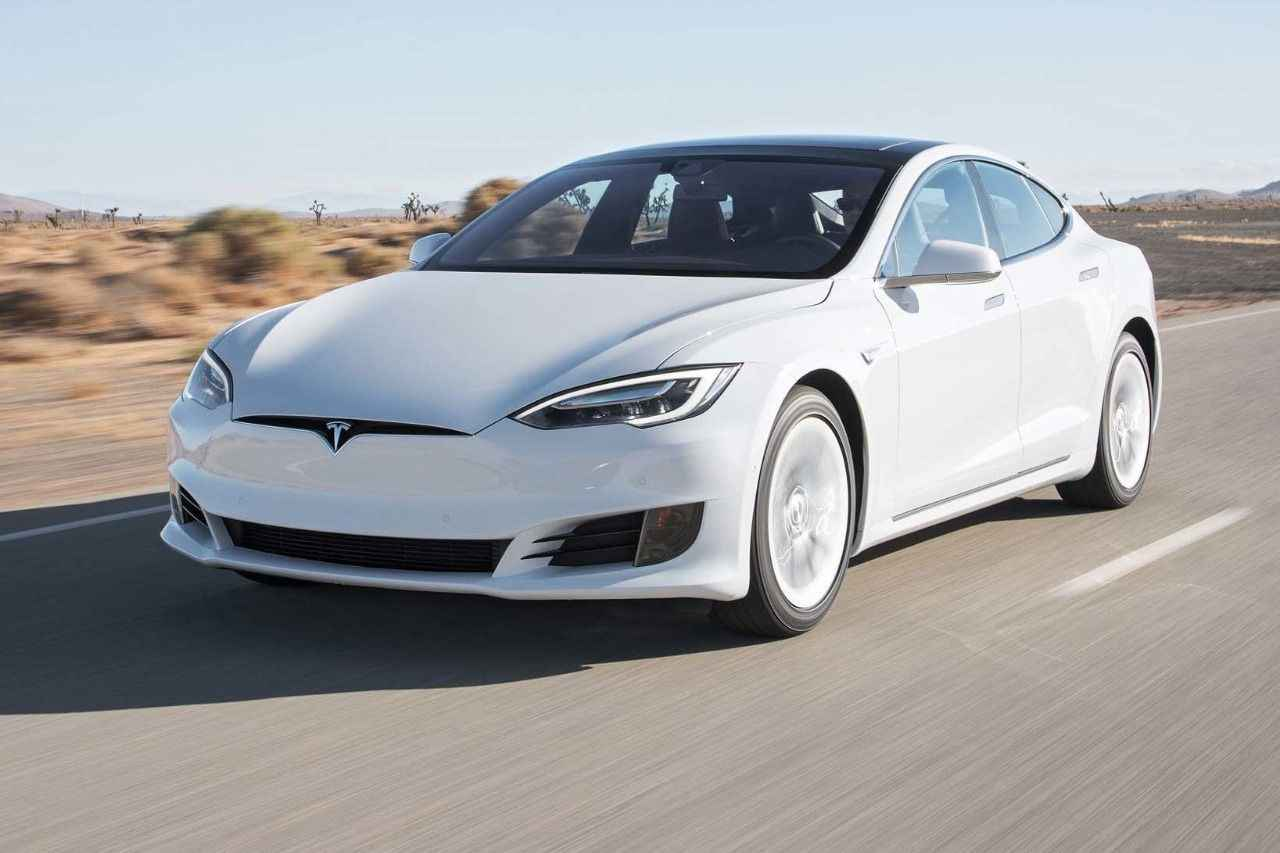
Tesla Shares Rise as Musk Promises Cheaper EVs and Autonomous Ride-Hailing

Tesla shares climbed more than 2% on Thursday after CEO Elon Musk announced plans to launch lower-cost electric vehicles (EVs) in the first half of 2025 and begin testing an autonomous ride-hailing service in June. These commitments helped investors look past a weaker-than-expected fourth quarter, which saw declining revenue and shrinking margins due to delayed model upgrades and rising competition.

Despite Tesla’s first annual decline in deliveries in 2024, the company assured investors that its vehicle business would return to growth in 2025. However, Tesla did not reaffirm Musk’s earlier forecast of a 20-30% sales increase for next year.

Morgan Stanley analysts noted that Tesla is shifting from being a traditional automotive company to a diversified player in AI and robotics. Investors remain optimistic, especially as Musk’s support for U.S. President Donald Trump could lead to more favorable regulatory conditions for Tesla’s robotaxi ambitions.

Musk revealed that Tesla will begin unsupervised testing of its autonomous ride-hailing service in Austin, Texas, though he did not provide specific details on how it would function. The company also did not share pricing details for its upcoming affordable EV models.

If Tesla’s stock gains hold, its market value could rise by approximately $28 billion. The stock surged 62.5% in 2024 and is currently trading at 118 times its 12-month forward earnings, significantly higher than Ford (6.07) and General Motors (4.48).

At least 19 brokerages have raised their price targets for Tesla stock, with a median target of $300, up from $278 at the end of December. Analysts believe that Tesla’s growth will be fueled by Full Self-Driving technology and the introduction of an affordable EV. However, some experts remain cautious about Musk’s timeline for launching robotaxis, citing regulatory challenges, particularly in Europe and China.

Tesla also announced an increase in its capital expenditure forecast, expecting to spend over $11 billion in 2025 and the following two fiscal years.

 

Meta Reports Strong Q4 Sales But Forecasts Muted Outlook Amid AI Investments

Meta Platforms (META.O) exceeded Wall Street expectations for its fourth-quarter revenue, reporting $48.4 billion, which outpaced analysts’ predictions of $47 billion. Despite this strong performance, the parent company of Facebook and Instagram issued a cautious outlook for the first quarter of 2025, with expected revenue between $39.5 billion and $41.8 billion, slightly below the analysts’ consensus of $41.72 billion.

Meta’s CEO, Mark Zuckerberg, struck an optimistic tone during a conference call, focusing on the company’s AI initiatives. He expressed confidence in the open-source AI strategy, commenting that the emergence of Chinese startup DeepSeek’s AI models reinforced his belief in this direction. “There’s going to be an open-source standard globally,” Zuckerberg remarked, emphasizing that he sees it as an American standard.

However, Meta’s outlook raised questions about the company’s capital spending, as the company relies on its core social media advertising business to finance its significant AI and “metaverse” investments, such as smart glasses and augmented reality systems. Meta has already committed up to $65 billion in capital expenditures for 2025 to expand its AI infrastructure, alongside increasing AI-related hires. The company also anticipates total expenses for 2025 to be between $114 billion and $119 billion, up from $95 billion in 2024.

Jeremy Goldman, principal analyst at eMarketer, noted that while Meta’s fourth-quarter results were strong, the key issue going into 2025 is whether its substantial AI investments will pay off. He highlighted that Meta’s family daily active people (DAP) metric, which tracks unique users who open any of its apps in a day, grew by 5% year-over-year to 3.35 billion.

Meta’s results came after DeepSeek, a Chinese AI company, launched new models that outperformed top U.S. competitors at a fraction of the cost, fueling concerns about the sustainability of U.S. AI business models and triggering a tech stock selloff. Zuckerberg acknowledged the challenges posed by DeepSeek but said it was too early to determine how its global impact would affect Meta’s AI strategy. He added that Meta’s AI teams were already incorporating insights from DeepSeek’s models into their work.

Meta continues to face financial losses in its metaverse-focused Reality Labs unit, which, while exceeding sales expectations, still reported a $5 billion loss in Q4. Despite these losses, Zuckerberg believes the long-term business potential of AI will become evident after 2025.

Meta’s hefty investment in AI includes plans to acquire more of Nvidia’s AI chips and develop custom silicon to train AI systems for better feed recommendations by next year. CFO Susan Li confirmed the company’s goal to use its own chips for these AI tasks. Meta’s continued investment in AI is part of its broader strategy to enhance user experiences across its platforms, while also aiming for cost reductions in AI model development.


Microsoft to Invest $80 Billion in AI-Enabled Data Centers in Fiscal 2025

Microsoft plans to invest $80 billion in fiscal 2025 to develop data centers focused on training artificial intelligence (AI) models and deploying AI and cloud-based applications, according to a company blog post. This follows a surge in AI investments, driven by the popularity of AI technologies like OpenAI’s ChatGPT, which require vast computing power.

As AI technologies demand specialized infrastructure, Microsoft is significantly enhancing its data-center network and increasing its investment in AI-focused computing capabilities. The company’s fiscal 2025 capital expenditure, including leases, is projected to total $84.24 billion, with a 5.3% increase to $20 billion in the first quarter of fiscal 2025.

Microsoft’s ongoing investment is seen as crucial to its competitive positioning in the AI race, especially given its exclusive backing of OpenAI. More than half of the $80 billion investment will be allocated to the United States, underscoring the country’s leadership in the global AI landscape.