Yazılar

SoftBank completes $41 billion investment in OpenAI, deepening bet on AI

SoftBank Group said it has completed a $41 billion investment in OpenAI, marking one of the largest private funding rounds ever and giving the Japanese group an ownership stake of about 11% in the maker of ChatGPT.

The move underscores SoftBank CEO Masayoshi Son’s increasingly aggressive push into artificial intelligence, which he has described as an “all in” bet. Son is positioning SoftBank to capitalise on booming demand for AI computing power, spanning both software and the physical infrastructure that underpins advanced models.

SoftBank said it completed an additional $22.5 billion investment on Wednesday, following an earlier $7.5 billion injection in April. OpenAI also secured an expanded syndicated co-investment of $11 billion from other backers as part of the round. In March, SoftBank had agreed to invest up to $40 billion into a for-profit OpenAI subsidiary, with the funding structured through a mix of direct capital and syndicated investments.

Picture background

The transaction initially valued OpenAI at about $300 billion on a post-money basis. However, a subsequent secondary share sale completed in October pushed OpenAI’s valuation to roughly $500 billion, according to PitchBook data. CNBC first reported the completion of the latest investment earlier in the day.

The deal comes as artificial intelligence has become the central driver of global technology investment, reshaping corporate strategies and investor expectations. OpenAI has emerged as a key beneficiary of that shift, sitting at the heart of an industry-wide surge in AI spending.

OpenAI is also a core participant in “Stargate,” a large-scale, multi-year data centre initiative being developed alongside Oracle and other partners. The project aims to support next-generation AI models and is backed by major investors including SoftBank, further linking the group’s capital deployment to the infrastructure required for future AI growth.
Survey Finds 97% of Listeners Can’t Tell AI Music From Human Songs

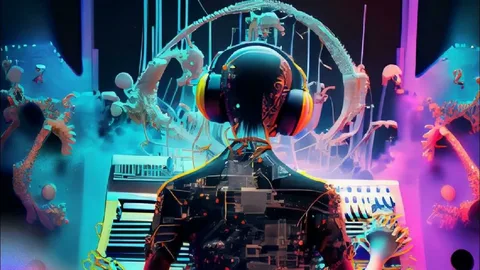
Nearly all listeners can no longer tell when a song has been composed by a machine.
A new Deezer–Ipsos survey revealed that 97% of respondents were unable to distinguish between AI-generated and human-made music, exposing the profound transformation — and disruption — that artificial intelligence is bringing to the global music industry.

The study, which polled 9,000 participants across eight countries, including the U.S., the U.K., and France, underscores how AI tools are reshaping creativity, raising copyright and ethical concerns, and threatening the income of traditional artists.

Despite their inability to detect the difference, most listeners want transparency. About 73% supported clear labelling for AI-generated tracks, 45% wanted filters to exclude them, and 40% said they would skip such songs entirely.

Deezer, which now receives over 50,000 AI-generated song uploads per day—a third of its total submissions—has introduced tagging systems and excluded synthetic tracks from editorial playlists and algorithmic recommendations.
“We believe creativity is a human value, and artists deserve protection,” said Deezer CEO Alexis Lanternier, calling for stronger transparency measures.

The company has also begun removing fake streams from royalty calculations and is exploring how to adjust payment structures for AI-generated music, though Lanternier admitted such changes would be complex.

The debate intensified earlier this year when AI band The Velvet Sundown gained over a million monthly Spotify listeners before being revealed as fully artificial. Meanwhile, Universal Music Group recently settled a copyright case with AI startup Udio and plans to launch a licensed AI-music tool in 2026.

Adding to the controversy, a Munich court ruled this week that OpenAI’s ChatGPT violated German copyright laws by reproducing song lyrics without permission.

OpenAI Explores Generative AI Health Tools in Expansion Beyond ChatGPT

OpenAI is reportedly exploring consumer health products, including a generative AI-powered personal health assistant, as part of its efforts to expand beyond its core AI offerings, according to Business Insider, citing people familiar with the matter.

The move marks a major step for the ChatGPT developer as it looks to enter the highly regulated and competitive healthcare sector. OpenAI declined to comment on the report.

The company’s healthcare ambitions come after a series of strategic hires earlier this year. In June, OpenAI appointed Nate Gross, cofounder of the physician networking platform Doximity, as head of healthcare strategy, followed by former Instagram executive Ashley Alexander joining as vice president of health products in August.

Speaking at the HLTH conference in October, Gross revealed that ChatGPT attracts around 800 million weekly active users, with a significant number seeking medical or health-related advice through the platform.

OpenAI’s expansion into health mirrors earlier efforts by Google, Amazon, and Microsoft to give consumers more control over their medical data—attempts that largely fell short. Google shut down its Health Records project in 2011, Amazon ended its Halo fitness tracker business in 2023, and Microsoft’s HealthVault also failed to gain widespread adoption.

If realized, OpenAI’s health assistant could integrate generative AI with personalized wellness and medical insights, potentially transforming how consumers manage their health. However, regulatory and ethical challenges around data privacy and medical accuracy are expected to be key hurdles.