Yazılar

Synopsys Resumes Limited Services in China Amid U.S. Export Restrictions, Core Tool Sales Still Blocked

Synopsys has partially resumed some services in China after suspending operations earlier this month in response to new U.S. export curbs, according to a source with direct knowledge of the situation. The California-based semiconductor design software provider had halted sales and access to its SolvNet customer support portal to comply with broad U.S. restrictions aimed at limiting technology exports to China.

The source revealed that while Synopsys has restarted sales of non-core hardware and intellectual property (IP) to serve some existing Chinese clients, sales of critical Electronic Design Automation (EDA) tools remain suspended. These essential EDA tools are necessary to fully utilize the company’s IP and hardware products, such as the HAPS and ZeBu hardware-assisted verification systems, which are primarily used for accelerating chip verification.

SolvNet has reopened with limited access, restricting some software-related documents, further impacting Chinese customers’ ability to use Synopsys’ full range of services.

Synopsys, along with Cadence and Siemens EDA, dominates the global EDA market with over 70% market share in China, according to the Chinese state news agency Xinhua. The ongoing restrictions on EDA tool sales pose a significant challenge to Chinese semiconductor design companies, potentially hindering the country’s chipmaking industry.

Following the U.S. export controls, Synopsys suspended its annual and quarterly revenue forecasts, reflecting uncertainty about future sales prospects in China.

The company did not immediately respond to requests for comment.

Trump AI Czar Downplays Risk of AI Chip Smuggling, Warns Against Overregulation

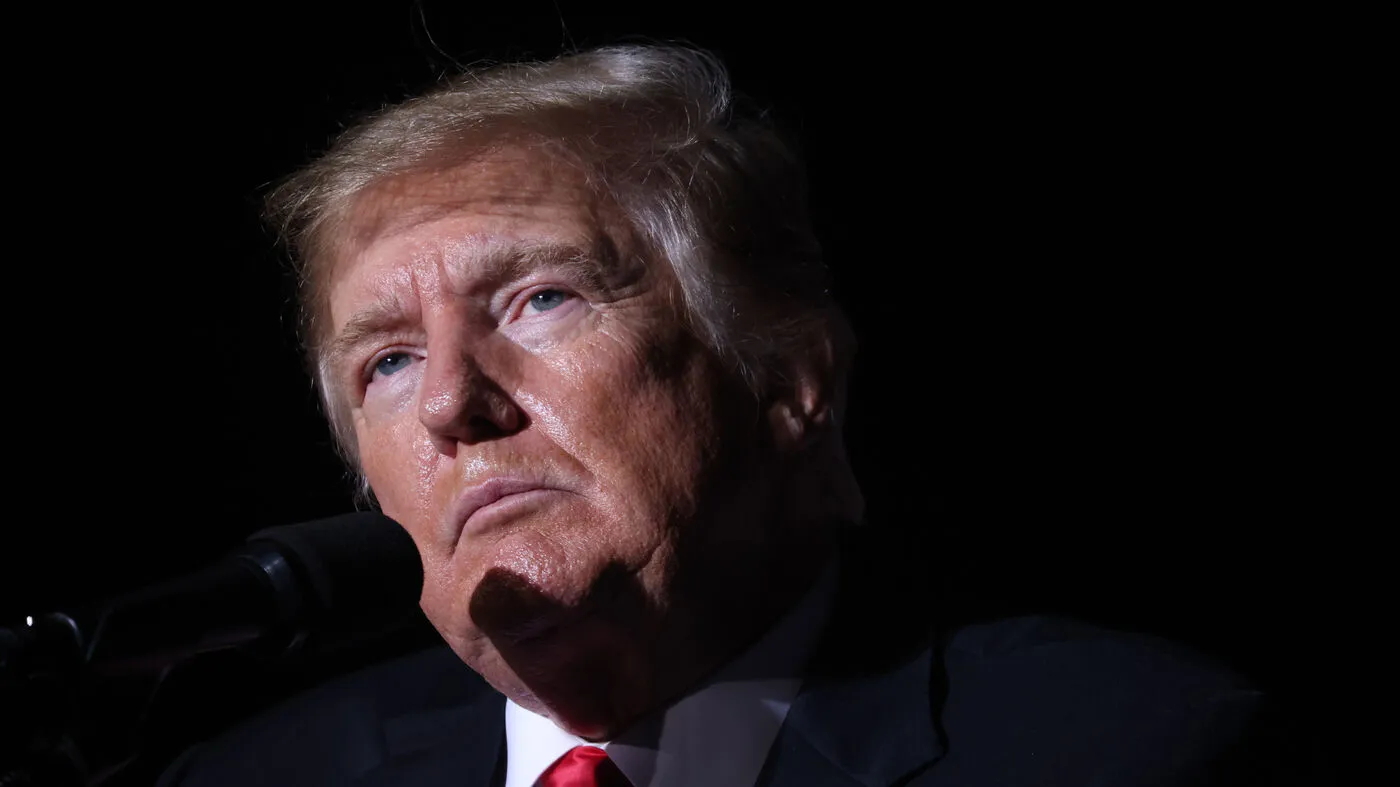
David Sacks, the White House AI czar under former President Donald Trump, on Tuesday minimized concerns about American AI chips being smuggled to adversaries, emphasizing the physical size and security of such equipment. Speaking at the AWS summit in Washington, Sacks explained that AI chips are housed in massive server racks weighing two tons, making clandestine smuggling highly unlikely.

Sacks expressed worries that stringent U.S. AI regulations could hinder innovation and growth, potentially ceding the global AI market to China. “We talk about these chips like they could be smuggled in the back of a briefcase. That’s not what they look like,” he said. He criticized efforts by state legislatures to regulate AI and permitting obstacles for data center construction.

Contrasting with President Joe Biden’s policies, which focused on curbing chip exports to China and addressing risks of AI misuse, the Trump administration revoked several Biden-era executive orders aimed at controlling AI diffusion and competition. Sacks argued that the Biden restrictions risk pushing countries like the United Arab Emirates closer to China, citing a recent U.S.-UAE plan to build a major AI campus abroad.

“We rescinded that Biden diffusion rule, which…made diffusion a bad word. Diffusion of our technology should be a good word,” Sacks said.

He warned that if AI chips made by Chinese giant Huawei become widespread globally within five years, it would signify a strategic loss for the U.S. Highlighting the rapid pace of Chinese AI development, Sacks stated, “China is not years and years behind us in AI. Maybe they’re three to six months.” The White House later clarified that Chinese AI chips lag one to two years behind U.S. technology, while their AI models are closer in capability.

Tesla’s Self-Driving Strategy Threatened by Chinese Auto and Tech Giants

Chinese electric vehicle (EV) makers, led by BYD, are increasingly challenging Tesla not only in the affordable EV sector but now also in the race to develop self-driving technology. BYD’s aggressive pricing strategy—offering its advanced “God’s Eye” driver-assistance system for free—poses a direct threat to Tesla’s expensive Full Self-Driving (FSD) package, priced at nearly $9,000 in China.

According to Shenzhen-based BYD investor Taylor Ogan, God’s Eye outperforms Tesla’s FSD. Other Chinese competitors such as Leapmotor and Xpeng are also offering highly capable driver-assistance systems in vehicles costing as little as $20,000. This surge in advanced autonomous technology is heavily backed by the Chinese government, creating fierce competition within the world’s largest auto market.

Teardown analyses reveal that BYD’s assisted-driving hardware costs are similar to Tesla’s, despite BYD’s systems incorporating additional components like radar and lidar that Tesla omits in favor of a camera-only approach. Lower sensor costs in China—up to 40% cheaper than in Europe and the U.S.—helped Chinese firms maintain a cost advantage while delivering more comprehensive systems.

The competitive pressure from China coincides with broader challenges for Tesla CEO Elon Musk, whose global EV sales have been slipping. As Tesla shifts its focus toward robotaxis and autonomy to sustain its market valuation—currently around $1 trillion—the company now faces stiff competition from Chinese firms who are also advancing rapidly in autonomous vehicle development.

Huawei has emerged as a key player by partnering with major Chinese automakers such as Chery, SAIC, and Changan to supply driver-assistance technology. Reuters journalists recently observed Huawei’s Aito M9 autonomous system successfully navigating the congested streets of Shenzhen, showcasing China’s significant progress in real-world autonomous driving conditions.

Meanwhile, Tesla faces regulatory hurdles in China that prevent the company from using locally collected driving data to improve its AI models abroad. Negotiations to transfer such data to the U.S. have so far been unsuccessful. In contrast, Chinese companies benefit from Beijing’s policy support, government subsidies, and the massive scale of domestic EV sales, which provide extensive on-road data to refine their autonomous systems.

BYD’s decision to offer God’s Eye for free may reduce its 22% gross margins but is expected to boost sales volume, enhancing its AI capabilities through expanded data collection. The company sold 4.2 million vehicles last year—more than twice Tesla’s output—further improving its economies of scale and bargaining power with suppliers.

The intense competition in China’s EV sector has driven rapid technological innovation and reduced costs, allowing companies like BYD to pressure suppliers for further price reductions. This aggressive environment is viewed as entering a “knockout round” of competition, as described in a recent BYD communication to its supply chain partners.

Tesla, preparing to launch a limited robotaxi trial in Austin, Texas, with 10 to 20 vehicles, remains behind its Chinese rivals in delivering fully autonomous solutions. Tesla has yet to release a fully unsupervised version of FSD capable of true hands-off driving, while Chinese companies are advancing toward Level 3 autonomy certification under new regulatory frameworks.