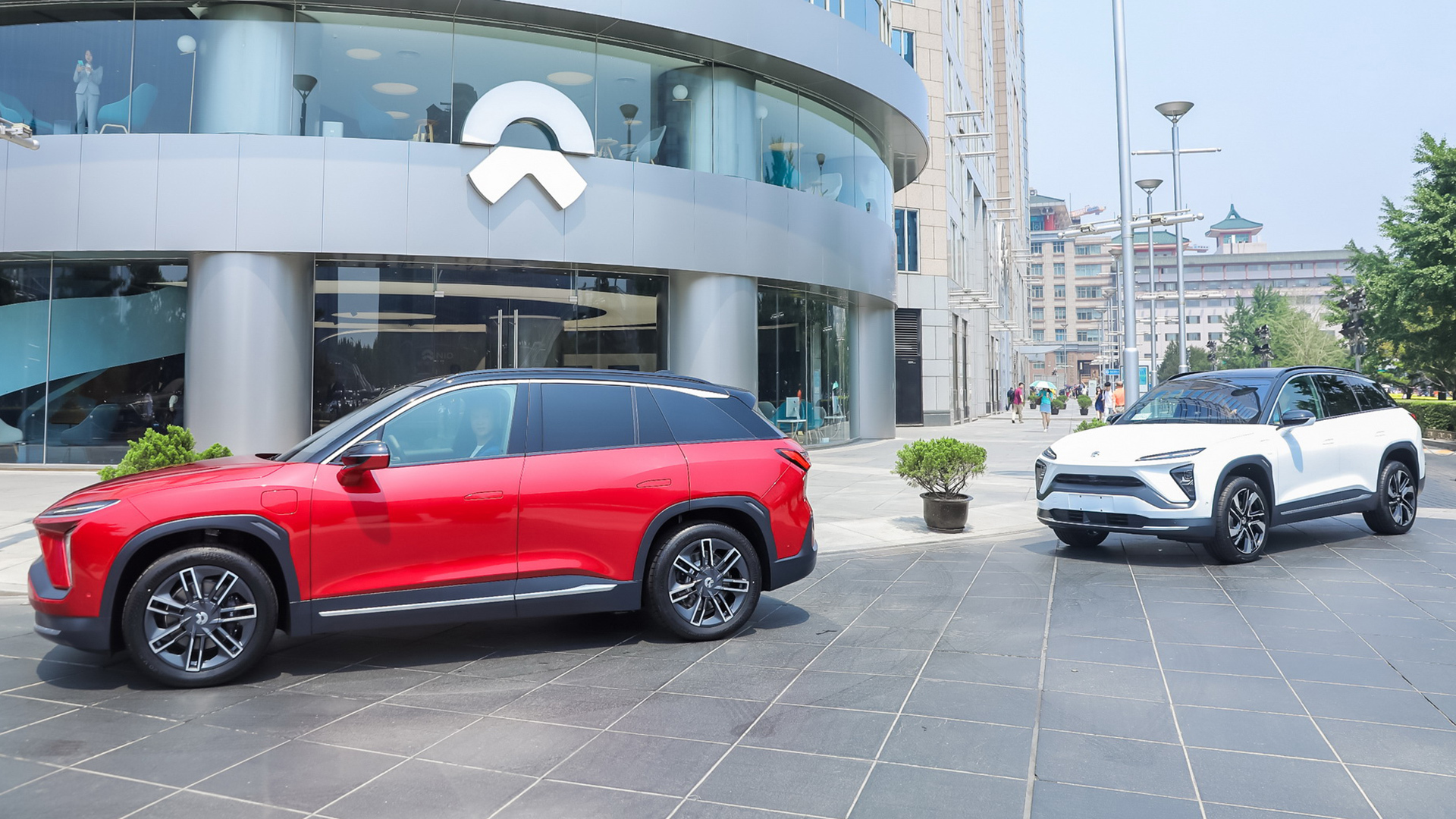
Chinese electric vehicle manufacturer Nio has announced plans to significantly expand its charging and battery swap infrastructure, aiming to install battery charging stations in each of China’s 2,844 counties by June 2025. The company, a leader in the country’s electric vehicle sector, further disclosed its intentions to establish battery swap stations in more than 2,300 counties by the same timeline, with efforts to reach the remaining counties by 2026.
This large-scale expansion is a part of Nio’s broader strategy to address consumer concerns regarding range anxiety, a key hurdle for the widespread adoption of electric vehicles (EVs). Battery charging and swap stations are considered crucial in less developed areas where such infrastructure is sparse. Nio’s innovative battery swap technology allows drivers of compatible vehicles to exchange depleted batteries for fully charged ones in about three minutes, drastically reducing the time spent waiting at conventional charging stations.
Nio’s current infrastructure already includes over 23,000 charging stations and more than 2,480 battery swap stations as of August 2023. The company claims to have completed over 51 million battery swaps, with more than half of the electricity used by Nio vehicles in July derived from these swaps. The expansion of Nio’s infrastructure is not limited to its vehicles, as more than 200 other car brands are reportedly able to use the company’s charging stations. Over 80% of the electricity provided by Nio’s chargers is used by non-Nio vehicles, showcasing the brand’s contributions to China’s growing EV ecosystem.

This expansion effort aligns with China’s national agenda to bolster the electric vehicle market, as outlined in its latest five-year plan that commenced in 2021. The plan includes goals for a nationwide fast-charging network, with particular emphasis on ensuring that at least 60% of highway service areas are equipped with such stations. The Chinese government has shown considerable support for the electric vehicle industry, including the development of EV charging infrastructure. In 2023, China reported a 65% increase in the number of charging stations, totaling 8.6 million. This translates to a ratio of one charging station for every 2.4 new energy vehicles sold during that year.
The competition in the electric vehicle market has driven rapid advancements in charging technology, with companies like Zeekr, a subsidiary of Geely, claiming that its new ultra-fast charging stations can charge a battery from 10% to 80% in just 10.5 minutes—surpassing the performance of Tesla’s charging technology. Nio, for its part, is focused on refining both its charging and swapping technologies, while continuing to build strategic partnerships with automakers such as Chang’an and Geely.
Nio’s power business is also expanding, with recent investments such as a 1.5 billion yuan ($210 million) injection led by a Wuhan city-linked fund. While the majority of Nio’s revenue comes from vehicle sales, its power services segment has grown by 5.2% in the first quarter of 2023, contributing 1.53 billion yuan to the company’s earnings.
The company has not yet announced its second-quarter earnings for 2023 but is expected to do so soon. As Nio continues its ambitious expansion plans, the company remains a central player in China’s push to dominate the global electric vehicle market.