Yazılar

Alibaba’s Amap Enters Local Business Rankings, Challenging Meituan

Alibaba’s mapping app Amap is expanding beyond navigation by launching AI-driven rankings for restaurants, hotels, and tourist destinations, directly competing with Meituan’s Dianping platform in the lucrative local-lifestyle services market.

Key Details

  • Street Stars Launch: Amap’s new feature, called Street Stars, ranks local businesses for its 170 million daily active users.

  • Financial Incentives: Alibaba is offering 1 billion yuan ($140 million) in subsidies for coupons on ride-hailing and in-store services.

  • Coverage: The service initially spans 300 cities and 1.6 million local business listings.

Competitive Landscape

  • Meituan’s Response: Meituan countered with 25 million coupons tied to top-rated restaurants, signaling an intensifying rivalry.

  • Instant Retail Battle: Both firms are locked in a discount-heavy price war in China’s booming one-hour delivery and lifestyle services segment.

  • CEO Vision: Alibaba CEO Eddie Wu described Amap’s AI transformation as a step toward making it a “gateway for future lifestyle services.”

Regulatory Angle

  • Scrutiny Rising: Chinese regulators have repeatedly warned against race-to-the-bottom pricing strategies and have summoned top firms for discussions.

  • Economic Context: The competition comes as consumer spending remains weak due to housing market troubles and job insecurity, pushing platforms to rely on aggressive subsidies.

Implications

Amap’s pivot signals Alibaba’s intent to build a comprehensive consumption ecosystem, but regulators’ intervention could determine how far the subsidy-driven price war continues in China’s local services and lifestyle economy.
China Postpones Approval of $35 Billion Synopsys-Ansys Merger Amid Rising Trade Tensions

China’s State Administration for Market Regulation (SAMR) has delayed its approval of the $35 billion merger between U.S. software companies Synopsys and Ansys, according to a Financial Times report on Friday. The move comes after U.S. President Donald Trump tightened export controls targeting China’s access to advanced semiconductor design software and other sensitive technologies.

The delay underscores the escalating trade tensions between the world’s two largest economies, even as they reached a tentative trade truce during talks in London earlier this week. The current dispute follows China’s previous curbs on mineral exports, prompting the Trump administration to respond with additional restrictions. These include stricter controls on exports of semiconductor design software — a key area of Synopsys’s business — as well as jet engines and various advanced goods destined for China.

The Synopsys-Ansys merger had reached the final stage of the Chinese regulatory process and was widely expected to receive approval by the end of June. However, U.S. actions in late May banning chip design software sales to China added new complications to the review, according to sources cited by the Financial Times.

Neither Synopsys nor Ansys have publicly commented on the reported delay. Reuters, which also attempted to verify the report, said Synopsys declined to comment, while Ansys and Chinese regulators have not responded to inquiries.

The Trump administration’s latest export controls form part of a broader strategy aimed at limiting China’s access to technologies that could enhance its semiconductor manufacturing capabilities and, potentially, its military strength. Washington has also revoked export licenses previously granted to certain suppliers, significantly tightening restrictions on U.S. technology shipments to China.

In a separate development, the U.S. Federal Trade Commission (FTC) last month required Synopsys and Ansys to divest certain assets to address domestic antitrust concerns related to the merger. Synopsys CEO has previously confirmed that the company has obtained regulatory clearances for the deal in all jurisdictions except China.

The $35 billion merger, if completed, would combine two of the most important players in electronic design automation (EDA) and engineering simulation software — sectors crucial for the development of next-generation semiconductors and complex industrial systems.

Pony.ai Robotaxi Catches Fire After Malfunction, No Injuries Reported

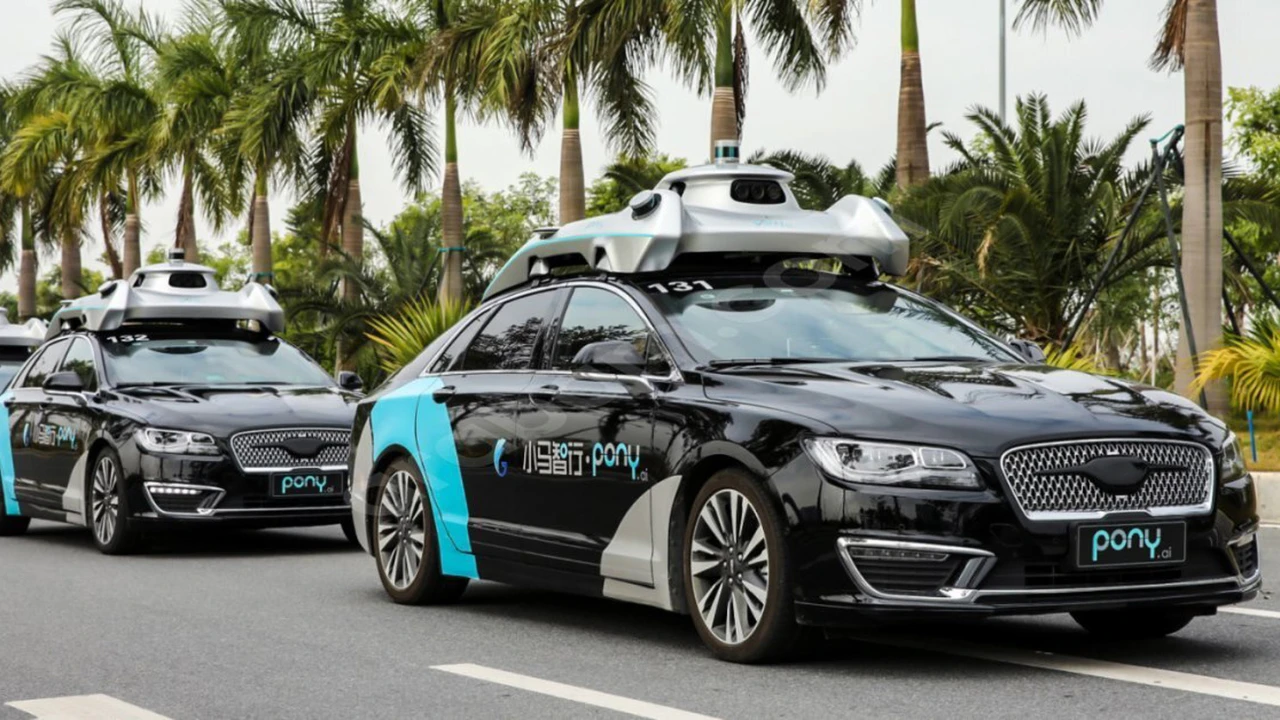
Pony.ai, one of China’s leading autonomous vehicle companies, confirmed on Wednesday that one of its driverless robotaxis caught fire in Beijing after a system malfunction triggered an emergency stop. The incident occurred while the vehicle was being handled by service personnel. Fortunately, no passengers were on board, and no injuries were reported.

According to a company statement, the car—operating without a human driver—experienced an “abnormal statusearly Tuesday morning, prompting its safety system to initiate a stop. Service staff arrived within two minutes, but during the response process, the vehicle ignited and caught fire.

No collision occurred and no one was injured. The specific cause is currently under investigation,” Pony.ai stated.

Incident Footage and Public Response

Videos circulating on Chinese social media show thick black smoke rising from a multi-lane highway, with a burned-out vehicle straddling a road divider. The car appears to be a Lexus, the luxury brand under Toyota, which is a known backer of Pony.ai. However, Reuters was unable to verify the model or authenticity of all media posted online.

An unnamed Beijing traffic police officer told Qingdao city’s broadcast outlet that the fire broke out when the engine was restarted, further complicating the cause analysis.

Regulatory and Industry Implications

The incident comes at a sensitive time, as Chinese regulators have begun tightening scrutiny on autonomous driving systems following a recent fatal autopilot-related crash involving a Xiaomi vehicle. The government has been encouraging the deployment of autonomous driving technology, with Pony.ai, Baidu, and others receiving approval to operate fully driverless robotaxis in designated urban zones.

However, high-profile failureslike the Waymo robotaxi incident in San Francisco where the vehicle was set on fire by a crowd—have raised broader concerns about safety, emergency response, and public trust in autonomous vehicles.

Ongoing Investigation

Neither Pony.ai nor Toyota provided additional details as of this writing. The cause of the fire remains under investigation, and regulators are likely to monitor the situation closely as the government refines its autonomous vehicle safety standards.