Yazılar

Qualcomm Explores Potential Acquisition of Intel Amid Industry Shifts

Qualcomm has recently approached Intel about the possibility of a takeover, according to a source familiar with the situation. The deal, still in its early stages, could mark a significant shift in the semiconductor industry but faces multiple challenges. Qualcomm CEO Cristiano Amon is said to be personally involved in discussions, which have yet to result in a formal offer.

Earlier reports suggested Qualcomm was particularly interested in Intel’s PC design unit but was also evaluating the broader portfolio of the five-decade-old company. Despite the ongoing talks, the complexity of such a deal—given Intel’s scale and position—could face regulatory scrutiny from antitrust authorities in the U.S., Europe, and China.

Intel, which has seen its stock drop by nearly 60% this year, is currently undergoing a restructuring under CEO Pat Gelsinger, who aims to focus on AI processors and the chip contract manufacturing business. Intel has been attempting to regain its competitive edge in the wake of losing market share to rivals like TSMC, Nvidia, and AMD.

If Qualcomm proceeds, the deal would likely be the largest in the tech sector since Broadcom’s attempt to acquire Qualcomm for $142 billion in 2018—a bid blocked by then-President Donald Trump due to national security concerns. Financing the acquisition remains unclear, though Qualcomm holds $13 billion in cash, and Intel’s current market value stands at $122 billion, including its debt. Qualcomm, which outsources its chip production to manufacturers like TSMC, has no history of operating a chip factory, raising questions about how it would manage Intel’s extensive manufacturing operations.

Intel declined to comment on the potential deal, and Qualcomm has not yet responded to requests for comments.
 

Intel Faces Setback as Broadcom Chip Manufacturing Tests Fall Short

Intel’s efforts to revitalize its contract manufacturing business have suffered a blow after tests with chipmaker Broadcom yielded disappointing results, sources revealed. Broadcom had sent silicon wafers through Intel’s cutting-edge 18A manufacturing process, which was intended to demonstrate the viability of the technology. However, after receiving the wafers last month, Broadcom’s engineers concluded that the process was not yet suitable for high-volume production. This setback poses a significant challenge to Intel’s turnaround strategy led by CEO Pat Gelsinger, who launched the contract manufacturing division in 2021 as a cornerstone of the company’s recovery.

Despite the setback, Intel remains optimistic. The company asserted that the 18A process is “healthy and yielding well,” with plans for full-scale production on track for next year. Broadcom, on the other hand, stated that it is still evaluating Intel’s offerings and has yet to make a final decision on a potential partnership.

Intel has been under significant pressure to secure major contracts with customers like Nvidia and Apple, especially as it faces mounting losses in its foundry business, which posted a $7 billion operating loss in the last quarter. The company aims to break even by 2027, but setbacks like the one with Broadcom complicate its path forward.

The foundry business, a critical part of Intel’s $100 billion expansion strategy, is integral to filling capacity at its newly constructed facilities in the U.S. However, Intel’s struggles to achieve viable yields with its advanced processes could hinder its ability to attract customers and compete with established giants like Taiwan Semiconductor Manufacturing Co. (TSMC).

Broadcom’s decision to test Intel’s 18A technology came amidst the chipmaker’s growing focus on AI hardware, with significant contracts from companies such as Google and Meta. However, concerns about defects on the wafers and the quality of chips produced by Intel’s process have made Broadcom cautious about committing to the new manufacturing technology.

Intel has pledged to be manufacturing-ready by the end of this year for its own chips, with plans to begin high-volume production for external customers in 2025. However, with high stakes and complex challenges ahead, Intel’s ability to turn its foundry business around remains uncertain.


Trump Accuses Taiwan of Stealing U.S. Chip Industry; Experts Say Taiwan’s Growth is Organic

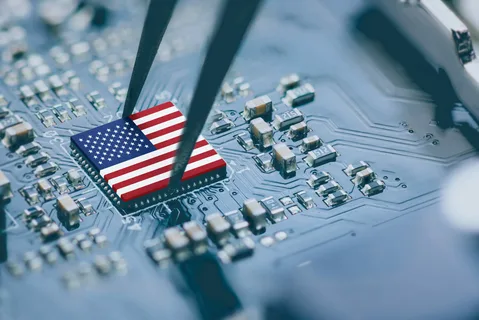
Former President Donald Trump recently claimed that Taiwan had effectively stolen America’s semiconductor industry, asserting that the island democracy had taken “almost 100%” of the market from the U.S. Trump suggested that this loss was a grave error and that Taiwan should pay for American defense support.

However, industry experts dispute this assertion. Taiwan’s semiconductor success is attributed to its strategic vision and innovative business model, not theft. Morris Chang, the founder of Taiwan Semiconductor Manufacturing Company (TSMC), established the company in 1987 after a distinguished career in the U.S. semiconductor industry. Chang’s vision was revolutionary—creating a “pure-play foundry” model focused solely on manufacturing chips designed by other companies.

This approach transformed the global chip sector. Today, Taiwan produces over 90% of the world’s advanced semiconductors, according to the Semiconductor Industry Association. TSMC’s success is built on its ability to scale production, invest heavily in R&D, and maintain efficiency. The company’s recent opening of a global R&D center in Hsinchu further underscores its commitment to advancing chip technologies.

Experts highlight that Taiwan’s achievements are rooted in its effective contract manufacturing model, skilled engineers, and a supportive tech ecosystem. While Intel and Samsung are attempting to replicate TSMC’s success, Taiwan’s advantages remain challenging to duplicate.

In response to Trump’s remarks, Taiwanese Premier Cho Jung-tai emphasized that Taiwan remains committed to maintaining its R&D capabilities domestically. This stance underscores the strategic importance of Taiwan’s semiconductor industry amid growing geopolitical tensions, including the risk of Chinese aggression.

The ongoing U.S.-China rivalry and chip shortages during the pandemic have prompted the U.S. to seek greater domestic chip production through initiatives like the CHIPS and Science Act. As TSMC expands its operations with new factories in Arizona, it faces challenges integrating its operations into different cultural and regulatory environments.

Experts advise that fostering a cooperative relationship between Taiwan and the U.S. could benefit both sides, ensuring stability and progress in the global semiconductor industry.