Yazılar

Scientists Discover Rare Metals in Coal Waste, Offering Potential for Clean Energy Transition

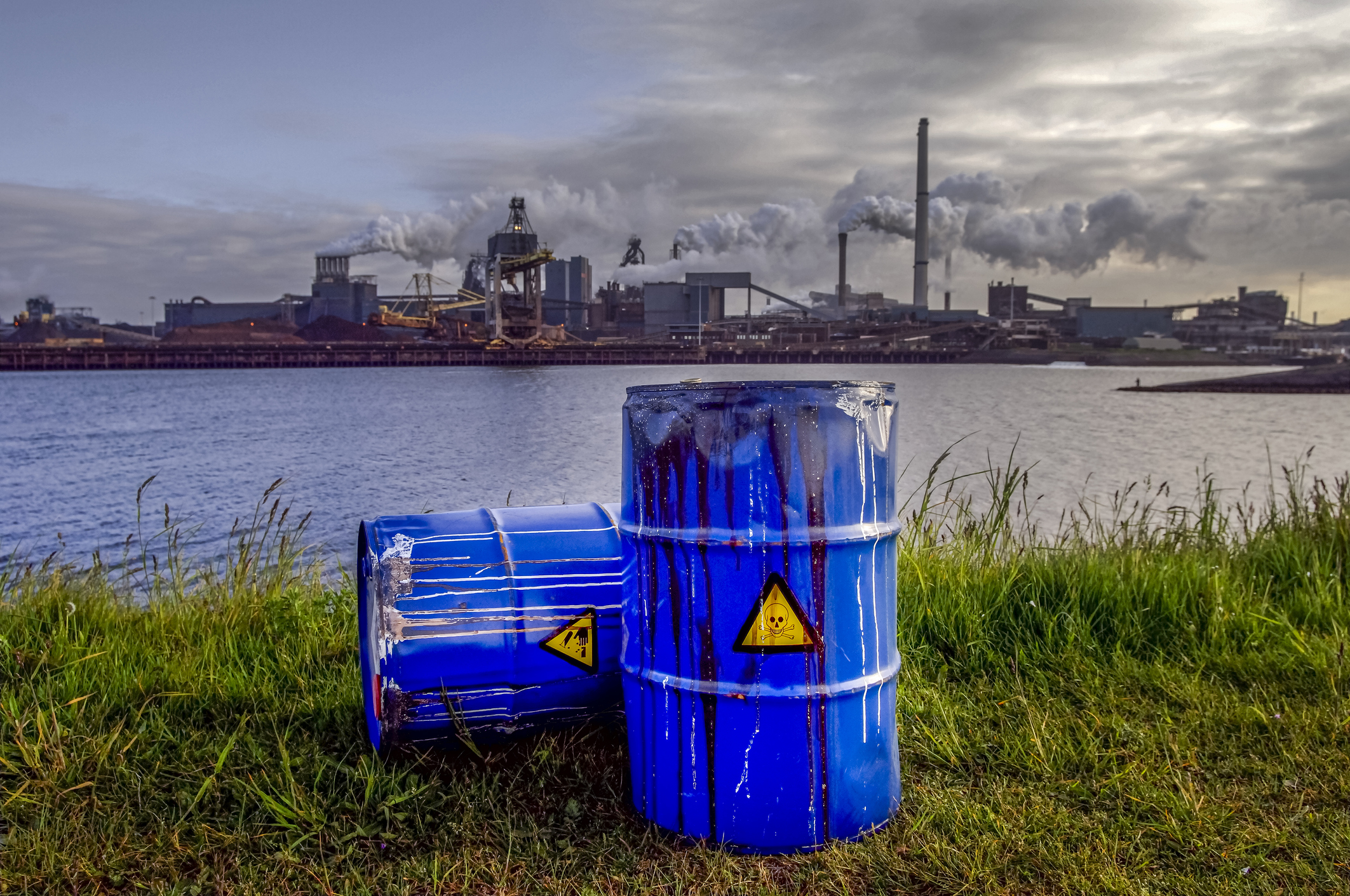
Scientists have uncovered a surprising potential source of rare earth metals in the vast amounts of coal ash left behind by power plants, presenting a new opportunity to advance clean energy technologies. These metals, essential for electric vehicles, solar panels, and wind turbines, are critical to the global shift away from fossil fuels, but their supply is limited. According to research led by the University of Texas at Austin, coal ash could contain up to 11 million tons of rare earth elements, worth around $8.4 billion. This is nearly eight times the amount currently available in U.S. reserves.

While coal ash has long been a concern due to its toxicity, the discovery of valuable rare earth elements within it could offer a way to recycle this waste and reduce reliance on mining. Bridget Scanlon, a research professor at the University of Texas, emphasized the opportunity to “close the cycle” by turning waste into a resource. The rare earth metals in coal ash, including scandium, neodymium, and yttrium, are crucial for clean technologies and are typically difficult and expensive to extract from conventional ore deposits.

Despite the name “rare earths,” these metals are not rare in nature but are challenging to separate from their ores. With global demand for these elements expected to rise sharply in the coming years, the need for alternative sources is becoming urgent. The International Energy Agency predicts that demand could increase up to sevenfold by 2040, yet the U.S. currently imports over 95% of its rare earths, mainly from China, presenting both supply chain risks and national security concerns.

In response, there has been growing interest in unconventional sources of these metals, with coal and its byproducts emerging as a viable option. Coal ash is produced in massive quantities—around 70 million tons annually in the U.S.—and contains trace amounts of rare earth elements. The extraction process would be significantly more efficient than traditional mining, as much of the material is already processed, leaving only the need to extract the metals.

However, the extraction process is not without challenges. The coal ash from different regions of the U.S. varies in its concentration of rare earths. For example, coal ash from the Appalachian Basin has higher concentrations but can only yield 30% of the available metals. In contrast, coal ash from the Powder River Basin, with lower concentrations, allows for up to 70% of the rare earth elements to be extracted.

Despite these variations, experts caution that the extraction process could be costly, involving strong acids and bases that are both expensive and environmentally hazardous. The environmental impact of extracting these metals, particularly when coal ash contains contaminants like mercury, arsenic, and lead, is another concern.

However, the research team argues that the financial value of the metals could offset the costs of improving the management and storage of coal ash. The Biden administration has already invested $17.5 million into projects focused on extracting rare earths from coal byproducts, aiming to enhance national security, revitalize energy and manufacturing sectors, and create jobs.

While some worry that focusing on coal ash could inadvertently encourage further coal production, Scanlon reassured that the plan focuses on utilizing existing waste, with over 2 billion tons of coal ash already stored across the U.S. This approach is aimed at extracting value without incentivizing the continued use of coal, as most of the focus is on “legacy waste.”

The ultimate goal is to explore a range of valuable products that can be derived from coal waste, contributing to a more sustainable approach to resource extraction while advancing the clean energy transition.
 

China Overtakes U.S. in Nuclear Fusion Race with Major Investments and Breakthroughs

As the world races to unlock the potential of nuclear fusion, China is emerging as a serious contender to overtake the U.S. in mastering this near-limitless form of clean energy. In Shanghai, the burgeoning tech hub that showcases China’s innovations in 6G internet and robotics, a small start-up called Energy Singularity is pushing the boundaries of nuclear fusion research.

For decades, the U.S. led the global effort to replicate nuclear fusion, the process that powers the sun, on Earth. But with China’s recent surge in investment and technological advancements, U.S. experts are increasingly worried about losing that edge. China’s government is currently outspending the U.S. on fusion energy research, with estimates suggesting Beijing invests between $1 billion to $1.5 billion annually, compared to the U.S. government’s $800 million.

Fusion is a difficult process to harness, but its potential is immense. A controlled fusion reaction could generate four million times more energy than burning fossil fuels, and four times more than nuclear fission, without producing long-lived radioactive waste. While fusion won’t be a near-term solution to climate change, it holds promise for addressing the world’s long-term energy needs.

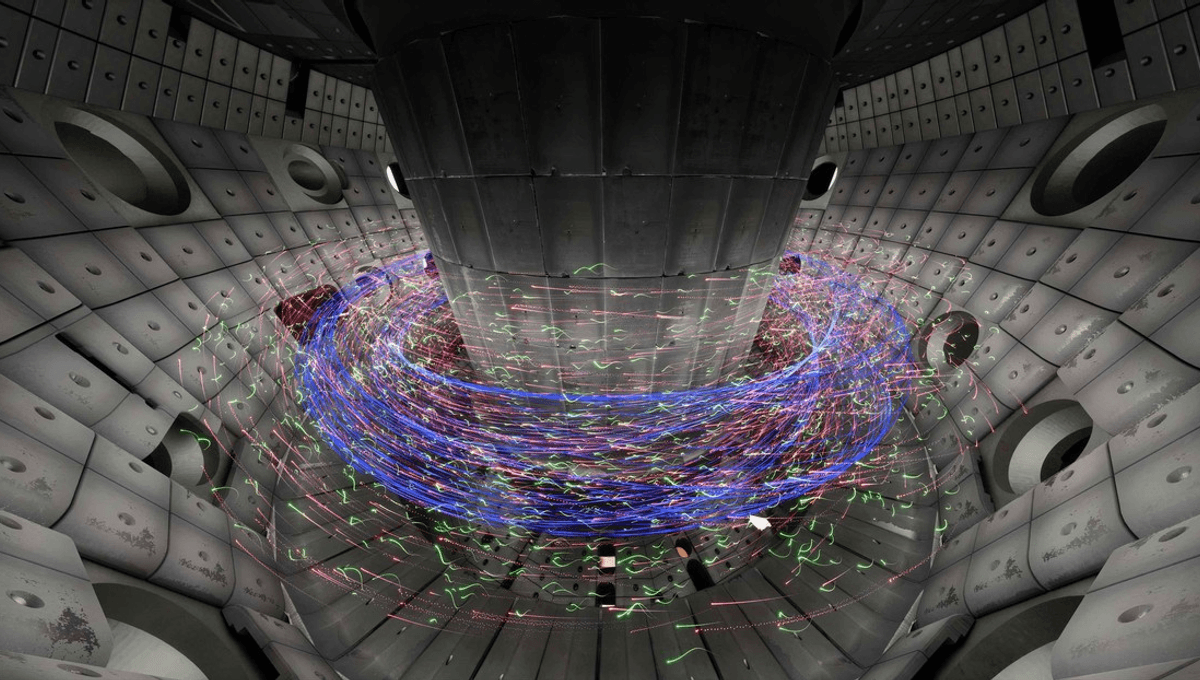
China’s rapid progress is reflected in companies like Energy Singularity, which has built its own fusion reactor, known as a tokamak, in just three years—faster than any comparable machine to date. The start-up has also pioneered the use of advanced high-temperature superconducting magnets, which allow for smaller, more efficient reactors. Its ambitious timeline aims to prove commercial viability by 2027, with grid-ready fusion power by 2035.

Meanwhile, U.S. tokamaks are aging. Andrew Holland, CEO of the Fusion Industry Association, noted that American researchers now rely on machines in Japan and Europe for much of their work. In contrast, China’s state-of-the-art fusion park, CRAFT, is set to open next year, with no similar facility in the U.S.

China’s strategy includes leveraging American designs. According to Holland, several Chinese fusion reactors resemble U.S. designs from companies like Commonwealth Fusion Systems and Helion. This echoes previous patterns in other industries, where China has rapidly followed U.S. innovations and then dominated global supply chains, as seen with solar technology.

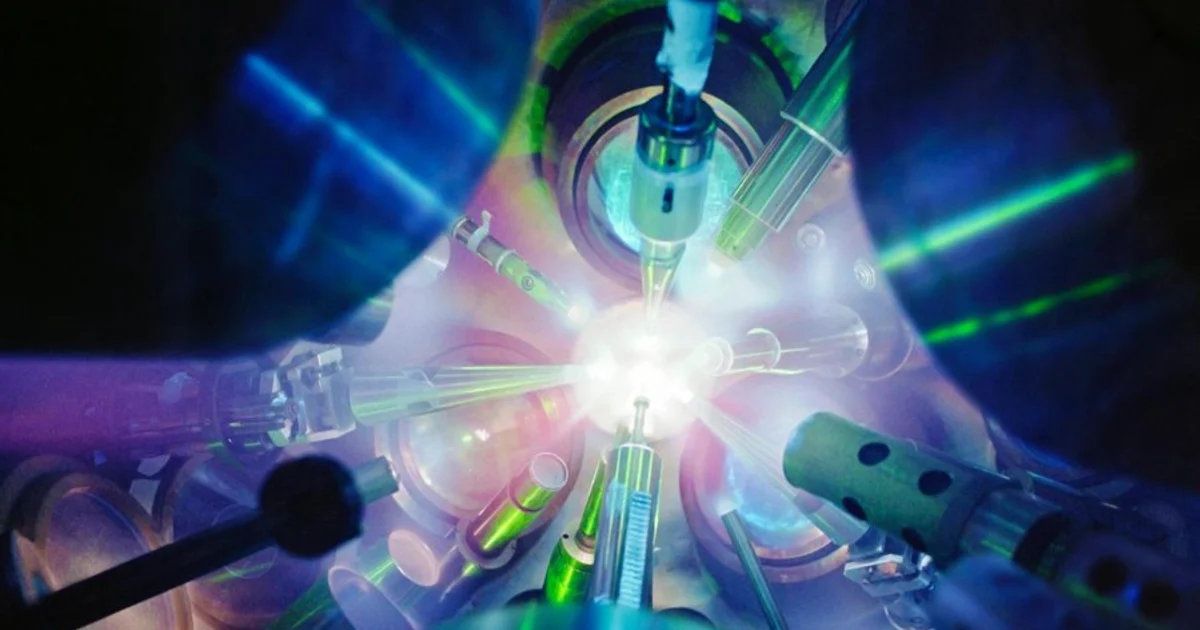
While China races ahead with tokamak technology, the U.S. is diversifying its approach. Last year, researchers at the Lawrence Livermore National Laboratory achieved a milestone using lasers to generate more energy from a fusion reaction than they put in. However, the tokamak remains the most advanced and well-researched fusion concept, and with China’s immense funding, it is evolving rapidly.

The stakes are high. Whichever country succeeds in taming nuclear fusion could reshape the global energy landscape. With China pouring over a billion dollars annually into fusion research, it may soon surpass the private investment driving U.S. innovation. If successful, China’s breakthroughs could redefine its role in global energy production, powering not only its iconic light shows but casting the country as a leader in the future of clean energy.


Could Powerful Lasers Unlock Affordable Fusion Power?

In the 1980s, secret nuclear fusion experiments conducted deep beneath Nevada showed promise, sparking the curiosity of physicists Conner Galloway and Alexander Valys. They realized fusion, the same process that powers the sun, had been ignited in a lab setting. This discovery led to the creation of the National Ignition Facility (NIF) in California, where, in late 2022, researchers achieved a breakthrough: the first fusion reaction that produced more energy than the lasers input.

However, NIF’s laser was barely powerful enough to achieve this result. Galloway and Valys, now co-founders of Xcimer in Denver, believe that more powerful lasers could unlock the potential for fusion power to fuel the electricity grid. They are developing lasers capable of up to 20 megajoules of energy—ten times more powerful than NIF’s laser—and plan to experiment with larger, simpler fuel capsules.

Xcimer joins a growing global effort to build a working fusion reactor. They plan to use molten salt to absorb heat from the fusion reaction and protect the reactor from damage caused by high-energy particles. The goal is to build a reactor that could be connected to the power grid by the mid-2030s.

However, skepticism remains. Some experts, like Prof. Ian Lowe, argue that fusion technology might not be commercially viable soon enough to address climate change, as decarbonization is needed much sooner than the projected timeline for fusion reactors.

Nonetheless, fusion startups like Xcimer remain optimistic, driven by the promise of cheap, carbon-free energy that could dramatically change the future.