
Yazılar

Comcast loses more broadband customers as competition intensifies

U.S. cable and media group Comcast reported a steeper-than-expected decline in broadband subscribers in the fourth quarter, highlighting mounting pressure on its core connectivity business. The company said it lost 181,000 broadband customers, exceeding market expectations, as rivals attracted users with aggressive pricing and alternative internet options.

Competition in the U.S. broadband market has intensified with the expansion of high-speed fiber networks and the growing availability of lower-cost fixed-wireless access services. These offerings have challenged long-established cable providers, forcing Comcast to adjust its strategy. The company said it will hold prices steady this year while revamping service bundles and offering free mobile lines to retain customers.

Despite these efforts, analysts do not expect meaningful broadband customer growth until 2027. Comcast said it aims to convert a significant portion of free mobile-line users into paying customers later this year.

Overall revenue for the quarter reached $32.31 billion, broadly in line with expectations. Results were supported by strong performance at the company’s theme parks division, which posted its best quarter on record, driven by Epic Universe in Orlando. The Peacock streaming service also added subscribers, though higher sports-related costs widened losses.

OpenAI warns EU regulators of Big Tech dominance in AI market

OpenAI has raised competition concerns with European Union regulators, warning that entrenched tech giants such as Google are using their market power to dominate the fast-growing artificial intelligence sector.

The company confirmed Thursday that its arguments to EU officials last month “mirrored its public positions” on the need to ensure fair competition in AI. During a September 24 meeting with EU antitrust chief Teresa Ribera, OpenAI said it faced major hurdles competing against vertically integrated platforms that control both infrastructure and distribution, according to meeting notes cited by Bloomberg News.

The firm urged regulators to prevent large companies from “locking in users” through their ecosystems — a reference to concerns that firms like Alphabet and Microsoft could tie AI products to existing search, cloud, and software services.

The European Commission has already been investigating how major technology platforms are extending dominance into AI through intercompany agreements and exclusive data access. Neither the Commission nor Google responded to requests for comment.

OpenAI’s outreach to EU authorities comes as it cements its own global influence. Following a secondary share sale last week, the ChatGPT-maker is now valued at $500 billion, making it the world’s most valuable startup with over 800 million weekly users.

Analysts say the move signals that OpenAI wants to shape the regulatory debate in Europe — not only to challenge rivals like Google and Anthropic, but also to secure its place in a market increasingly defined by antitrust scrutiny and AI sovereignty policies.

Tesla’s Sales Rise in Parts of Europe but Pressure Mounts From Rivals

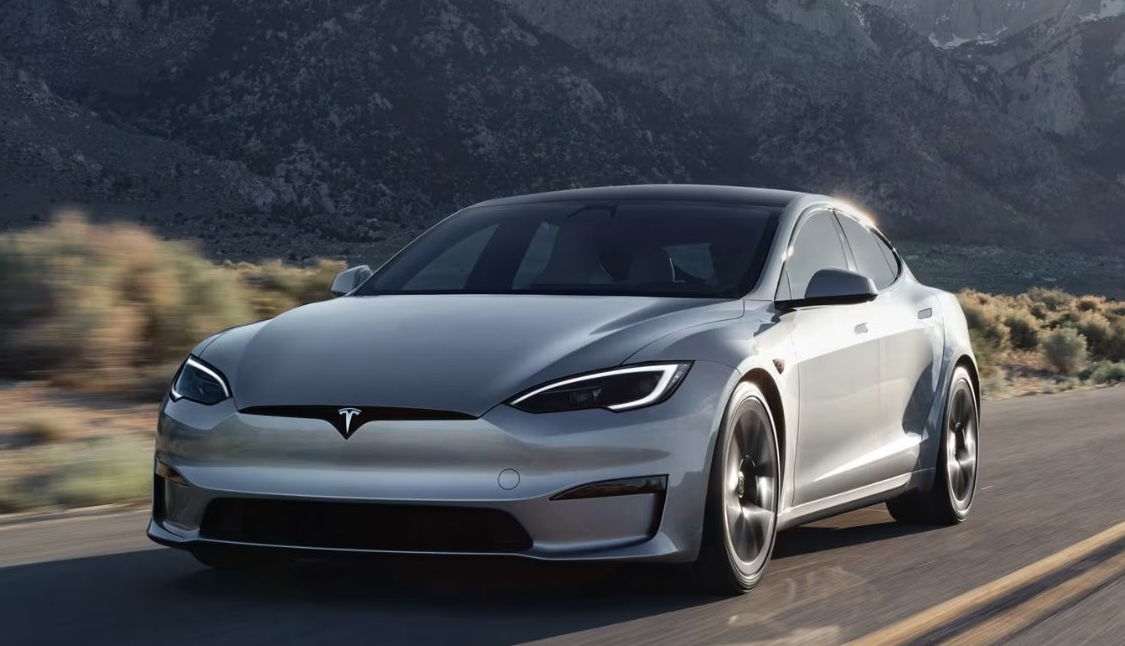
Tesla recorded a modest rebound in several European markets in September, buoyed by sales of its updated Model Y, but analysts warn the U.S. automaker faces mounting challenges from both European and Chinese competitors amid an ageing product lineup.

According to local industry data released Wednesday, Tesla’s sales rose in France, Denmark, Norway, and Spain, with the Model Y emerging as Denmark’s best-selling vehicle. However, new car registrations fell in Sweden and the Netherlands—the latter marking its ninth consecutive monthly decline.

Despite recent gains, Tesla’s broader European performance remains weak. Between January and August, Tesla’s sales fell 42.9% year-on-year in the European Union and 32.6% across Europe overall, even as the region’s total EV sales jumped 24.8%.

Matthias Schmidt of Schmidt Automotive Research described the September uptick as “a bottoming out of the downward trend rather than any real signs of an expected uplift.” He said an affordable Model Y variant, expected in 2026, could help, but Tesla’s prospects remain “tough in a more competitive market environment.”

Once dominant in Europe, Tesla now faces an influx of new EVs from Volkswagen, BMW, Renault, and Chinese players like BYD, which outsold Tesla in the EU in August for the second time this year.

The automaker’s reputation has also been affected by political backlash against CEO Elon Musk, whose support for Donald Trump’s re-election campaign and European far-right parties has alienated some consumers.

Andy Palmer, chairman of Electric Vehicles UK, said Tesla is still “a big fish, but the pond is now full of serious competitors.” Unless it refreshes its range soon, he warned, “it will keep losing market share.”

Performance varied sharply across Europe in September:

  • France: +2.74% year-on-year

  • Denmark: +20.5%, with the Model Y leading sales

  • Norway: +14.7%, with Model Y and Model 3 ranking top two

  • Spain: +3.4%, boosted by a 60% surge in Model Y registrations

  • Sweden: –64% year-on-year, though higher than August levels

  • Netherlands: –48%

Analyst Andy Leyland of SC Insights said Tesla’s biggest challenge lies ahead: “Chinese automakers are rapidly building distribution networks in Germany, the UK, and France. It will be critical to see whether Tesla can still compete.”