Yazılar

US Considers Breaking Up Google After Landmark Case

The US Department of Justice (DoJ) is weighing the possibility of breaking up Google, following a landmark ruling in August that found the company had maintained an illegal monopoly in online search. This potential move could fundamentally alter how major technology companies operate. The DoJ has suggested “structural requirements” to prevent Google from using its products—like Chrome, Play Store, and Android—to promote its search engine and related services.

Google has warned that such measures could have unintended consequences for both US businesses and consumers. In response to the government’s proposals, Lee-Anne Mulholland, Google’s vice president of regulatory affairs, labeled the move as “government overreach.” Google is expected to submit its own proposals for remedies by December 20, while the DoJ is preparing a more detailed plan by November 20.

The court decision, reached after a 10-week trial, marked a significant blow to Alphabet, Google’s parent company. Prosecutors successfully argued that Google had paid billions of dollars to firms such as Apple and Samsung to ensure it remained the default search engine. Google’s defense claimed that its popularity was driven by consumer choice, as users preferred its services.

This case is part of a broader government effort to regulate major tech firms like Meta (Facebook’s parent company), Amazon, and Apple, all of which face similar antitrust lawsuits. US authorities are aiming to increase competition within the tech industry, targeting monopolistic practices that stifle innovation and limit consumer choice.
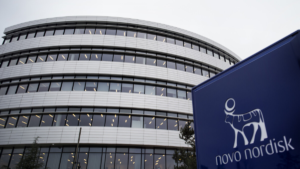
 

Novo Nordisk Shares Dip Amid Earnings Miss and Reduced Profit Outlook

Novo Nordisk experienced a dip in its share price after posting weaker-than-expected net profit for the second quarter and revising its operating profit outlook downwards. The pharmaceutical giant reported a net profit of 20.05 billion Danish kroner ($2.93 billion) for the quarter ending in June, falling short of the 20.9 billion Danish kroner projected by LSEG analysts. Additionally, the company’s EBIT (earnings before interest and tax) was 25.93 billion Danish kroner, below the forecasted 26.86 billion Danish kroner.

In response to these results, Novo Nordisk adjusted its full-year 2024 operating profit growth expectations to a range of 20% to 28%, down from the previous 22% to 30%. This announcement caused the company’s shares to tumble nearly 7% before recovering slightly, trading down 2.71% by 9:40 a.m. London time.

Despite the disappointing second-quarter earnings, Novo Nordisk raised its sales growth guidance for the full year, expecting growth between 22% and 28% at constant exchange rates, up from the previous estimate of 19% to 27%. This optimism is partly driven by a 55% increase in sales of its popular weight loss drug, Wegovy, which reached 11.66 billion kroner in the second quarter compared to the same period in 2023.

CEO Lars Fruergaard Jørgensen expressed confidence in the company’s future growth, highlighting the potential for “attractive growth” in the coming months. He assured investors of the company’s ability to scale operations and supply patients, emphasizing that adjustments to rebates were a factor in the second-quarter results. Jørgensen remains positive about the long-term competitiveness of Novo Nordisk, even in the face of increasing competition from companies like Roche, which recently reported promising early-stage trial data for its obesity drug candidate.

Moreover, Novo Nordisk’s Wegovy has recently achieved significant milestones. The drug was approved for sale in China, the world’s second-largest economy, and received backing from medical regulators in the U.K. and European Union for reducing risks of serious heart events among overweight and obese adults.

Moderna Stock Plummets 20% After Lowering Guidance on EU Sales and U.S. Vaccine Market Challenges

Moderna experienced a significant 20% drop in its stock price on Thursday after reporting second-quarter results that, while beating revenue expectations, prompted the company to sharply reduce its full-year sales forecast. The biotech firm now anticipates 2024 product revenue between $3 billion and $3.5 billion, down from its previous estimate of $4 billion.

The revised guidance is attributed to lower-than-expected sales in Europe, heightened competition in the U.S. vaccine market, and potential delays in international revenue. Moderna’s newly approved respiratory syncytial virus (RSV) vaccine, mRESVIA, began shipping in the U.S., but faces stiff competition from existing RSV vaccines by Pfizer and GSK.

Moderna CEO Stephane Bancel highlighted the increased competition for both RSV and Covid vaccines and noted difficulties in securing new contracts with European governments due to tight budgets and existing agreements with Pfizer and BioNTech. The ongoing conflict in Ukraine is also putting strain on government finances.

Despite the current challenges, Bancel expressed optimism for a recovery, projecting sales growth in 2025 and a break-even point by 2026, driven by new product launches.

For the second quarter, Moderna reported:

  • Loss per share: $3.33, better than the expected loss of $3.39
  • Revenue: $241 million, exceeding the $132 million forecast

Revenue from Moderna’s Covid vaccine fell 37% year-over-year, contributing to the company’s net loss of $1.28 billion. However, Moderna achieved a reduction in costs, including a significant drop in sales expenses and a 19% decrease in selling, general, and administrative costs. R&D expenses rose by 6% to $1.2 billion due to increased personnel costs.

Despite these setbacks, Moderna’s stock has risen nearly 20% this year, reflecting confidence in its pipeline and messenger RNA technology. The company is advancing 45 products in development, including a combination vaccine for Covid and flu, and a personalized cancer vaccine with Merck.