Yazılar

Physical AI Takes Centre Stage at CES, but Humanoid Helpers Remain Distant

Just four years after the launch of ChatGPT brought artificial intelligence into the mainstream, CES in Las Vegas this week was dominated by talk of “physical AI” — robots, humanoids and autonomous systems that move AI beyond software and into the real world.

The annual technology show highlighted a clear shift by the global tech and auto industries from pure AI software toward hardware-driven applications. From robotics and autonomous driving to AI-powered home devices, exhibitors showcased visions of how AI could reshape daily life in the coming years.

Chip designer Arm Holdings said AI is fuelling a fresh wave of innovation and demand. Arm told Reuters it has reorganised its business to create a dedicated physical AI unit aimed at expanding into robotics. “AI is really driving a whole innovation and demand cycle,” said Chris Bergey, head of Arm’s PC and mobile unit.

Humanoid robots drew particular attention. Machines from companies including LG Electronics played poker, folded paper and danced with visitors. But their slow, carefully scripted movements underlined persistent hurdles such as limited processing power, battery constraints and difficulty handling real-world situations beyond pre-programmed tasks. Analysts said affordable, capable humanoid assistants remain years away.

AI HARDWARE MEETS SOFTWARE
Major tech players used CES to underline the convergence of AI hardware and software. Lenovo hosted a high-profile event featuring Jensen Huang and Lisa Su, unveiling its Qira AI assistant designed to work across PCs, phones and wearables, including services from companies such as Expedia.

Meta Platforms showcased upgrades to its Ray-Ban Display glasses and Neural Band, while Google introduced its Gemini AI model for TVs and smart home devices.

Alongside headline products, CES also featured more questionable AI applications. From AI-powered hair clippers and dry-cleaning gadgets to digital pets and talking avatars, analysts noted that many devices previously branded as “smart” now simply carried the AI label.

CHIPS UNDER THE HOOD
Behind the scenes, chipmakers stressed the need to move AI workloads from the cloud onto devices to control costs. Intel launched its Panther Lake laptop chip, built using its new 18A manufacturing process, while AMD unveiled new processors for AI PCs.

Still, questions remain over consumer demand. “The general consumer is still not aware of what an AI PC really means,” said Ben Bajarin of Creative Strategies, adding that it could take time before the benefits become clear.

While CES made clear that physical AI is the industry’s next big push, experts agreed that truly useful, affordable humanoid servants are still a long way off.
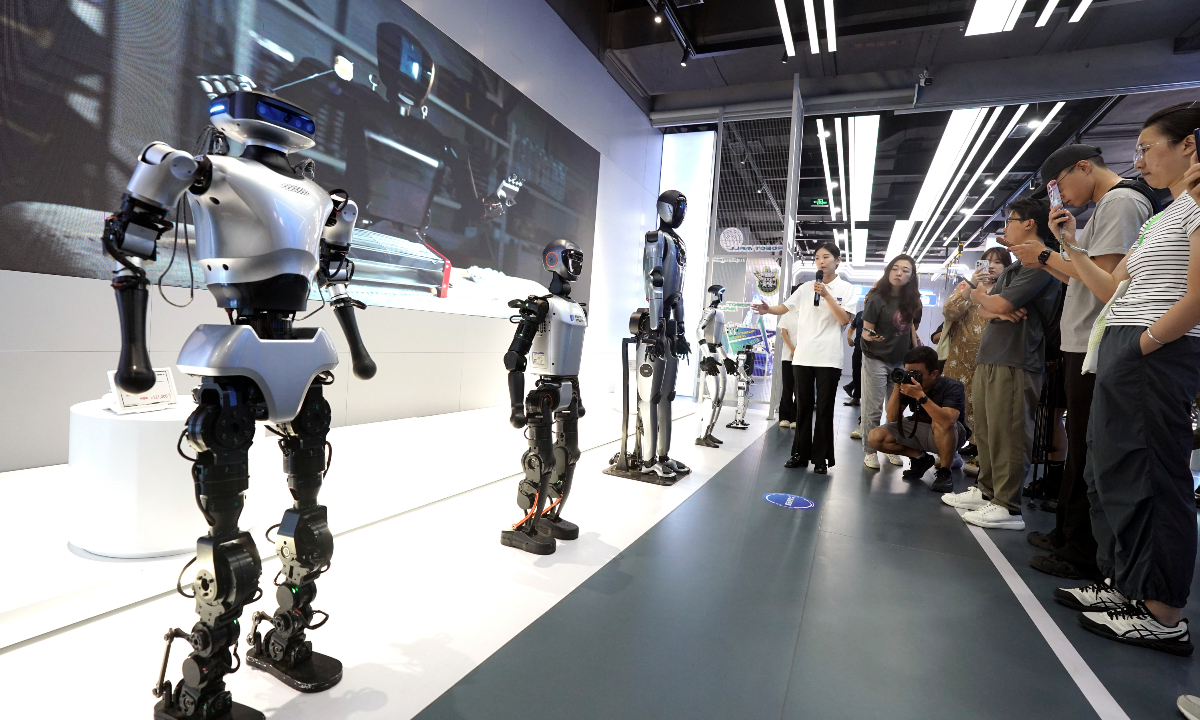
Beijing Robot Store Stocks Einstein Replicas, Chess Partners in AI Leadership Push

A new store opening in Beijing this Friday will showcase over 100 humanoid and consumer-oriented robots from more than 40 Chinese brands, including Ubtech Robotics and Unitree Robotics. Among the offerings are life-sized replicas of Albert Einstein designed to teach physics, robotic chess partners, and pet robots, highlighting China’s ambition to lead in artificial intelligence and robotics.

The store adopts a “4S” dealership model—providing sales, spare parts, maintenance, and survey services—catering to a growing consumer market with robot prices ranging from around 2,000 yuan ($278) to several million yuan. Wang Yifan, the store director, noted the importance of customized consumer solutions, stating that mass adoption of robots requires more than just manufacturers’ efforts.

China’s aggressive push into robotics aims to mitigate economic challenges such as its ageing population and slowing growth. The sector benefits from government support with subsidies exceeding $20 billion over the past year, alongside a planned one trillion yuan ($137 billion) fund to back AI and robotics startups.

Jim Cramer Says AI-Driven PC Upgrade Cycle Is “On Hold” Despite Industry Expectations

INTRODUCTION

CNBC’s Jim Cramer shared his thoughts on the state of the PC market, noting that the much-anticipated AI-driven PC upgrade cycle has yet to materialize. Despite being four years since the last refresh phase, Cramer suggested that current trends indicate a slower-than-expected pace of technological adoption.


KEY POINTS

AI-Driven PC Upgrade Cycle Not Yet in Full Swing

  • Cramer’s Analysis:
    Cramer pointed out that while there’s widespread confidence in an AI-driven PC upgrade cycle, the industry is still seeing a “normal” refresh cycle rather than the revolutionary shift many had hoped for.

    • Slow Pace: Cramer expressed concern that the expected AI-driven upgrade cycle appears to be stalled for now, with no substantial acceleration in demand for AI-enhanced PCs.

Earnings Reports and Stock Reactions

  • Disappointing Results:
    • Dell, HP, and Best Buy all experienced declines in their stock prices after reporting earnings that failed to meet Wall Street’s expectations.
    • Best Buy’s Outlook: Best Buy did show some positive signs, especially in PC sales, which were fueled by demand for new models replacing older ones. However, the sales weren’t driven by AI capabilities, with the company noting that AI integration is being phased in gradually.
    • PC Sales and AI: While Best Buy management expressed optimism for AI in the future, the sales figures were more tied to standard PC upgrades rather than any significant push for AI-driven tech.

Dell and HP Sales Trends

  • Enterprise vs. Consumer Sales:
    • Both HP and Dell showed stronger sales in enterprise PCs than consumer units, signaling that businesses are upgrading their PCs at a faster rate than individual consumers.
    • Dell’s Transparency: Cramer praised Dell for its transparency regarding its challenges and its view that a full PC refresh cycle is nearing, especially with the end of Windows 10 support in 2025.

Cramer’s Conclusion

  • No Cause for Panic:
    Despite the slower-than-expected pace of the PC upgrade cycle, Cramer believes it’s too early to dismiss the idea of a major refresh. He noted that, even if the AI-driven aspect is delayed, the traditional cycle is still likely to pick up speed soon.

CONCLUSION

While the industry eagerly anticipates an AI-driven shift in the PC market, the reality appears to be a more gradual upgrade cycle. With continued uncertainty over the role of AI and upcoming software changes like Windows 10’s end of support, the PC refresh may take longer to materialize than previously expected, though Cramer remains optimistic about its eventual occurrence.