Yazılar

Trump-Backed World Liberty Financial to Launch Crypto Debit Card by Early 2026

World Liberty Financial, the cryptocurrency venture backed by the family of U.S. President Donald Trump, plans to launch a crypto-linked debit card that will allow users to spend digital assets in everyday transactions as early as late 2025, according to CEO Zach Witkoff.

Speaking at the TOKEN2049 crypto conference in Singapore on Wednesday, Witkoff said the card aims to “bridge crypto assets with everyday spending,” and a pilot program is scheduled for launch next quarter. “We’ll be rolling out a debit card that will either go live in Q4 or Q1 2026,” he added.

Witkoff was joined on stage by Donald Trump Jr., co-founder of World Liberty, where both reiterated their optimistic view on cryptocurrency adoption and highlighted what they described as progress made under the Trump administration. Their comments drew cheers from attendees, reflecting the strong enthusiasm among crypto investors for the Trump family’s growing involvement in the sector.

A CRYPTO-POWERED FINANCIAL PLATFORM

Founded in 2024, World Liberty Financial (WLF) seeks to provide decentralized finance (DeFi) services, allowing users to access financial tools and payments directly through cryptocurrencies without traditional banking intermediaries.

In September 2024, the company launched its governance token $WLFI, granting holders voting rights on business proposals. According to data from CoinGecko, the token last traded 0.5% higher at $0.2011.

Witkoff confirmed that World Liberty is working on tokenizing real-world assets, including real estate, oil, and gas, as part of its long-term strategy. “We also want USD1 to be the base pair for these assets because we view it as the most trustworthy and transparent stablecoin on Earth,” Witkoff said, referring to the firm’s U.S. dollar–pegged stablecoin.

TRUMP FAMILY’S ROLE AND PROFITS

While critics have accused the Trump family of profiting from crypto ventures amid the administration’s relaxed regulatory stance, Donald Trump Jr. insisted that World Liberty Financial is “100% not a political organization.”

Reuters estimates that since its founding, the Trump family has earned around $500 million from the project — a figure based on publicly disclosed deals, crypto transaction data, and the company’s terms and conditions.

During the conference, Trump Jr. said, “My father was the first guy to run as sort of a pro-crypto president,” while Witkoff recalled early skepticism from the industry. “They called us a joke, a memecoin — they said we’d never amount to anything,” he said, before adding that World Liberty is now partnering with Aptos, a leading blockchain platform, to bring its USD1 stablecoin to the network.

The company’s planned debit card marks the next step in World Liberty’s expansion, reflecting its ambition to make digital currency spending mainstream while strengthening its ties to the global crypto ecosystem.

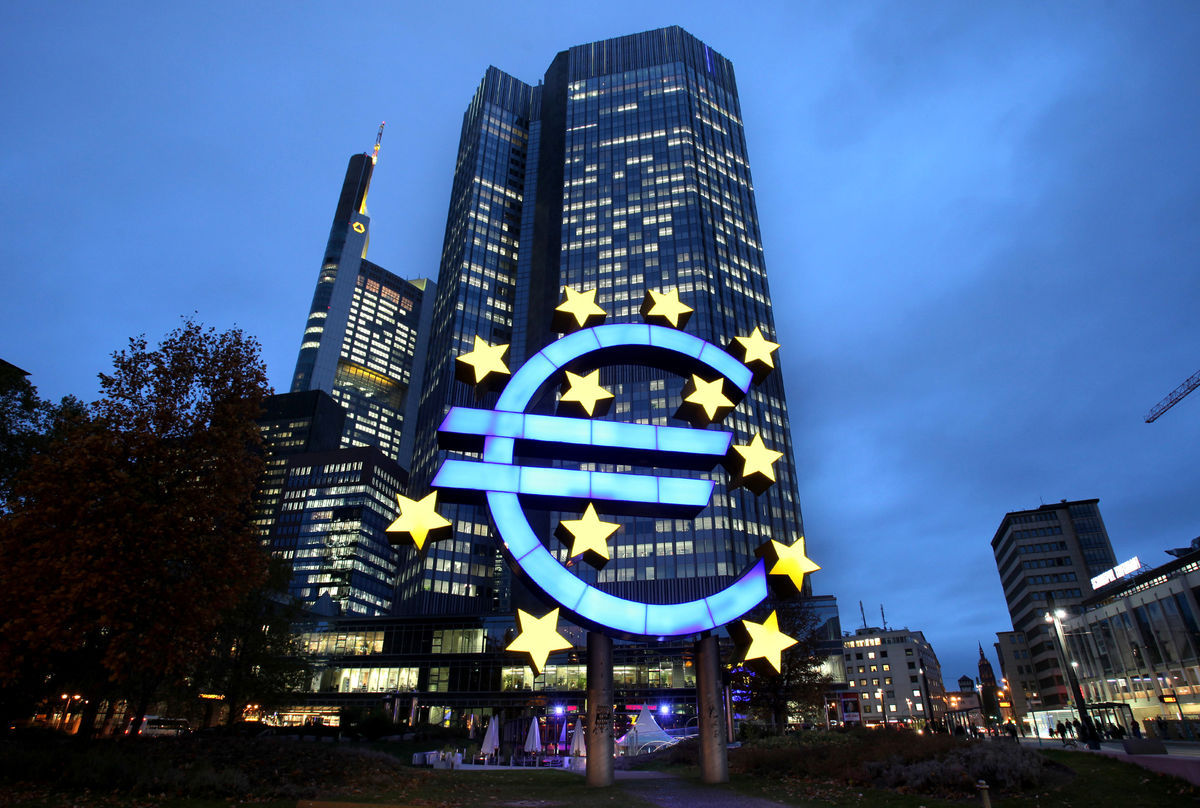
European Banks Plan Euro Stablecoin to Counter U.S. Market Dominance

A consortium of nine major European banks, including ING and UniCredit, announced on Thursday that they are creating a new Amsterdam-based company to launch a euro-denominated stablecoin by the second half of next year. The move aims to reduce reliance on U.S.-backed tokens and strengthen Europe’s role in the digital payments market.

The decision comes as U.S. financial firms prepare their own stablecoins, backed by President Donald Trump’s new regulatory framework, which could further cement America’s dominance in the sector.

Stablecoins—cryptocurrencies pegged to traditional currencies—have grown rapidly in use, not only for crypto trading but also for mainstream payments and cross-border settlements. While the global stablecoin market is worth nearly $300 billion, euro-denominated stablecoins account for just $620 million, according to recent Bank of Italy figures. Dollar-pegged tokens dominate the market.

“The initiative will provide a real European alternative to the U.S.-dominated stablecoin market, contributing to Europe’s strategic autonomy in payments,” the banks said in a joint statement.

Still, the project faces skepticism from the European Central Bank (ECB). ECB President Christine Lagarde has warned that privately issued stablecoins could pose risks to monetary policy and financial stability, urging lawmakers instead to support a digital euro backed by the central bank. Some commercial banks, however, worry that such a move would drain deposits from their institutions.

In addition to ING and UniCredit, participants include Banca Sella, KBC, DekaBank, Danske Bank, SEB, CaixaBank, and Raiffeisen Bank International. A CEO will be appointed soon, and the consortium signaled that other banks may join.

A recent Deutsche Bank report underscored the urgency, noting that emerging economies are increasingly adopting dollar-backed stablecoins in place of local deposits. “This has created a global monetary dilemma: countries should adopt stablecoins or risk being left behind. Europe is under particular pressure,” the report said.

Some European efforts have struggled to gain traction. Societe Generale’s crypto unit SG-FORGE launched a euro stablecoin in 2023, but it has seen limited adoption, with just €56.2 million in circulation. Its U.S.-dollar stablecoin has even less uptake at $32.25 million.

Meanwhile, U.S. banks like Bank of America and Citigroup are exploring stablecoins, but most of the market remains dominated by non-bank players such as Tether and Circle.

BitGo revenue surges nearly 4x ahead of U.S. IPO filing

Crypto custody startup BitGo revealed in its U.S. IPO filing that its revenue nearly quadrupled in the first half of 2025, underscoring the booming demand for digital asset infrastructure as the sector cements itself in mainstream finance.

BitGo reported $4.19 billion in revenue and $12.6 million in profit for the six months ending June 30, compared with $1.12 billion revenue and $30.9 million profit in the same period last year. Founded in 2013, the company has grown into one of the largest U.S. providers of secure storage for cryptocurrencies, a role that has become increasingly critical as institutional adoption accelerates.

The filing comes during one of the busiest IPO seasons since 2021, with crypto firms leading the charge. Recent blockbuster debuts by stablecoin giant Circle, crypto exchange Bullish, and blockchain lender Figure have reinforced investor appetite for the sector. Regulatory wins, ETF inflows, and a friendlier stance from Washington are also helping digital assets shed their reputation as purely speculative.

BitGo, valued at $1.75 billion in a 2023 funding round, now plans to list on the New York Stock Exchange under the ticker BTGO. Goldman Sachs and Citigroup are leading the underwriting.

Analysts say BitGo’s strong growth highlights the maturation of crypto as an asset class in its own right, with custody providers positioned as essential infrastructure in the digital economy.