Yazılar

Meta Strikes Long-Term Nuclear Power Deals With Vistra, Oklo and TerraPower

Meta Platforms said on Friday it has signed 20-year agreements to secure nuclear power from three U.S. plants operated by Vistra and to support the development of small modular reactor (SMR) projects with Oklo and TerraPower.

The move underscores how large technology companies are seeking long-term electricity supplies as artificial intelligence workloads and data centres push U.S. power demand higher for the first time in two decades. Following the announcement, Oklo shares surged nearly 20%, while Vistra rose about 8% in premarket trading.

Meta said it will buy power from Vistra’s Perry and Davis-Besse nuclear plants in Ohio, as well as the Beaver Valley plant in Pennsylvania. The company said the agreements will help finance expansion at the Ohio facilities and extend the operational life of the plants, which are licensed to run through at least 2036. One of Beaver Valley’s two reactors is licensed through 2047.

In addition to power purchases from existing plants, Meta said it will help develop new nuclear capacity through partnerships focused on small modular reactors. SMRs are designed to be built largely in factories rather than on-site, which supporters say could eventually reduce costs, though critics argue they may struggle to achieve the economies of scale of traditional large reactors. There are currently no SMRs operating commercially in the United States, and all projects still require regulatory approval.

Meta said the agreements could provide up to 6.6 gigawatts of nuclear power by 2035. A typical nuclear power plant produces about 1 gigawatt. In 2024, Meta sought proposals from nuclear developers for between 1 and 4 gigawatts of capacity.

Under the deal with TerraPower — a company backed by Bill Gates — Meta will help fund the development of two reactors expected to generate up to 690 megawatts as early as 2032. The agreement also gives Meta rights to energy from up to six additional TerraPower reactors by 2035. TerraPower President and CEO Chris Levesque said the partnership would support rapid deployment of new reactors.

Meta’s partnership with Oklo is aimed at developing up to 1.2 gigawatts of nuclear capacity in Ohio as early as 2030. Oklo co-founder and CEO Jacob DeWitte said Meta’s support would help fund early procurement and development work.

Meta Chief Global Affairs Officer Joel Kaplan said the new agreements, together with a deal signed last year with Constellation Energy to keep an Illinois reactor running for 20 years, would make Meta “one of the most significant corporate purchasers of nuclear energy in American history.”

Belgium Considers Power Limits for Data Centres Amid AI-Driven Energy Surge

Belgium’s electricity grid operator Elia is weighing plans to introduce energy allocation limits for data centres, as a wave of AI-fueled demand threatens to strain the country’s power network and crowd out other industries.

Under the proposal, Elia would place data centres in a separate consumption category, giving them a fixed share of grid capacity. The move aims to prevent high-energy facilities from monopolising the grid while still allowing flexible connections that could be curtailed during peak demand or congestion.

The proposal comes as the global race to build AI data infrastructure drives electricity demand to unprecedented levels. In Belgium alone, requests from data centre operators have surged ninefold since 2022, Elia told Reuters. Reserved capacity for 2034 already exceeds twice the 8 terawatt-hours projected in national grid development plans.

“These volumes were not anticipated when Belgium’s grid scenarios were designed,” Elia said, warning that speculative projects risk blocking capacity for other sectors if left unchecked.

The issue will be addressed in Belgium’s next federal grid development plan (2028–2038), Energy Minister Mathieu Bihet told parliament this week. “I will pay particular attention to this during the plan’s approval,” he said.

Belgium’s debate reflects a broader European challenge: balancing energy-intensive AI operations with industrial and environmental goals. Data centres—essential for AI model training and cloud computing—are rapidly becoming one of Europe’s largest sources of new electricity demand.

Tech giants such as Google are already ramping up investment. The U.S. company plans to spend €5 billion ($5.8 billion) expanding its Belgian data centre campuses as part of its global AI strategy.

If approved, Elia’s proposal could make Belgium one of the first European nations to formally cap grid access for AI infrastructure—signalling a shift toward tighter energy governance in the digital age.

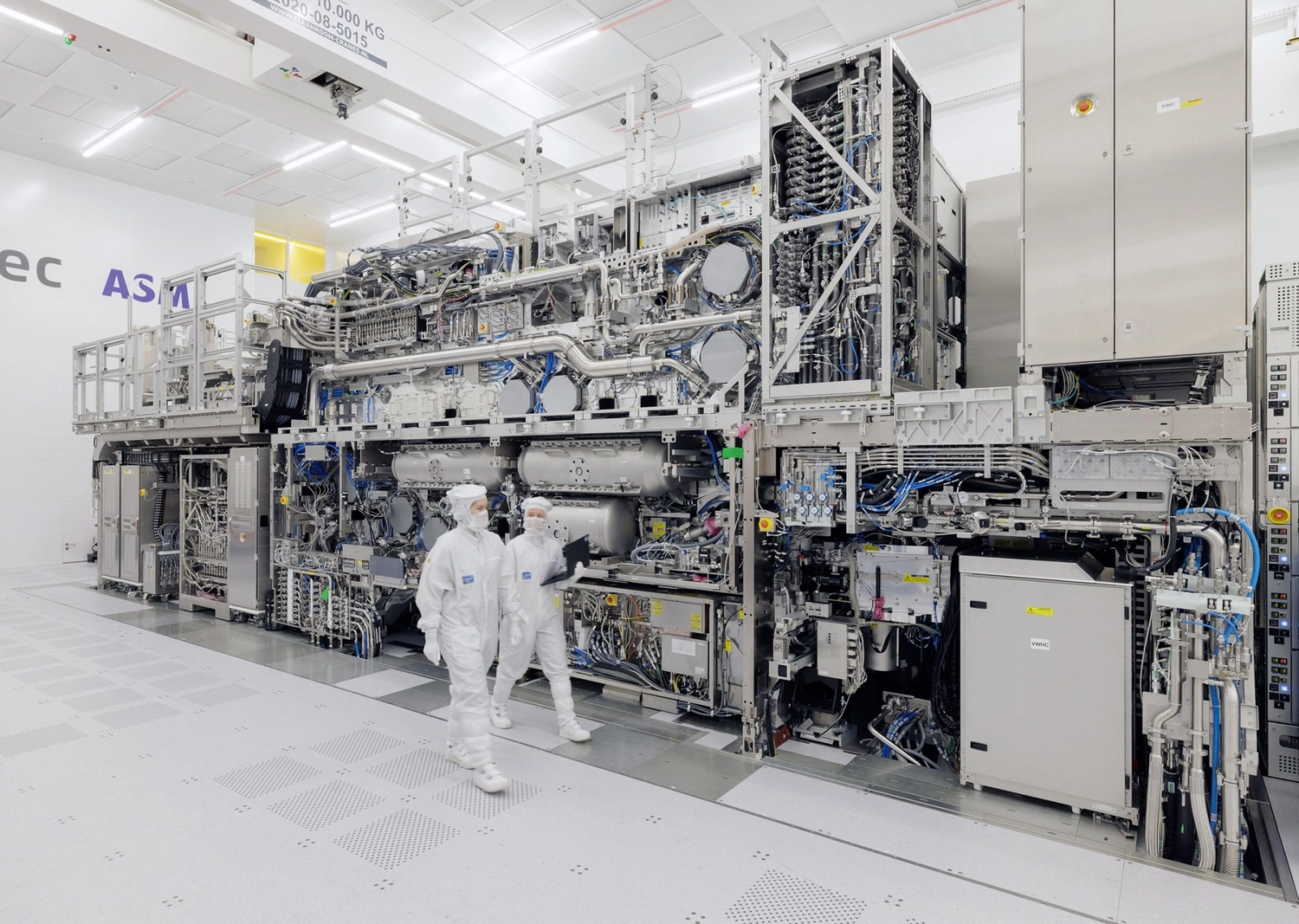
ASML poised to benefit from AI megadeals and chip expansion wave

Dutch chipmaking equipment giant ASML is expected to benefit from a surge in AI-related megadeals between major technology firms and semiconductor manufacturers, with investors anticipating a strong outlook when it reports third-quarter earnings on Wednesday.

Analysts believe ASML’s top customers — including TSMC, SK Hynix, and Samsung — are preparing to ramp up production capacity through 2026 and beyond, driven by a global race to expand AI data centres. These expectations have already boosted ASML’s stock by 32% since early September, outpacing the Philadelphia Semiconductor Index, which rose 15% in the same period.

Forecasts compiled by Visible Alpha suggest new bookings — a key industry indicator — will total 5.36 billion euros ($6.21 billion) for the quarter, following 9.48 billion euros in the first half of the year. Meanwhile, net income is projected to rise 1.4% year-on-year to 2.11 billion euros, according to LSEG IBES data.

Recent multi-billion-dollar deals between NVIDIA, AMD, Intel, Samsung, Meta, and Oracle are fuelling optimism for ASML, whose machines — costing more than $300 million each — are essential for producing advanced chip circuitry.

However, analysts note that building fabrication plants can take several years. They want to hear whether ASML’s clients can accelerate these expansion plans amid rising demand. “Every memory chipmaker is likely to increase production capacity for AI,” said Michael Roeg of Degroof Petercam, citing Micron, SK Hynix, Samsung, and Chinese competitors.