
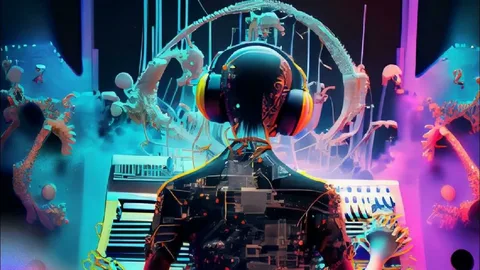
Survey Finds 97% of Listeners Can’t Tell AI Music From Human Songs
Nearly all listeners can no longer tell when a song has been composed by a machine.
A new Deezer–Ipsos survey revealed that 97% of respondents were unable to distinguish between AI-generated and human-made music, exposing the profound transformation — and disruption — that artificial intelligence is bringing to the global music industry.
The study, which polled 9,000 participants across eight countries, including the U.S., the U.K., and France, underscores how AI tools are reshaping creativity, raising copyright and ethical concerns, and threatening the income of traditional artists.
Despite their inability to detect the difference, most listeners want transparency. About 73% supported clear labelling for AI-generated tracks, 45% wanted filters to exclude them, and 40% said they would skip such songs entirely.
Deezer, which now receives over 50,000 AI-generated song uploads per day—a third of its total submissions—has introduced tagging systems and excluded synthetic tracks from editorial playlists and algorithmic recommendations.
“We believe creativity is a human value, and artists deserve protection,” said Deezer CEO Alexis Lanternier, calling for stronger transparency measures.
The company has also begun removing fake streams from royalty calculations and is exploring how to adjust payment structures for AI-generated music, though Lanternier admitted such changes would be complex.
The debate intensified earlier this year when AI band The Velvet Sundown gained over a million monthly Spotify listeners before being revealed as fully artificial. Meanwhile, Universal Music Group recently settled a copyright case with AI startup Udio and plans to launch a licensed AI-music tool in 2026.
Adding to the controversy, a Munich court ruled this week that OpenAI’s ChatGPT violated German copyright laws by reproducing song lyrics without permission.