Yazılar

Micron Expands US Investment by $30 Billion Amid Trump’s Onshoring Push

Micron Technology announced on Thursday a significant expansion of its U.S. investment plans, adding $30 billion to its existing commitments as President Donald Trump intensifies efforts to bring semiconductor manufacturing back to American soil. The memory chip maker now projects total investments of $200 billion, up from previous plans of approximately $125 billion.

The new funding will support the construction of a second cutting-edge memory fabrication facility in Boise, Idaho, and the expansion of its manufacturing site in Manassas, Virginia. “These investments are designed to allow Micron to meet expected market demand, maintain share and support Micron’s goal of producing 40% of its DRAM in the U.S.,” the company stated.

Micron’s DRAM chips are widely used in personal computers, automotive systems, industrial equipment, wireless communications, and artificial intelligence. The company’s High-Bandwidth Memory (HBM) products are seen as essential for powering next-generation AI models. About $50 billion of Micron’s total investment will be dedicated to research and development.

President Trump’s administration has pushed hard for semiconductor onshoring, with Trump threatening new tariffs on chip imports and reconsidering previous subsidies granted under former President Joe Biden. In December, Micron secured nearly $6.2 billion in government subsidies through Biden’s $52.7 billion 2022 CHIPS and Science Act. Trump’s administration is now renegotiating some of those grants, according to Commerce Secretary Howard Lutnick.

The expansion aligns with broader trends in the U.S. semiconductor industry. Nvidia, a key customer of Micron, announced plans in April to build AI servers worth up to $500 billion in the U.S. over the next four years, in partnership with firms such as Taiwan’s TSMC. “Micron’s investment in advanced memory manufacturing and HBM capabilities in the U.S., with support from (the) Trump administration, is an important step forward for the AI ecosystem,” said Nvidia CEO Jensen Huang.

Micron also finalized a $275 million direct funding award under the CHIPS Act to further support its Manassas facility expansion.
Global EV Sales Jump 24% in May as China Reaches Record High

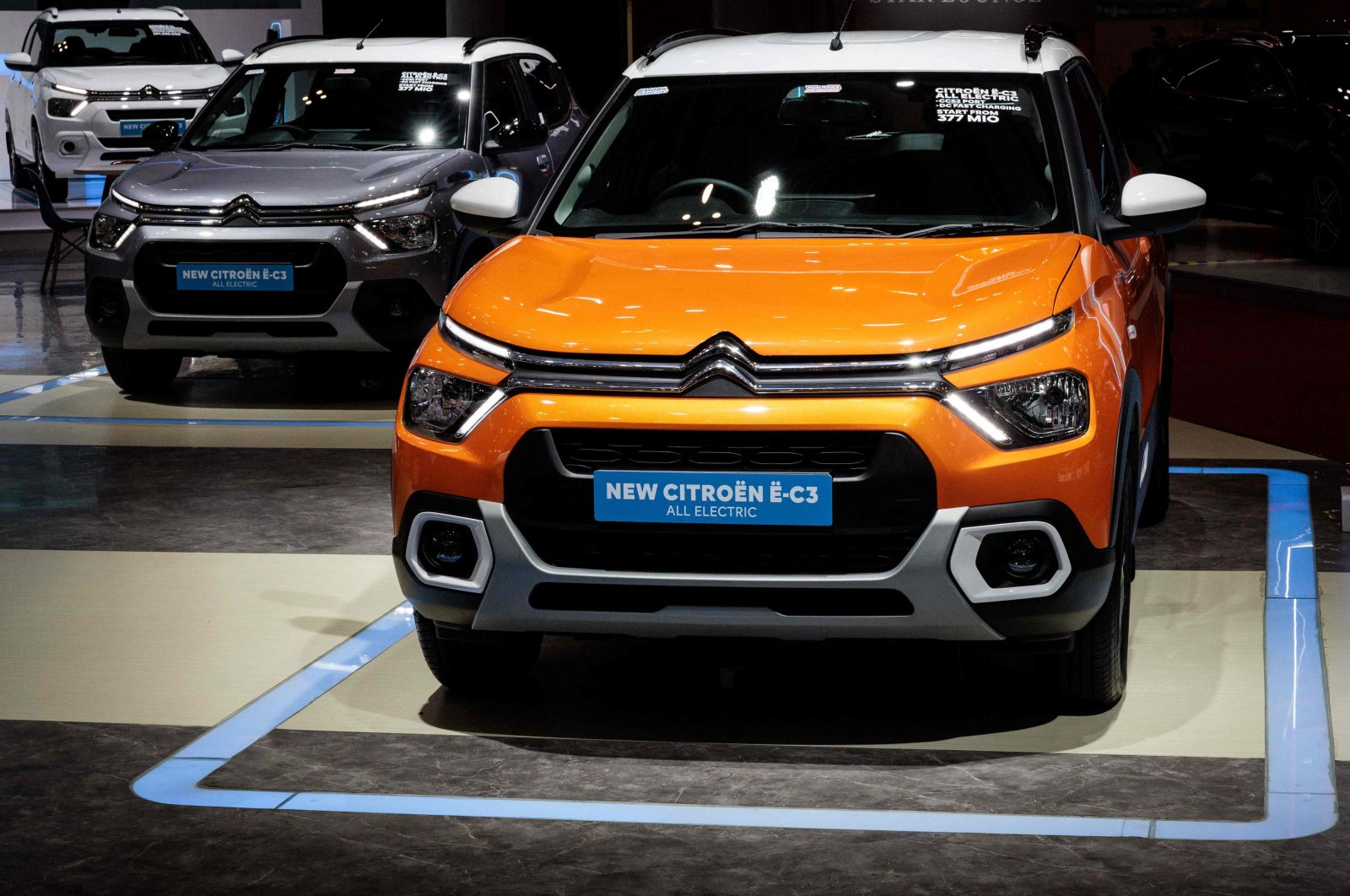
Global electric and plug-in hybrid vehicle (EV) sales surged by 24% in May year-over-year, according to market research firm Rho Motion. The strong performance was led by China, where monthly EV sales exceeded one million units for the first time this year, driven by robust domestic demand and aggressive export strategies.

Chinese automaker BYD played a key role in expanding EV sales, exporting large volumes to markets such as Mexico, Southeast Asia, and Uzbekistan. “BYD’s exports to Mexico and Southeast Asia, along with Uzbekistan, have significantly boosted sales in these regions,” noted Charles Lester, data manager at Rho Motion.

In Europe, fleet incentives in Germany and strong growth in Southern European markets contributed to a 36.2% rise in EV sales, reaching 330,000 units. However, North America showed more modest growth, with sales increasing just 7.5% to 160,000 units, partly due to the expiration of Canadian subsidies and broader policy uncertainties.

Global automakers continue to face challenges in the U.S., where new 25% import tariffs have prompted several companies to reconsider their 2025 forecasts. Tesla’s Berlin-based Model Y production remains shielded from these tariffs, but the company faces intensifying global competition as production volumes increase worldwide.

Meanwhile, President Donald Trump’s policies on emissions standards and tariff uncertainties have further slowed EV adoption in North America. U.S. tax credits for EVs remain in place but are scheduled to begin phasing out in 2026, adding another layer of hesitation for potential buyers.

By the numbers, global sales of battery-electric vehicles and plug-in hybrids totaled 1.6 million units in May. China’s sales grew over 24% year-over-year to 1.02 million vehicles. Europe recorded a 36.2% increase, while North America lagged with a 7.5% gain. The rest of the world saw a 38% rise, reaching 150,000 vehicles.

Summing up the global picture, Charles Lester stated, “The story this month with global vehicle sales is the continued chasm between Chinese market growth versus the faltering market in North America.”

Trump to Join AI and Energy Summit in Pittsburgh with Tech and Energy Leaders

U.S. President Donald Trump will attend an artificial intelligence and energy summit in Pittsburgh, Pennsylvania, on July 15, according to an announcement from the office of Pennsylvania U.S. Senator Dave McCormick. The inaugural Pennsylvania Energy and Innovation Summit will take place at Carnegie Mellon University.

The event is expected to gather top executives from both the tech and energy industries. Axios reported that the guest list includes high-profile tech leaders such as OpenAI CEO Sam Altman, Meta Platforms CEO Mark Zuckerberg, Microsoft CEO Satya Nadella, and Alphabet CEO Sundar Pichai. Leading figures from the energy sector such as Exxon Mobil CEO Darren Woods, Shell CEO Wael Sawan, and Chevron CEO Mike Wirth are also expected to attend.

White House AI czar David Sacks is scheduled to participate as well. Earlier this week, Sacks voiced concerns that excessive regulation of artificial intelligence in the U.S. could hinder industry growth and give China a competitive advantage in the global AI market. His comments suggest that the Trump administration may adopt a more expansionist policy for U.S. AI companies, focusing on boosting international markets for American AI chips and models.

This approach contrasts with that of Democratic former President Joe Biden, who emphasized strict controls to prevent U.S. AI chips from being used to strengthen China’s military capabilities.

Meanwhile, a bipartisan group of 40 state attorneys general, including Republicans from Ohio, Tennessee, Arkansas, Utah, and Virginia, have pushed back against federal efforts to limit state-level AI regulations. They argue that states should retain the authority to develop and enforce consumer protection rules for AI technologies.

The Pittsburgh summit signals the increasing intersection of AI policy, energy strategy, and international trade considerations in U.S. political and economic debates as AI continues to reshape multiple sectors.