Yazılar

Gemini Files Confidentially for U.S. IPO as Crypto Markets Regain Strength

Gemini, the cryptocurrency exchange founded by billionaire twins Tyler and Cameron Winklevoss, has confidentially filed for an initial public offering (IPO) in the United States, as digital asset firms capitalize on renewed strength in crypto markets. This move comes amid a surge of successful listings, particularly in high-risk sectors like crypto and fintech, signaling a revival of capital market activity.

The IPO wave reflects pent-up demand after years of regulatory uncertainty and market volatility. Earlier this week, stablecoin issuer Circle made a strong debut on the New York Stock Exchange, encouraging other crypto firms to consider public offerings. “Pre-IPO crypto companies would be crazy not to move ahead with listings after seeing how Circle traded,” said Matt Kennedy, senior strategist at Renaissance Capital.

Gemini has not yet disclosed the size or price range of its offering. The exchange currently offers trading and storage for over 70 cryptocurrencies and aims to join a growing list of crypto-native companies seeking mainstream investment. Kat Liu, vice president at IPOX, noted that Gemini’s filing adds to the sector’s momentum and reflects the growing readiness of digital asset firms to engage with public capital markets.

The timing for Gemini’s IPO coincides with a dramatic rise in the global cryptocurrency market, now valued at approximately $3.3 trillion, with Bitcoin trading above $100,000, according to CoinMarketCap. The recent approval of U.S. spot Bitcoin ETFs has drawn billions of dollars from institutional investors eager for crypto exposure.

Michael Ashley Schulman, CIO at Running Point Capital Advisors, said, “A successful listing would confirm that the crypto thaw is real.” He added that if the trend continues, the IPO calendar could rapidly fill up with fintech, AI, and other tech-related offerings.

This renewed optimism marks a stark turnaround for the crypto industry, which was rocked by the collapse of FTX in 2022 and years of global regulatory scrutiny. However, recent political developments have also helped boost sentiment, with U.S. presidential candidate Donald Trump declaring his support for the sector and pledging to be a “crypto president.”

In May, Coinbase made history by becoming the first U.S. crypto-focused company to join the S&P 500, solidifying crypto’s growing presence in traditional financial markets. Gemini’s IPO filing further underscores the sector’s accelerating financial maturity and its efforts to integrate more deeply into global capital markets.
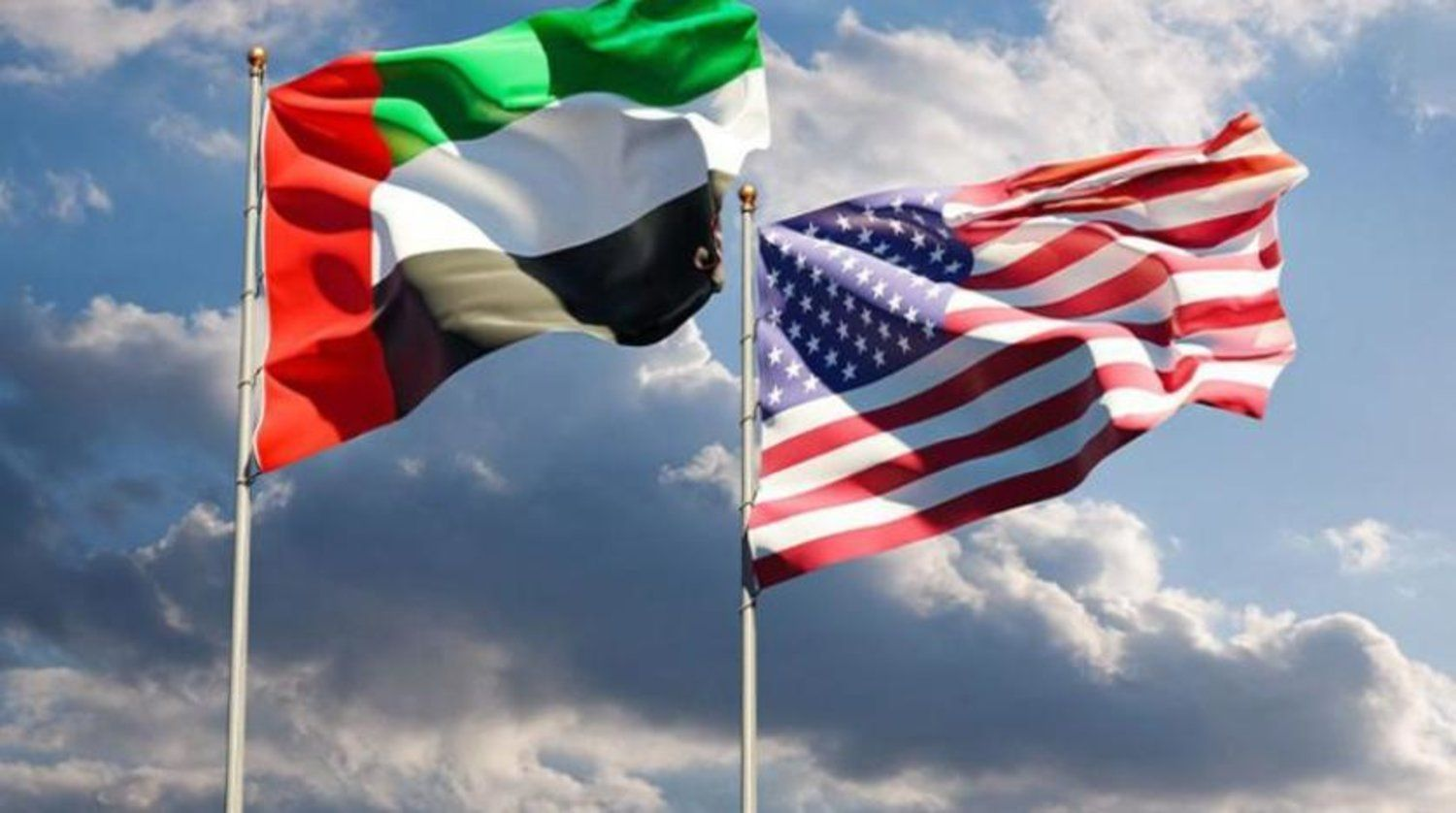
US-UAE AI Data Campus Deal Faces Delays Amid Security Concerns

A multi-billion dollar agreement to establish one of the world’s largest artificial intelligence data center hubs in the United Arab Emirates (UAE) remains far from finalized, according to sources familiar with the negotiations. Despite its high-profile announcement during President Donald Trump’s recent visit to Abu Dhabi, persistent U.S. security concerns continue to stall progress.

The planned 10-square-mile AI campus is being spearheaded by G42, an Emirati state-linked technology firm central to the UAE’s AI ambitions. Major U.S. technology firms including Nvidia, OpenAI, Cisco, Oracle, and Japan’s SoftBank have signed on to help develop the first phase, called Stargate UAE, which is scheduled to become operational in 2026.

The project’s backers have touted it as a significant step toward steering Gulf nations toward U.S. technology and away from Chinese alternatives. However, five sources involved in the discussions told Reuters that U.S. officials remain deeply concerned about potential technology transfers to China and the UAE’s ability to enforce strict export controls.

Although the UAE pledged during Trump’s visit to align its national security regulations with Washington — including measures to prevent diversion of U.S.-origin technology — American officials remain cautious. These concerns mirror those raised during both the Biden and Trump administrations, particularly over the UAE’s previous deployment of Huawei 5G infrastructure despite U.S. objections.

Sources indicated that the U.S. Commerce Department has yet to determine the security protocols required for exporting advanced Nvidia AI chips critical to the project. The absence of an agreed enforcement mechanism further complicates the deal, leaving it without a definitive timeline for completion.

Among the likely U.S. conditions are prohibitions on Chinese technology at the site and restrictions on employing Chinese nationals, given ongoing fears of AI chip smuggling and intellectual property leaks to adversaries. While the UAE has dismantled some Chinese partnerships—such as G42 removing Chinese hardware and divesting from certain Chinese holdings under Biden administration pressure—Chinese firms like Huawei and Alibaba Cloud still maintain a strong presence in the country.

Adding to U.S. unease is the UAE’s growing role as a hub for companies circumventing Western sanctions on Russia, further complicating Washington’s strategic calculus. Despite these challenges, both Trump administration officials and some in the current administration remain committed to pursuing the deal, though bipartisan skepticism remains strong in Congress.

Once operational, Stargate UAE is expected to house roughly 100,000 advanced Nvidia Grace Blackwell GB300 AI chips within a 1-gigawatt facility — potentially expanding to 5 gigawatts in the future. The Emirati government has so far not commented on the latest delays, and no final agreement has been reached on technology controls or operational oversight.

Trump-Musk Feud Triggers $150 Billion Wipeout in Tesla Market Value

Tesla shares plummeted 14% on Thursday, erasing $150 billion in market value, as a public feud between U.S. President Donald Trump and Tesla CEO Elon Musk rattled investors. The stock selloff occurred despite no major company-specific news, as traders reacted to escalating tensions between the two high-profile figures.

The dispute began when Trump criticized Musk’s opposition to his administration’s tax bill, which includes provisions that would eliminate federal subsidies for electric vehicle (EV) purchases. Musk responded by attacking Trump’s policies on social media, further intensifying the confrontation. Trump later escalated his rhetoric, suggesting that terminating government subsidies and contracts with Musk’s companies could save the federal government billions of dollars.

The spat poses multiple risks for Tesla, especially as it tries to navigate a shifting regulatory landscape. The U.S. Transportation Department, which regulates vehicle safety standards, could become an obstacle to Musk’s ambitions of mass-producing autonomous robotaxis — a cornerstone of Tesla’s future growth strategy. The department is also investigating Tesla’s Full Self-Driving system following a fatal crash.

“Elon’s politics continue to harm the stock,” said Dennis Dick, chief strategist at Stock Trader Network. “First he aligned with Trump, upsetting Democratic buyers. Now he’s alienated the Trump administration.” Analysts warn that political fallout could also influence regulatory decisions that disproportionately affect Tesla, particularly if regulators mandate technologies like lidar, which Tesla currently avoids in favor of camera-based systems.

The market rout has also dented Musk’s personal wealth. Following Thursday’s selloff, his net worth fell by roughly $27 billion to $388 billion, according to Forbes.

Investors are increasingly concerned about Tesla’s exposure to political headwinds as well as its heavy reliance on government incentives. Trump’s budget proposal includes ending the popular $7,500 EV subsidy by late 2025, which could slash Tesla’s annual profit by $1.2 billion and hit regulatory credit sales by an additional $2 billion, according to J.P. Morgan estimates.

Despite these risks, Tesla remains the most valuable automaker globally with a market capitalization of around $1 trillion — more than triple that of Toyota. However, some investors question the stock’s lofty valuation, which trades at 150 times profit estimates. “I am short Tesla. I don’t understand its valuation or fundamentals. I think it’s overhyped,” said Bob Doll, chief investment officer at Crossmark Global Investments.

Tesla’s stock has been highly volatile since Musk endorsed Trump’s reelection bid in mid-2024. After an initial 169% surge, shares have since fallen 54% amid protests and weakening sales in major markets including Europe, China, and key U.S. states like California.

While Transportation Secretary Sean Duffy has already moved to ease some autonomous vehicle safety regulations, experts caution that federal regulators could still shape rules in ways that disadvantage Tesla. “With President Trump, being on his bad side always creates risk,” said Morningstar analyst Seth Goldstein, though he noted that broader industry pressure may limit targeted retaliation.

Ultimately, analysts suggest the political drama could overshadow Tesla’s ambitious AI and autonomous driving plans, which Wedbush previously valued at up to $1 trillion in potential market capitalization.