Yazılar

OPEC+ Concerned About Rising U.S. Oil Output Under Trump’s Leadership

OPEC+ is expressing concerns about a potential surge in U.S. oil production if Donald Trump returns to the White House, delegates from the group said. Increased U.S. output could further erode OPEC+’s market share and hinder its ability to maintain high oil prices, a priority for the producer alliance.

OPEC+ Strategy at Risk

Currently, OPEC+—which accounts for roughly 50% of global oil supply—has delayed plans to raise production until April and extended some supply cuts until the end of 2026 due to weak demand and growing output from non-OPEC+ producers, particularly the U.S. Over the past decade, the U.S. has become the world’s largest oil producer, now accounting for 20% of global oil supply.

The renewed concern comes as Trump’s transition team is reportedly preparing a wide-ranging energy deregulation package, promising a boost to U.S. oil production. While OPEC+ acknowledges that less stringent environmental policies under Trump could be favorable for the global oil industry, the expected rise in American output is seen as a challenge.

One delegate from an OPEC+ member aligned with the U.S. commented, “Trump’s return could be good for the oil industry, but higher U.S. production is not good for us.”

U.S. Oil Output Trends

OPEC’s data indicates that U.S. oil output has risen by 11% between 2022 and 2024, reaching 21.6 million barrels per day (bpd). This surge in production has contributed to OPEC+’s declining market share, which now stands at 48% of global supply, down from over 55% in 2016 when the alliance was formed.

OPEC+ has faced challenges maintaining its influence, especially as U.S. shale oil output has flourished. Decisions to reduce production in 2016 and 2020 inadvertently supported the growth of the U.S. shale industry, turning it into a leading global exporter.

Looking ahead, OPEC+ plans to ease production cuts starting in April 2025. However, any significant rise in U.S. output could risk a drop in oil prices, harming OPEC+ nations heavily reliant on oil revenues.

Industry Dynamics Under Trump

Trump campaigned on promises to lower energy costs and inflation, goals that align with boosting domestic oil production. According to Richard Bronze, head of geopolitics at Energy Aspects, “This is a potentially difficult dynamic for both sides. Rising U.S. production has reduced OPEC+’s influence on the market.”

Still, some industry analysts doubt that Trump’s policies alone could lead to a substantial near-term increase in U.S. output. Shale producers remain focused on profitability, known as capital discipline, and are unlikely to expand production without favorable prices. Moreover, new oilfields take years to develop, meaning Trump’s promises to expedite drilling permits may not immediately translate into higher output.

Bob McNally, president of Rapidan Energy Group, explained, “The U.S. has no spare capacity. How much the U.S. will drill depends more on decisions made in Vienna than in Washington.”

OPEC’s Outlook and Challenges

OPEC’s latest report forecasts U.S. oil supply to grow by 2.3% in 2024, while the International Energy Agency (IEA) predicts a faster growth rate of 3.5%. At the same time, OPEC has lowered its global demand growth forecast, reflecting uncertainties in the market.

Despite these challenges, some OPEC+ delegates see a potential silver lining. A source noted that while rising U.S. production poses risks, Trump’s policies could also boost global oil demand, indirectly benefiting the producer group.

As OPEC+ prepares for a future where U.S. shale continues to expand its market share, the group faces a delicate balance of managing production cuts and maintaining price stability.
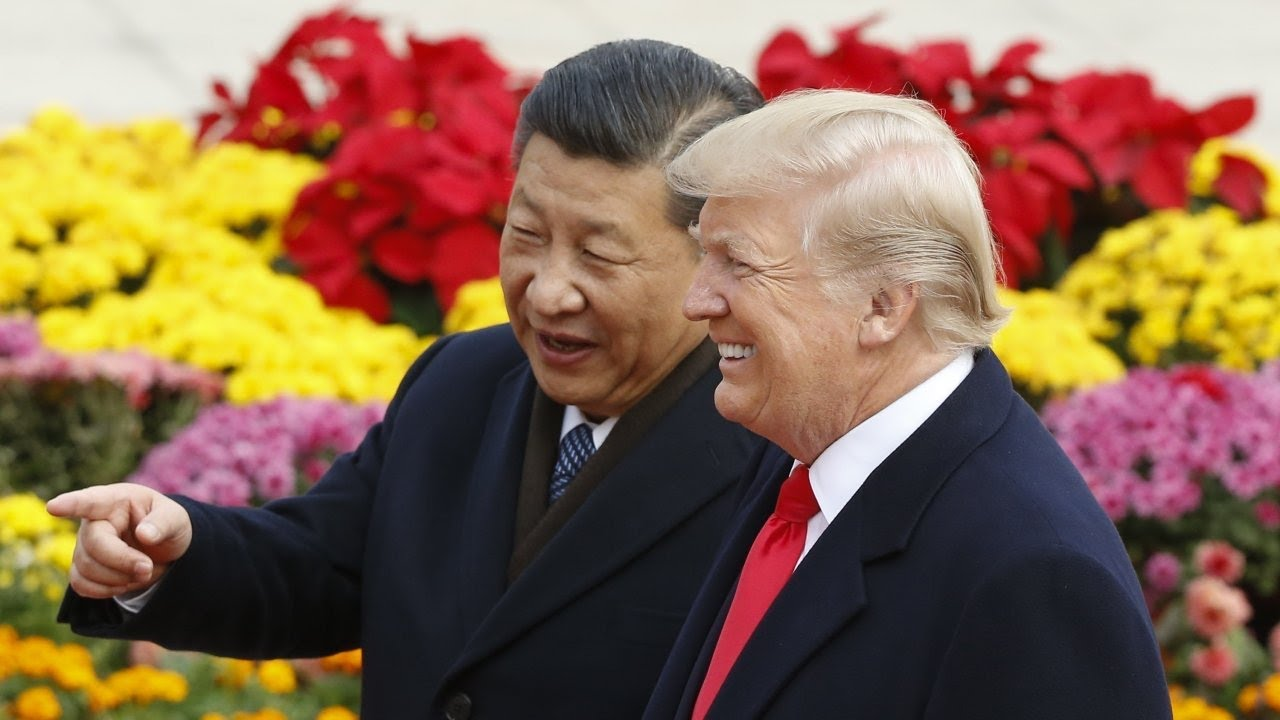
 

China, Trump Signal Cautious Optimism for Renewed US-China Cooperation Amid Tough Rhetoric

China’s top diplomat, Foreign Minister Wang Yi, expressed hope on Tuesday that the incoming Trump administration would collaborate with Beijing “in a mutually beneficial manner” despite ongoing tensions. Wang’s comments came hours after Donald Trump remarked that the COVID-19 pandemic had strained his relationship with Chinese President Xi Jinping, whom he once considered a “friend.”

“We hope the new U.S. administration will make the right choice and work with China to remove disruptions and overcome obstacles,” Wang stated during a forum in Beijing, according to his ministry’s statement.

Trump, addressing reporters at his Mar-a-Lago resort, reflected on his past relations with Xi, acknowledging the pandemic as a breaking point. “We had a very good relationship until COVID,” Trump said. “COVID didn’t end the relationship, but it was a bridge too far for me.” Trump avoided confirming whether Xi would attend his inauguration but emphasized the importance of U.S.-China ties: “China and the United States can together solve all of the problems of the world.”

Trump’s Second Term Agenda and Beijing’s Strategy

Trump has signaled a more confrontational stance toward China as he prepares for his second term. His campaign promises include imposing a 10% tariff on Chinese goods and additional levies exceeding 60% to pressure China on issues like stopping fentanyl exports to the U.S. Trump has also pledged to revoke China’s most-favored-nation trade status—a move that could reshape bilateral trade dynamics.

In response, analysts suggest China is preparing to amass bargaining chips to engage with Trump’s administration on contentious issues such as trade, technology, and investment. Beijing has shown readiness to push back, with Wang Yi emphasizing China’s firm stance: “We firmly oppose the illegal and unreasonable suppression of China by the U.S., particularly on matters like Taiwan.”

Sanctions and Hard-Line Appointments

The diplomatic environment remains volatile as Trump’s choice of China hawks for key positions signals an aggressive approach. Republican Senator Marco Rubio, Trump’s nominee for Secretary of State, remains under Chinese sanctions imposed in 2020. Rubio’s prior criticism of Beijing raises questions about how his role would affect bilateral engagement.

China’s move to quietly remove a January 2021 statement sanctioning 28 Trump administration officials from its foreign ministry website has further fueled speculation. When asked about this development, Chinese Foreign Ministry spokesperson Lin Jian declined to comment, stating he had “no information to offer.”

Mutual Posturing, Cautious Optimism

Despite the confrontational rhetoric, both sides have hinted at opportunities for collaboration. Trump’s remarks acknowledged the global importance of U.S.-China cooperation, while China continues to position itself for negotiations that balance engagement with resistance to U.S. policies it deems provocative.

As Trump prepares for a second term, Beijing appears both prepared to push back against hard-line policies and cautiously optimistic about finding common ground to stabilize bilateral relations.


Iranian Rial Hits Record Low Amid Escalating U.S. and European Tensions

The Iranian rial fell to a historic low on Saturday, trading at 756,000 against the U.S. dollar on the unofficial market, as reported by Bonbast.com. Another exchange tracker, bazar360.com, indicated similar rates, with the dollar being sold for approximately 755,000 rials. This marks a steep decline from 741,500 rials on Friday, reflecting escalating economic and geopolitical pressures.

The currency’s downturn is attributed to mounting uncertainty surrounding Donald Trump’s return to the White House in January. Concerns are growing that Trump may reinstate his “maximum pressure” strategy on Iran, potentially imposing harsher sanctions and bolstering Israel’s ability to target Iranian nuclear sites.

Iran’s economy is also reeling from rising inflation, officially pegged at 35%, prompting citizens to safeguard their wealth by purchasing dollars, other hard currencies, gold, and cryptocurrencies. This behavior has added to the downward pressure on the rial.

The currency’s fall accelerated after the UN nuclear watchdog, the International Atomic Energy Agency (IAEA), passed a resolution proposed by European nations condemning Tehran. The resolution raises the likelihood of further sanctions, compounded by the recent collapse of Syrian President Bashar al-Assad’s regime, a long-standing ally of Iran.

Iran’s currency has been in freefall since 2018, when Trump withdrew from the 2015 nuclear deal brokered by then-President Barack Obama. The deal had placed strict limits on Iran’s uranium enrichment capabilities in exchange for economic relief. However, Trump’s reimposition of sanctions in 2018 caused the rial to lose over 90% of its value.

As January approaches, analysts predict continued volatility in the rial’s value, with uncertainties about U.S. foreign policy and Western diplomatic actions further exacerbating the situation.