Yazılar

Government Rules Against Satellite Spectrum Auction; Elon Musk Praises the Move

On Tuesday, the government announced its decision to allocate spectrum for satellite broadband services through administrative means rather than an auction process. This announcement came just hours after Elon Musk publicly criticized the auction approach proposed by rival billionaire Mukesh Ambani, calling it “unprecedented.” The decision has sparked considerable discussion regarding the future of satellite broadband in India, a market projected to grow by 36% annually, potentially reaching $1.9 billion by 2030.

The spectrum allocation methodology has been a contentious issue, particularly given the fierce competition between the two billionaires and their respective ventures. Musk’s Starlink has been vocal about the benefits of administrative allotment, positioning it as part of a broader global trend towards simplifying access to satellite services. Starlink argues that this approach would allow for a faster rollout of satellite broadband, enabling more consumers to benefit from the technology without the delays often associated with auction processes.

On the other hand, Reliance, under Ambani’s leadership, contends that an auction is essential to establish a level playing field in the burgeoning satellite broadband sector. Reliance argues that current Indian laws do not adequately address how individuals can obtain satellite broadband services, making an auction necessary to ensure fair competition among providers. This divergence in opinion reflects deeper strategic differences in how each company envisions the future of satellite internet in India.

As the debate continues, the implications of this decision could significantly impact the landscape of satellite broadband in India. With Musk’s backing of the administrative process, there is potential for accelerated deployment of services by Starlink, while Reliance’s push for auction-based allocation raises questions about the feasibility of equitable access to this technology. The outcome of this rivalry not only shapes the competitive dynamics between these tech giants but also determines how satellite internet will evolve in a market eager for growth and innovation.

Biden Criticizes Elon Musk’s Immigration Hypocrisy at Pennsylvania Campaign Event

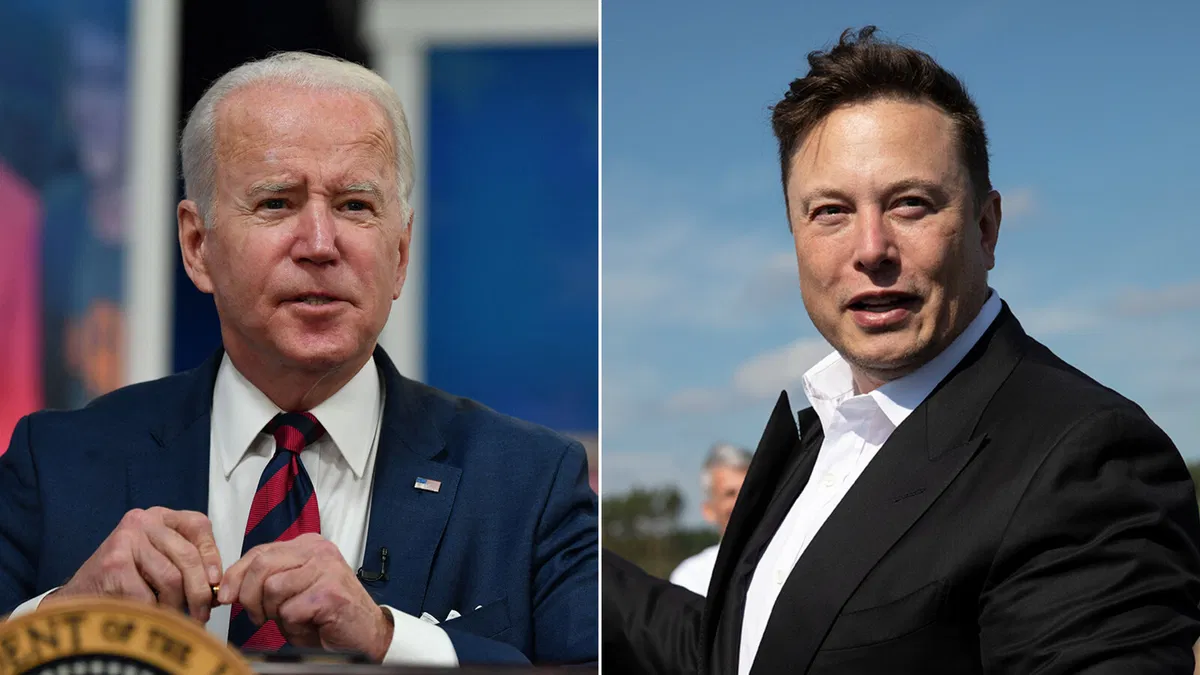
During a campaign event in Pittsburgh, Pennsylvania, President Joe Biden publicly criticized Elon Musk, CEO of Tesla and SpaceX, for his perceived hypocrisy regarding immigration policies. Biden referred to Musk’s early career in the U.S., stating that he began as an “illegal worker” before amassing his wealth. This remark comes amidst Musk’s increasing alignment with former President Donald Trump and his campaign efforts.

Biden’s comments highlighted Musk’s past, stating, “The wealthiest man in the world turned out to be an illegal worker here when he was here.” He elaborated that Musk was in violation of his student visa, as he was not attending school during his initial time in the U.S. Instead, he began developing his first startup, Zip2, without the necessary work authorization.

Key Points from Biden’s Remarks

  • Hypocrisy on Immigration: Biden criticized Musk for speaking against undocumented immigrants while having violated U.S. immigration laws himself.
  • Border Policy Context: The President also took the opportunity to address broader immigration issues, asserting that the number of illegal crossings at the border is lower than during Trump’s presidency. He accused Trump and Republicans of failing to address the immigration system effectively.

Musk’s Recent Activities

Musk has been actively campaigning for Trump in Pennsylvania, including hosting town hall events and distributing lottery-style prizes to incentivize voter participation in his pro-Trump group, America PAC. His recent activities have sparked discussions about his influence on swing state voters and his political alliances.

Legal Background

A Washington Post report corroborated Biden’s remarks, detailing how Musk worked in the U.S. before securing a work visa in 1996. The report noted concerns from investors about Musk’s immigration status, which prompted them to support his visa application. Musk, originally intending to pursue graduate studies at Stanford, ultimately founded Zip2, which sold for approximately $300 million in 1999, paving the way for his subsequent ventures.

Criticism of Trump’s Immigration Policies

Biden also contrasted Musk’s wealth and influence with Trump’s immigration proposals, which include plans for significant deportations and revoking visas for specific groups. This dialogue underscores the ongoing tensions surrounding immigration policy in the U.S. and the contrasting views of the two political figures.

Misinformation on Voting

In addition to his immigration stance, Musk has propagated claims regarding noncitizen voting, which Biden highlighted as unfounded. Studies, including those from the Brennan Center for Justice, show that voter fraud is exceedingly rare in the U.S., with misinformation often being a result of errors rather than intentional misconduct.


Tesla Shares Reach Highest Point in Over a Year Amid Strong Post-Earnings Rally

Tesla shares rose to $267.79 on Friday, marking their highest close since September 2023 following a strong third-quarter earnings report. After surging 22% on Thursday, Tesla’s stock has now increased 8% for the year, narrowing the gap with the Nasdaq’s 24% gain in 2024. Piper Sandler raised its 12-month price target to $315, citing stronger delivery rates and higher margins.

Tesla’s Q3 revenue reached $25.18 billion, slightly below estimates but up 8% year-over-year, with adjusted earnings per share of 72 cents—outperforming analyst forecasts. Profit margins saw a boost from $739 million in regulatory credits and $326 million from its Full Self-Driving (FSD) system, though JPMorgan analysts view regulatory credits as an uncertain source of cash flow.

On the earnings call, CEO Elon Musk forecasted vehicle growth between 20%-30% for 2025, largely driven by advancements in autonomy and more affordable vehicle models. Musk anticipates production of Tesla’s Cybercab robotaxi, with its unique butterfly doors and no manual controls, by 2026. Pilot autonomous ride-hailing services are set for 2025 in California and Texas.

Musk’s net worth rose to approximately $274 billion after the rally, positioning him $60 billion ahead of Oracle founder Larry Ellison. However, Tesla’s shares still lag about 35% behind their all-time high in 2021.

Competitive Landscape
Despite the stock’s recent surge, Tesla faces intensifying competition from Chinese manufacturers like BYD and Nio, and U.S. legacy automakers Ford and GM, who are expanding their EV offerings despite recent reductions in electrification commitments. Additionally, while Musk is optimistic about Tesla’s autonomy progress, analysts from Bernstein caution that Tesla continues to trail competitors in robotaxi technology.