Yazılar

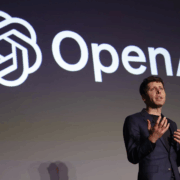
OpenAI and SoftBank Invest $1 Billion in SB Energy to Expand Stargate Data Center Buildout

OpenAI and SoftBank Group will jointly invest $1 billion in SB Energy, committing $500 million each to accelerate the expansion of data center and power infrastructure for their Stargate initiative, SB Energy said on Friday.

SB Energy, which is owned by SoftBank, will build and operate OpenAI’s previously announced 1.2-gigawatt data center campus in Milam County, Texas. The facility is a key component of Stargate, a massive, multi-year plan to scale artificial intelligence training and inference capacity in the United States.

As part of the partnership, SB Energy will also become a customer of OpenAI, using its application programming interfaces and deploying ChatGPT internally for employees.

Stargate is a $500 billion initiative backed by major investors including Oracle, and was publicly endorsed by Donald Trump when the plan was unveiled in January 2025. The project reflects the scale at which leading AI developers are now operating as they race to secure computing power.

The deal highlights a broader industry shift in which technology companies are investing directly in energy and power infrastructure. Access to reliable electricity has become a critical bottleneck for AI expansion, as larger and more numerous data centers sharply increase power demand.

SB Energy said it is developing several data center campuses, with initial facilities expected to begin service later this year. “The partnership accelerates our delivery of advanced AI data center campuses and associated energy infrastructure at the scale required to advance Stargate and secure America’s AI future,” said SB Energy co-CEO Rich Hossfeld.

The data center construction boom has also driven rivals to commit unprecedented sums to infrastructure. Meta Platforms and other Big Tech firms have announced multi-billion-dollar investments spanning chips, cooling systems, servers and power generation.

At the same time, OpenAI is facing rapidly rising costs to train and operate its AI models amid intensifying competition from Alphabet’s Google. OpenAI CEO Sam Altman told employees late last year that the company had entered a “code red” phase, prioritising improvements to ChatGPT while delaying other product launches to counter Google’s Gemini gaining traction.

UAE Pledges $1.4 Trillion Investment in U.S. Economy, White House Announces

The United Arab Emirates (UAE) has committed to a major 10-year, $1.4 trillion investment framework in the United States, signaling a deepening economic relationship between the two countries. This commitment, announced by the White House on Friday, comes after high-level meetings between UAE officials and President Donald Trump, highlighting the UAE’s expanding role in key sectors such as artificial intelligence (AI), semiconductors, energy, and manufacturing.

While the White House did not detail how the full $1.4 trillion would be invested, some deals under the framework have already been publicly disclosed. Notably, the UAE’s Emirates Global Aluminium announced plans to build the first new aluminum smelter in the U.S. in 35 years. This smelter would significantly boost U.S. aluminum production, nearly doubling its domestic capacity.

The UAE, a major oil producer and longstanding U.S. security partner, is increasingly focusing on diversifying its economy away from fossil fuels, with AI emerging as a critical area of investment. In addition to energy and manufacturing, the UAE is also positioning itself as a leader in the AI sector, aiming to capitalize on its technological growth to secure a more diversified economic future.

This agreement is part of a broader trend of increased Gulf investment in the U.S., exemplified by sovereign wealth funds like Abu Dhabi’s Mubadala, which already holds significant U.S. assets. The UAE’s push for more investments follows a pattern of heightened collaboration between the two nations, with previous discussions between UAE President Sheikh Mohamed bin Zayed Al Nahyan and former President Joe Biden emphasizing AI, space exploration, and investments.

In addition to the aluminum smelter project, one of the key partnerships under the new framework is between the UAE sovereign wealth fund ADQ and U.S. private equity firm Energy Capital Partners, which will focus on a $25 billion initiative to enhance energy infrastructure and data centers across the U.S.

Google Sets Ambitious Five-Year Timeline for Quantum Computing Breakthroughs

Google has set an ambitious goal to release commercial quantum computing applications within the next five years, presenting a challenge to Nvidia’s more conservative prediction of a 20-year wait for practical uses. Hartmut Neven, the founder and lead of Google Quantum AI, expressed optimism in a statement, asserting that “real-world applications that are only possible on quantum computers” will arrive in the next five years.

The applications Google envisions are groundbreaking, particularly in fields like materials science, where quantum computers could help develop superior batteries for electric vehicles, discover new drugs, and even explore alternative energy sources. This prediction stands in stark contrast to the broader uncertainty surrounding quantum computing’s timeline, with experts and investors differing widely on when the technology will deliver tangible results. While some predictions lean towards several years, others expect a much longer wait—potentially up to two decades.

Quantum computing has long been a subject of fascination in the scientific community. Unlike traditional computers that process information one bit at a time, quantum computers leverage qubits, which can represent multiple states simultaneously, allowing them to perform calculations at vastly accelerated speeds. This potential for power has captured the attention of governments and businesses, particularly regarding its potential impact on cybersecurity, finance, and healthcare.

In many ways, quantum computing’s development mirrors the early days of artificial intelligence. Before breakthroughs like OpenAI’s ChatGPT in 2022, AI was understood mainly by scientists, with no clear indication of when it would become commercially viable. Quantum computing, similarly, has made substantial advances, but the timeline for practical applications remains a topic of debate.

Nvidia’s CEO, Jensen Huang, has taken a more cautious stance, predicting that it could take up to 20 years before quantum computers are truly useful in commercial applications. At the CES trade show in Las Vegas earlier this year, Huang stated that while a 15-year horizon could be considered optimistic, a 30-year timeframe would be overly pessimistic, with 20 years being a reasonable estimate for the realization of practical quantum computing applications.

Despite Huang’s more reserved prediction, Google’s recent progress has fueled optimism in the field. In December, Google announced a breakthrough in quantum computing with new chips that enabled the resolution of a complex problem in minutes—something a classical computer would require longer than the age of the universe to solve. Google has been working on quantum computing since 2012, designing and building quantum chips as part of its efforts to tackle some of the most challenging problems in the field.

In another significant step toward commercializing quantum computing, Google’s scientists recently published a paper in the journal Nature, revealing a new approach to quantum simulation. This discovery brings the company closer to achieving its goal of practical quantum computing applications within the next five years.